Heroic Struggle in Snow and Ice is a 1917 Austro-Hungarian propaganda newsreel film produced by Sascha-Film for the Imperial and Royal War Press Headquarters. The film is hand-colored and presented in two parts. It depicts the fighting on the Alpine Front between Italy and Austria-Hungary.
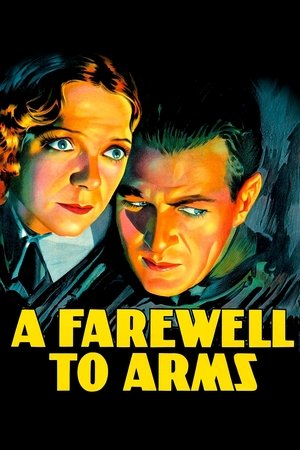
A tale of the World War I love affair, begun in Italy, between American ambulance driver Lt. Frederic Henry and British nurse Catherine Barkley. Eventually separated by Frederic's transfer, tremendous challenges and difficult decisions face each as the war rages on.
Unassuming catering salesmen Jim Ferguson falls through a time hole to 1917 where he saves the life of dashing Royal Flying Corps pilot James "Biggles" Bigglesworth after his photo recon mission is shot down. Before he can work out what has happened, Jim is zapped back to the 1980s......
Produced by the Fox Movietone News arm of Fox Film Corporation and based on the book by Lawrence Stallings, this expanded newsreel, using stock-and-archive footage, tells the story of World War I from inception to conclusion. Alternating with scenes of trench warfare and intimate glimpses of European royalty at home, and scenes of conflict at sea combined with sequences of films from the secret archives of many of the involved nations.
In 1916, the New Zealand Government secretly shipped 14 of the country's most outspoken conscientious objectors to the Western Front in an attempt to convert, silence, or quite possibly kill them. This is their story.
In 1917, the First World War is raging. Julien is from Luxemburg, so instead of having to go to war he studies piano in Paris. One day his friend Jacques, also a musician and now a fighter pilot on the front, invites him to spend a few days in his family's empty house in Bray. The housekeeper, a beautiful stoic woman lets Julien in, but his friend is late and he is obliged to wait. In the meantime, he starts reminiscing of the pre-war days spent with his friend and Jacques' girlfriend Odile.
Producer Samuel Cummins, along with five participants in World War I, discuss the key events of the war as illustrated by an assemblage of battlefield and other documentary footage. This film is not the same as, but seems likely to have either inspired or been inspired by, Norman Lee's British production of the same title (q.v.), apparently released the following year.
In 1911, a willful and determined man from peasant stock named Charles Saganne enlists in the military and is assigned to the Sahara Desert under the aristocratic Colonel Dubreuilh.
In early 20th-century Montana, Col. William Ludlow lives on a ranch in the wilderness with his sons, Alfred, Tristan, and Samuel. Eventually, the unconventional but close-knit family are bound by loyalty, tested by war, and torn apart by love, as told over the course of several decades in this epic saga.
Wounded and left for dead, a British soldier embarks on a daring escape from a booby-trapped German dugout.
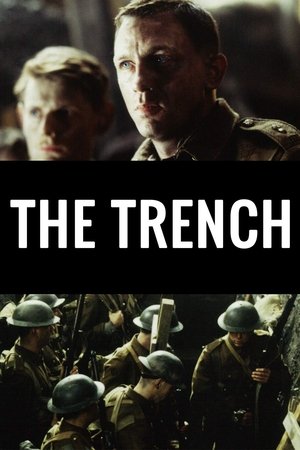
The Trench tells the story of a group of young British soldiers on the eve of the Battle of the Somme in the summer of 1916, the worst defeat in British military history. Against this ill-fated backdrop, the movie depicts the soldiers' experience as a mixture of boredom, fear, panic, and restlessness, confined to a trench on the front lines.
The movie depicts the events from July until September of 1914 which led to the defeat of the German troops at the Marne. While Sebastian Haffner explains and comments on operations and decisions on the basis of situation maps, key scenes are depicted by actors. A main focus is thereby placed by Haffner onto the controversial mission of lieutenant-colonel Richard Hentsch who is said to have, during a war patrol to the various army high commands, contributed to the abortion of the operations significantly.
Two vaudeville performers fall in love, but find their relationship tested by the arrival of WWI.
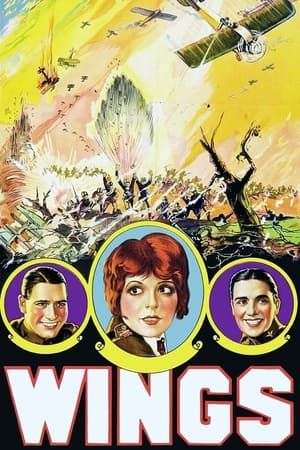
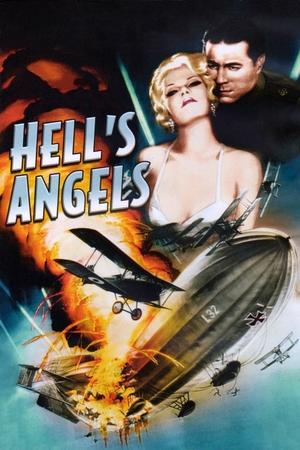
Two young men, one rich, one middle class, both in love with the same woman, become US Air Corps fighter pilots and, eventually, heroic flying aces during World War I. Devoted best friends, their mutual love of the girl eventually threatens their bond. Meanwhile, a hometown girl who's the lovestruck lifelong next door neighbor of one of them pines away.
When the Great War breaks out, brothers Roy and Monte Rutledge, each attending Oxford University, enlist with the Royal Flying Corps.
General Candy, who's overseeing an English squad in 1943, is a veteran leader who doesn't have the respect of the men he's training and is considered out-of-touch with what's needed to win the war. But it wasn't always this way. Flashing back to his early career in the Boer War and World War I, we see a dashing young officer whose life has been shaped by three different women, and by a lasting friendship with a German soldier.
The adventures of the Lafayette Escadrille, young Americans who volunteered for the French military before the U.S. entered World War I, and became the country's first fighter pilots.
Canada was led to war by a bigoted, ignorant, self-obsessed Minister of Militia, who may well have been clinically insane, but the importance of Canada's contribution in that war owes a great deal to him. The man of course, was Colonel - later made Lieutenant General by his own hand - Sam Hughes. Sam's Army is a compelling portrait of a complex man and the formidable military he built. Sam Hughes was not your standard-issue military leader. Canada's World War I Minister of Militia and Defence concentrated power in his own hands, insisted that the Canadian military use the ill-conceived Ross rifle and liberally promoted his cronies. But there was no denying Hughes was a visionary. He assembled the world's largest-ever volunteer army and bucked superiors to keep his ferocious fighting force together in one Canadian Corps.
A two-hour documentary which recreates for the viewer one of the greatest battles in Canadian military history. The film was made to show that Canadian character at its best, forging an identity for a country that before the First World War had been seen only as a British colony - an identity and a character that became recognized and respected throughout Europe.
Canadian military accomplishments in the last hundred days of World War I, when the German Army was destroyed, surpassed those of any other army. The Canadian success was, in no small measure, due to Arthur Currie, whom a recent British historian describes as "the most successful Allied General and one of the least well known."