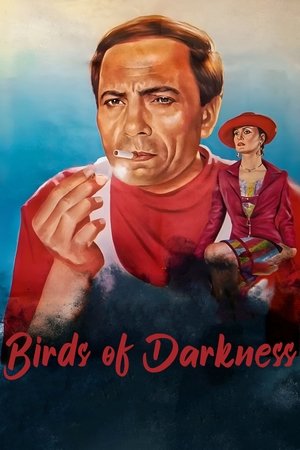
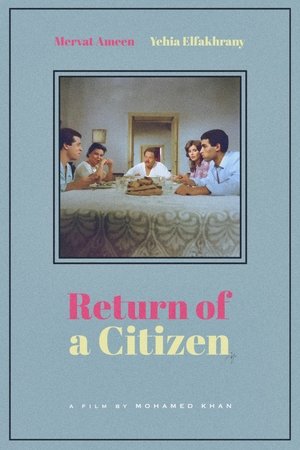
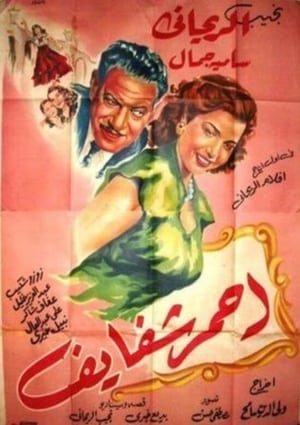
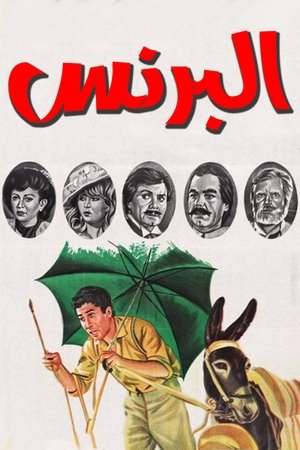
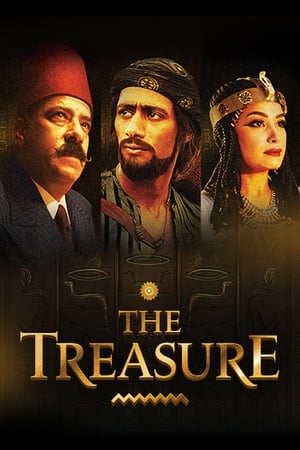
The film is an Egyptian adaptation of a play by Marcel Pagnol, transposed into an Egyptian and Arab context. It follows the story of a shy, naive professor who allows himself to be exploited by an aristocrat or influential figures—depending on the interpretation—in a gambling scheme or a con. As the plot unfolds, the professor undergoes a moral transformation, coming to accept and eventually adopt behaviors that were initially alien to his nature. The narrative explores two central themes: the temptation of corruption and the clash of cultural codes—specifically between Western culture and the Arab/Cairene society depicted in the film.
Ghost of the Nile
The movie focuses on the fury state that was among the people in synchronization with the main event in Egypt: The 1919 Egyptian Revolution which unites the fates of Kira and El Gen to participate in the struggle against the British occupation.
A Third part of The Blue Elephant Saga.
A wife gives birth to sextuplets, forcing the husband to sell three of their children due to poverty. When the wife finds out, she decides to leave her husband and travel abroad and many conflicts arise between siblings in the future.
The son of a wealthy man wants to be a musician but his father, the factory owner, objects and kicks him out. When his father announces a competition for the name of a new soap, his son wins the prize and has enough money to finance the theater of his dreams and he becomes famous for his shows.
The film is an adaptation of a novel by Ismåeel Walieddin. The main character, Ahmad, leaves rural eastern Egypt for the city hoping to become economically self-sufficient, gets an apartment for his parents, and obtains a law degree. He and his family are refugees from a town occupied by the Israeli army, Ismaåilia. Ali, the owner of the Malatily Bathhouse, offers to let him stay there for free. Ahmad encounters several characters there, including Naåeema, a prostitute who he becomes obsessed with, and Raouf, a homosexual man.
Four people from an Arab generation roaming over the ruins of ideologies, causes and virtues of their predecessors. It portrays their intellectual and emotional nonchalance about what is happening around them in their daily lives and relationships. In a house whose architecture is a sixties' experiment in mixing modern and Islamic architecture, a stone and concrete cube suspended over a rocky shore bashed by the waves of the Mediterranean, by famed Iraqi architect Refaat Chaderji, we spend a night with four characters whose non-stop conversations and peculiar actions reflect the void and chaos they are living in.
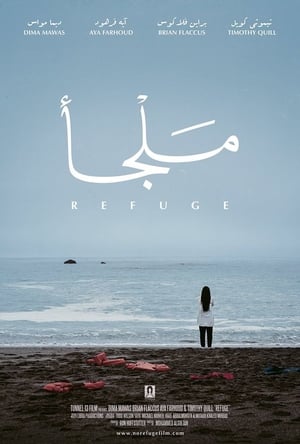
Refugees are captured by border patrol officers as one woman escapes to find herself surviving on her own in a foreign land.
The film revolves around an officer who examines some social issues, especially those related to the crises of the poor within moled el saida, and the problems they face.
Mansoor, a 16 year-old teenager, living in a coastal "freej" (an Emirati neighborhood), has strong feelings for 16 year-old girl Kaltham. But culture and tradition, as well as family hardship, make it difficult for him to express his feelings. A conversation with his "know-it-all" friend convinces him that a gift is the best way to express love, and so, he begins to look for ways to save money for the gift without arousing the suspicion of his family and friends.
After suffering Egyptians from the oppression of the Mamluks and despotism clump the people and organize popular resistance to eliminate them and get rid of the ruling Circassians and the commander of his bodyguards Aybak, joins Alhabiban Ahmad and Qamar resistance despite suffering colors they receive, designed Ahmed to avenge the death of his mother on their hands, achieved guerrilla dream he is condemned the country's young people from Egyptians are free.
Abu al-Ma'ati disguies himself as a janitor of a building to escape justice, he meets a dancer and work together in prostitution and drug trade, but events turn when he decides to run for election.
After a "white lie" which spirals out of control, a neurotic, naive and musically gifted Muslim cleric's eldest son must follow through with an arranged marriage, except he is madly in love with an Australian born-Lebanese girl.
Youssef joins a United Nations disaster-fighting group dubbed the Desert Cat. When he discovers an alternative for petrol, an international gang tries to steal his discovery and recruits a girl to seduce him.
The events of the film takes place on new year's eve of 2009 in the Red Sea at a resort near the city of Hurgahda inside the world of the wealthy where difficult situations and crises happen when they get together.
The story of the film, in a different context of a successful and wealthy engineer named Hossam Khedive, but recently suffers from problems in his natural life resort to alternative life through a new device enters the world of dreams.
A Christian kid suddenly is forced to go to a public school after his father dies and because of a misunderstanding everyone thinks that he's a Muslim.
Everyone in his village believes that Zein is a simpleton, a half-wit, an amiable buffoon. Thus, his braying laughter and public declarations of love for village maidens only win laughter rather than anger, beatings or worse. However, Haneen, a wandering Muslim holy man, perceives something more in this figure of fun: genuine piety and an inner radiance, marked by a powerful spiritual intelligence. One other person sees more in Zein than most do- the beautiful, pious and sedate young girl in the village.
The events revolve around three eras: the Pharaonic era, the Mamluk era, and the first half of the 20th century. The events revolve around corruption and the power of some clerics over the ages to power and false and bad dealings with the people, and how to involve religion in politics in order to obtain positions. That there are clerics deliberately coloring and counterfeiting in this period of time to be the strongest and maintain their positions.