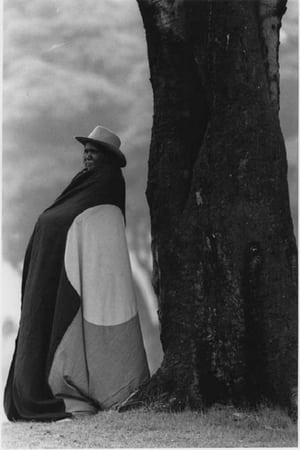
Sacred Ground tells the true story of Aboriginal people fighting to save the last remnants of their ancient heritage and culture.
Dubbed New York's "Queen of the Night," proto–club kid Susanne Bartsch has been throwing unforgettable parties for over 30 years and is still going strong.
Follows the waves of literary, political, and cultural history as charted by the The New York Review of Books, America’s leading journal of ideas for over 50 years. Provocative, idiosyncratic and incendiary, the film weaves rarely seen archival material, contributor interviews, excerpts from writings by such icons as James Baldwin, Gore Vidal, and Joan Didion along with original verité footage filmed in the Review’s West Village offices.
The Soul of Bossales is an immersion in the heart of popular Haitian culture whose spirituality and creativity have been forged by a surge of freedom and identity affirmation. Foukifoura, Édris, Charlotte or Ramoncite, “Bossales” characters with committed artistic and political acts, give us the gripping story of a very harsh reality: material and health precariousness, political violence, neo-colonialism.
A documentary revealing an observation on three barbershops throughout the course of one summer's day in the city of London - Hackney, Herne Hill, and Catford.
Paul "Gator Boy" Bedard and croc hunter "Crocodile Mick Pittman" journey through the Northern Territory to explore the invasion of crocodiles.
Rap de Saia is a documentary that reports, through the voices and rhymes of the protagonists themselves, part of the historical trajectory of Female Rap in the State of Rio de Janeiro. In addition to its historical trajectory, Rap de Saia brings a collection of themes that leads us to reflect on women in today's society.
A short film / documentary that depicts the daily grind of first-generation immigrants in Australia.
Masao Adachi, the author and director of experimental works and pinku-eiga in the 1960s, was a member of the Japanese New Left that shifted from being a filmmaker to a guerrilla fighter. In 1974, he joined the Japanese Red Army in Lebanon, which worked closely with the Popular Front for the Liberation of Palestine. Filmmaker Lutz Dammbeck met Adachi in Tokyo in 2018 and talked with him about a wide range of topics, including art, revolution, the influence of western avant-garde art and American underground; the Japanese Red Army; collaboration with secret services; the role of the Left after 1968; and the reasons for failures of leftist ideas and strategies.
Gil Cardinal searches for his natural family and an understanding of the circumstances that led to his becoming a foster child. An important figure in the history of Canadian Indigenous filmmaking, Gil Cardinal was born to a Métis mother but raised by a non-Indigenous foster family, and with this auto-biographical documentary he charts his efforts to find his biological mother and to understand why he was removed from her. Considered a milestone in documentary cinema, it addressed the country’s internal colonialism in a profoundly personal manner, winning a Special Jury Prize at Banff and multiple international awards.
WINHANGANHA (Wiradjuri language: Remember, know, think) - is a lyrical journey of archival footage and sound, poetry and original composition. It is an examination of how archives and the legacies of collection affect First Nations people and wider Australia, told through the lens of acclaimed Wiradjuri artist, Jazz Money.
This film examines how, since white settlement, Australians have structured, and restructured, their time. Despite some basic inequalities, Australia was a new nation trying to throw off the conditions of the Old World. Even two world wars and severe economic depression could not deter Australians from pursuit of “the fair go”. By the 1950s most middle class Australians lived in an ordered, protected, prosperous world of school, employment, Saturday afternoon sport and the Sunday roast. Yet today Australia is following the global trend towards a population divided between the overworked and the underemployed. The old 9 to 5 certainties are no longer in place. People work from home via computer; shop in non-stop trading supermarkets seven days a week; and online 24 hours a day. Overtime has increased and penalty rates are disappearing.
A paralysingly beautiful documentary with a global vision—an odyssey through landscape and time—that attempts to capture the essence of life.
THE QUEST: Everest is a journey to deeper understand and climb the most iconic mountain in the world, Mt. Everest, and to reveal its amazing history and culture. From experiencing Everest like never before to witnessing unique stories about one of the most remarkable places on earth, THE QUEST: Everest is a one-of-a-kind cinematic tribute to the human spirit of adventure that lives inside us all.
RODEO ROAD explores the unique cowboy culture of Australia's remote north west in the pursuit of the rodeo dream - eight seconds of bull riding glory. Each year cowboys from across the Kimberley load up their saddles, chaps and wranglers and go rough-riding. Some are born and bred in the saddle, while others are young ringers from over east who come to muster through the dry season. Come rodeo time they are chasing the dream, gripped by the rodeo fever of the wild north west.
Afrocantos
“Balance of Life” is a film about life’s and human kinds’ fight to find the balance between our own evolving life style and the nature of the planet we inhabit. The human race is drifting further and further away from its real roots and from what being a human is really about. The speed of development has increased to a state where humans have a hard time keeping up. We find ourselves in a situation where both our own and the planets’ wellbeing is severely threatened. As a last resort human is relying on faith to find the balance. Is faith the last defense of man or is this world guided by forces greater than us? Is this force God, evolution or just the mere sum of coincidences that formed the universe, the natural order and laws of physics?’ Watch it here (https://vimeo.com/51203265)
The life of Shona mbira player Gwanzura Gwenzi coexists in both the traditional and modern worlds: he works in the city for a large western corporation; at his rural homestead, he is the family head who hosts all-night spirit ceremonies, called bira. His sister Francisca is the family medium for the spirit of Kaodza, their great-grandfather. The highlight and centerpiece of the film is a bira, perhaps the only one ever completely captured on film. We see the various stages and liturgical components of the ceremony, culminating in the arrival of the spirits late at night. Francisca’s daughter, now-famous mbira player Stella Chiweshe becomes possessed by a snake spirit. Kaodza arrives through Francisca, and the family confers with the spirit in an extraordinary scene that shows how ancestors interact with the living. (Description credit: Villon Films)
Something in the Water explores the rock phenomenon that is music in WA. How can the most isolated city in the world have exploded with so many successful bands over the years? Across decades and genres, Something in the Water asks "what is responsible for the sparkling talent pool?"
Keeping Country Strong is a new documentary by Country Needs People From the heart of the desert to the islands and estuaries of Sea Country, Indigenous Protected Areas span over 110 million hectares of land and sea and now cover over 54% of Australia’s reserves on land. Indigenous Rangers are on the frontline. Working in some of the most remote corners of the planet they are safeguarding endangered species, fighting wildfires and invasive species, and practising culture in the face of a changing climate. FEATURING Indigenous Rangers and Traditional Owners from Budj Bim IPA, Gaagal Wajaarr Proposed Sea Country IPA, Ngururrpa IPA, Tiwi Islands Proposed IPA, Anangu Tjutaku IPA, Lungtalanana IPA, Mayala IPA & SE Arnhem Land IPA.