Badru hopes her volatile husband will reform if he stops drinking. But when his rage goes too far, she and her mom boldly, albeit clumsily, seek revenge.
A Bollywood obsessed auto-rickshaw meets and falls in love with an actress. When the film crew packs up and leaves, he too sets off to Bombay to be close to her.
Shudra: The Rising is a Hindi language film with a storyline based on the caste system in ancient India, and more specifically the Hindu Varna system. It is directed by Sanjiv Jaiswal and dedicated to Bhim Rao Ambedkar. The film depicts the four basic units of the caste system - the Brahmins, Kshatriyas, Vaishyas and the Shudras. The film shows various rules imposed on the Shudras such as waking with a bell around their ankles and a long leaf behind their back,and a pot hanging around their neck.
Sunil is a collegian and comes from an upper class family. His parents want him to marry the girl of their choice, but he rebels, and refuses to do so. He wants to marry beautiful fellow collegian, Mamta. But will his parents let him have his own way?
Orphaned at a very young age, Varsha Oberoi, lives a wealthy lifestyle with her paternal uncle, Jain Oberoi, in Bombay, and has traveled world-wide. She is in love with Vijay, a middle-classed young man, who runs a small furniture store, badly in debt, and lives with his widowed mom, a younger brother, Deepu, and sister, Nanhi, who are very friendly with Varsha. Then Vijay is reunited with his childhood friend, Vikram Chawla, who is welcomed with open arms by the entire family. It is then Vijay's life turns around, he starts getting a lot of orders, gets out of debt, is able to buy a jeep to replace his motorbike, and moves to a comfortable bungalow.
Runaway Rinku gets forcefully married to already engaged Vishu. Both don't want this marriage and make a deal to go on their separate ways. The equation gets weirder when Rinku's lover Sajjad shows up and Vishu starts developing feelings for her.
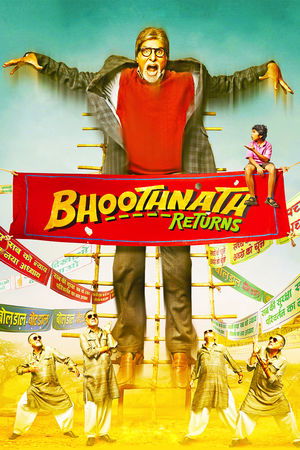
Boothnath vows to redeem himself when spirits tease him, and searches for a child to terrify. He befriends Akhrot, a slum kid, and helps him take on the country's most powerful politician.
The play depicts the lives of seven people living in Mumbai, all with their own uniquely moving story. It tries to capture the essence of people living in the city through seven characters who have been strung together in a series of monologues. Stories about the ambitions of a child artist, the escape of a ridiculed wife into art, a single mother’s sacrifice of her life for the sake of her children, child abuse, a TV reporter’s regret of the media’s inability to celebrate positivism rather than sensationalism and negative news, a hilarious take on corruption by a broker and the west beckoning today’s youth are all interwoven. Each character, marked by failure and doubt are clearly self –censored. While they may communicate through candid expression, they subtly allude to greater truths.
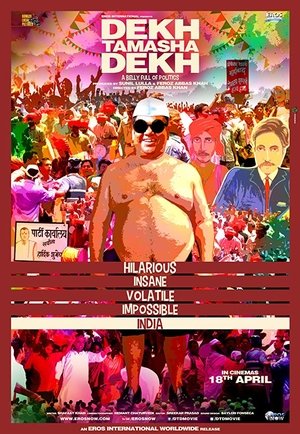
Dekh Tamasha Dekh is a political and social satire based on a true story, it revolves around the search for the religious identity of a poor man crushed under the weight of a politician`s hoarding.
A woman threatens to leave her husband unless he installs a toilet in their home. To win back her love and respect, he heads out on a journey to fight against the backward society.
A middle-aged tour guide develops profound affection for a bubbly traveller while helping her search for a lost engagement ring across various picturesque European destinations.
Veera, a fire-cracker of a girl who lives in a small village but dreams of playing cricket in the big league. Rohan is an accomplished captain of a county cricket team in England. Rohan returns to India to captain his father's cricket team which has been losing for the last 8 years. In a Village where girls don't play Cricket, Veera has to put on a put on a turban & beard to live her dream.
Radhe is a hardcore gangster. A sharpshooter with a sharp brain, he works for Gani Bhai, the dreaded Mafioso, but on his own terms. Totally fearless, Radhe single handedly eliminates Gani Bhai's enemies one by one; making more enemies than he bargained for.
When flatmates Karan and Rahul are unable to pay the rent, they are dramatically evicted. However, they sneak their way back in within hours as the building is being renovated.
Rishi 'Chintuji' Kapoor, the son of a legendary actor, decides to enter politics and go to Hadbahedi, a remote village. However, he creates havoc by misleading the villagers who trust him simply because he is famous.
When a rival steals his presentation and takes the credit for making it, a man gets fired from his job and lashes out on God for making his life miserable. However, God appears before him in human form and gives him his powers with a challenge to do better than him.
A year after the first movie, the four friends are enjoying their lives to the fullest, get in trouble once again with Bholi, who is released from prison earlier than expected and is broke.
Owing to the condition that the girls of the neighborhood should be treated like one's own sister, Gattu works to capture Binny's heart and the approval of his community.
A man falls in love with his childhood friend, but another friend is the one who reciprocates his feelings.
Auro suffers from a progeria like syndrome. Mentally he is 13 but physically he looks 5 times older. In spite of his condition, Auro is a very happy boy. He lives with his mother Vidya, who is a gynaecologist. Amol is young, progressive politician. He is a man with a mission. Auro is Amol's son. Paa is a 'rare' story about a father-son, son-father relationship.