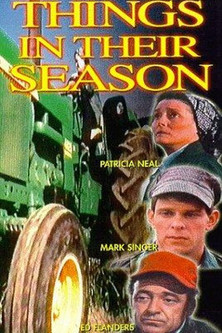
The son in a close-knit family of Wisconsin dairy farmers decides to get married and move out of the house, just as his mother discovers she has incurable leukemia and only a short time to live.
Set in the South just after the US Civil War, Laurel Sommersby is just managing to work the farm without her husband, believed killed in battle. By all accounts, Jack Sommersby was not a pleasant man, thus when he suddenly returns, Laurel has mixed emotions. It appears that Jack has changed a great deal, leading some people to believe that this is not actually Jack but an imposter. Laurel herself is unsure, but willing to take the man into her home, and perhaps later into her heart.
Shindo Yuya quits his job and joins the agriculture and forestry division of Takasaki City in Gunma Prefecture which is tasked with the regional revitalization of the local agriculture industry.
Framed for two crimes he didn't commit, and betrayed by his girl, Cliff Banks finds himself on the run from the police. Now distrustful of everyone, he finds a safe haven hiding out at a quaint country cottage under the care of a kindly old farmer and his daughter, a Cinderella-like blind woman who seems to be able to communicate with nature. There he is forced by their love to question his misanthropy.
An oil baron and a farmer standoff after the water on his farm is poisoned by her company.
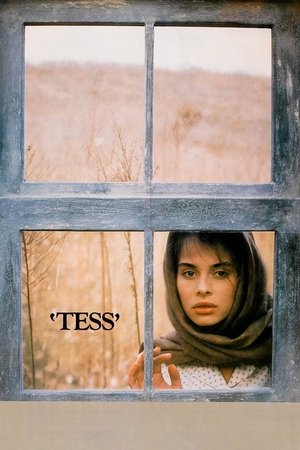
A strong-willed peasant girl is sent by her father to the estate of some local aristocrats to capitalize on a rumor that their families are from the same line, but is left traumatised from her experiences.
The daughter of a Scottish farmer comes of age in the early 1900s.
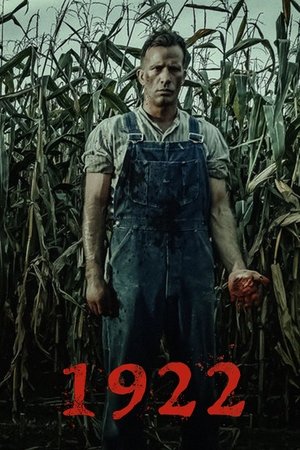
A hard-working farmer, despairing by the harsh reality of his daily struggle, is determined to have his son taking over the farm and continue his legacy. The mother tries her best to keep the family together. Yet, with increasing horror, the son witnesses his father's psychotic behavior escalate.
A group of young men kidnaps a politician-gangster, who is awaiting the results of an election. What are they after?
A divorced farmer takes in his troubled teenage daughter for the summer, a summer which changes the lives of the two of them, and their friends and family.
Farmer Jabez Stone, about to lose his land, agrees to sell his soul to the devil, known as Mr. Scratch, who gives Jabez seven years to enjoy the fruits of his sale before he collects. Over that time, Jabez pays off his debts and helps many neighboring farmers, then becomes an advocate for the upstanding Sen. Daniel Webster. When Jabez's contract with Mr. Scratch concludes, he desperately turns to Webster to represent him in a trial for his soul.
An eight-hour fiction shot for a total of twenty-seven weeks, over a period of fourteen months, in a village population forty-seven in the mountains of Kyoto Prefecture, Japan. It is a geographic description of the work and non-work of a farmer. A portrait, over five seasons, of a family, of a terrain, of a soundscape, and of duration itself. A film-as-adaptive-landscape. A georgic in five books.
After a botched robbery results in the brutal murder of a rural family, two drifters elude police, in the end coming to terms with their own mortality and the repercussions of their vile atrocity.
Fleeing heartbreak in the big city, Ichiko returns to Komori, her rural hometown. She battles summer's rain and humidity, bakes her own bread, grows hothouse tomatoes and tills the fields. During autumn, the time for pickling and preserving fish and sweet potatoes, Ichiko begins reaping rice and recalls her departure five years before.
Here is a film that is, to say the least, singular. A fiction filmed under Giscard, in two farming families, one in Brittany and the other in Languedoc. One sees the Catholic mass and the mass of the television news, one hears the Benedicite and the Internationale, a rural class struggle is played out, daily peasants against the aristos in the middle of a hunt...Chronicle of the Sad Years tells the story of the new forms of subjection suffered by the workers of the land, discovering the perverse effects of the CAP and the growing influence of agribusiness. A film in which the director, Alain Aubert-Dechartre, stages a historical turning point, the forced conversion of peasants into technicians of farms of which they will be the first to be exploited
Movie adaptation of the history novel by August Senoa, about Matija Gubec, the leader of peasant revolt of 1573.
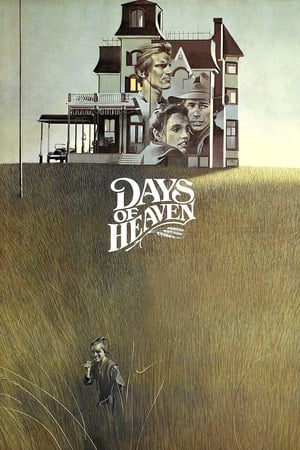
In 1916, a Chicago steel worker accidentally kills his supervisor and flees to the Texas panhandle with his girlfriend and little sister to work harvesting wheat in the fields of a stoic farmer.
In the first year of freedom after WW2, a poor family from rocky Herzegovina moves to fertile province of Vojvodina hoping for a better life. However, there they face different type of troubles following the Tito's break-up with Stalin in 1948. Destinies of individual members of this family are about to have a tragic epilogue.
A samurai answers a village's request for protection after he falls on hard times. The town needs protection from bandits, so the samurai gathers six others to help him teach the people how to defend themselves, and the villagers provide the soldiers with food.
A married farmer falls under the spell of a slatternly woman from the city, who tries to convince him to drown his wife.