After the World War I, Mussolini's perspective on life is severely altered; once a willful socialist reformer, now obsessed with the idea of power, he founds the National Fascist Party in 1921 and assumes political power in 1922, becoming the Duce, dictator of Italy. His success encourages Hitler to take power in Germany in 1933, opening the dark road to World War II. (Originally released as a two-part miniseries. Includes colorized archival footage.)
In his lifetime, Thomas Merton was hailed as a prophet and censured for his outspoken social criticism. For nearly 27 years he was a monk of the austere Trappist order, where he became an eloquent spiritual writer and mystic as well as an anti-war advocate and witness to peace. Merton: A Film Biography provides the first comprehensive look at this remarkable 20th century religious philosopher who wrote, in addition to his immensely popular autobiography The Seven Storey Mountain, over 60 books on some of the most pressing social issues of our time, some of which are excerpted here. Merton offers an engaging profile of a man whose presence in the world touched millions of people and whose words and thoughts continue to have a profound impact and relevance today.
On May 8, 1989, Sports Illustrated ran an article about Ultimate frisbee… about a team with no name hailing from New York City that was about to change the sport forever. From its 1968 New Jersey birth to its unanimous 2015 recognition by the International Olympic Committee, FLATBALL circles the globe to showcase four decades of world-class Ultimate and goes even further: to a set of fields in the Middle East to understand and demystify the unique spirit of the game.
Every summer on Palermo's Mondello beach, over 1,000 cabins are built in preparation of the Ferragosto holiday. Centered around a family who goes into debt, three women holding onto the feeling of youth, and a politician seeking votes -- a vanity fair of beachgoers hiding behind the memory of a social status that the economic crisis of recent years has compromised.
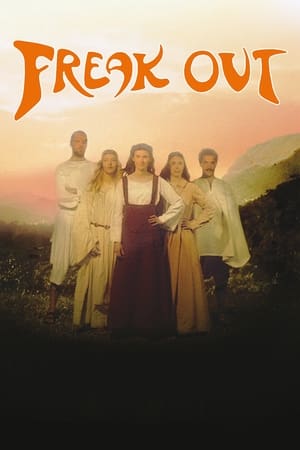
Long-haired, barefoot people. Free love! Veganism! Experiments with drugs... The sixties, right? Not quite. In 1900 a group of middle class kids revolted against their time and started the original alternative community - Monte Verità, the mountain of truth. A community based on veganism, feminism, pacifism and free love. This creative documentary mixes interviews, archive and animation in a beautiful combination bringing you straight back to the early 1900 as seen through the eyes of these young radicals. The documentary Freak Out tells the untold story of the birth of the alternative movement and unfold the uncanny similarities between our time and what they revolted against in the early 1900s.
A documentary that uncovers the careers of a population of entertainers never heard from before: Black actors in Italian cinema. With modern day interviews and archival footage, the documentary discloses the personal struggles and triumphs that classic Afro-Italian, African-American and Afro-descendant actors faced in the Italian film industry, while mirroring their struggles with those of contemporary actors who are working diligently to find respectable, significant, and non-stereotypical roles, but are often unable to do so. Blaxploitalian is more than an unveiling of a troubled history; it is a call-to-action for increased diversity in international cinema through the stories of these artists in an effort to reflect the modern and racially diverse Italy.
This poetic core in youngsters is also touched in Stanukina's less known Your very personal poetry (Свои, совсем особые стихи, 1982), a wonderful film about a poetry class. It is here that one recalls Kogan's admiration of Lyalya's emotional documentary skills. And it is here that one recalls Kosakovsky's depiction of Lyalya as a person of extraordinarily prosperous feelings, sensitive and energetic, childish and female, shrill and quiet. The young poets are marvellously sneaky, respectfully adoring and creatively playing with - maybe even deconstructing - "Aleksandr Sergeevich", Mr. Pushkin, Russia's exclusive trade mark of high culture and literature.
Filmed on location in Italy, this EWTN original documentary chronicles the life and witness of Blessed Carlo Acutis. It features photos, interviews, and recollections with family, friends, and others who knew him.
The 1960s opened with La Dolce Vita by Federico Fellini and its unforgettable lead: Marcello Mastroianni. The actor seemed to glide effortlessly through his roles — and through life — as if to say that life is not all that serious, or perhaps that it is far too serious not to be laughed at. But what kind of man was hiding behind the actor with the handsome, boyish looks, who appeared so gentle and nonchalant?
A look at the rampant HIV epidemic rate in Swaziland.
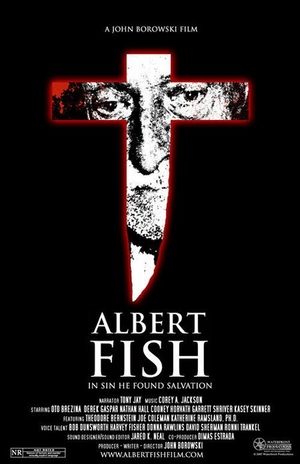
Albert Fish, the horrific true story of elderly cannibal, sadomasochist, and serial killer, who lured children to their deaths in Depression-era New York City. Distorting biblical tales, Albert Fish takes the themes of pain, torture, atonement and suffering literally as he preys on victims to torture and sacrifice.
Drawing inspiration from his personal encounter with the Italian refugee child Giovanna during World War II, Markus Imhoof tells how refugees and migrants are treated today: on the Mediterranean Sea, in Lebanon, in Italy, in Germany and in Switzerland.
Oscar, not quite a child anymore, scavenges for scrap metal for his father. He spends his life in improvised landfills among what remains of leftovers. Worlds apart, yet close-by, there is Stanley. He tidies the church in exchange for a monetised hospitality, picks fruits, herds sheep: anything that keep his foreign body busy. Oscar, the young Sicilian, and Stanley the Nigerian don’t seem to have much in common. Except for the feeling of being thrown into the world, to suffer the same refusal, the same overwhelming wave of choices imposed on them by others.
Money talks. Teens in Los Angeles discuss money: getting it, spending it, and learning to live without it.
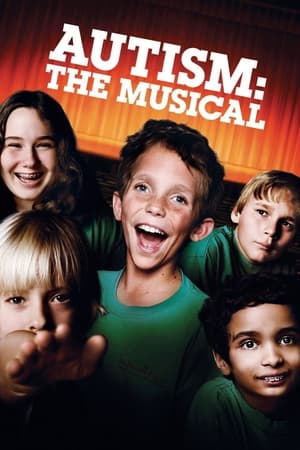
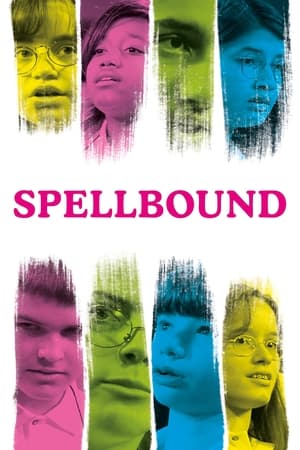
Follows five autistic children as they work together to create and perform a live musical production.
This documentary by Craig and Damon Foster focuses on the surviving San bushmen in the central Kalahari.
After 20 years of living in Berlin, the director Olga Delane goes back to her roots in a small Siberian village, where she is confronted with traditional views of relationships, life and love. The man is the master in the home; the woman’s task is to beget children and take care of the household (and everything else, too). Siberian Love provides unrivaled insights into the (love) life of a Siberian village and seeks the truth around the universal value of traditional relationships.
The most popular children's magazine in Yugoslavia was called Modra lasta (Blue Swallow). In 1969, it created Lastan. For hundreds of thousands of children Lastan was a mythical hero who helped unhappy and confused little souls. Each child imagined him differently and felt confident to share with him what they could not confess to anyone else: Dear Lastan, I kissed him, am I pregnant?; Dear Lastan, I fell in love with a boy from my class... For decades Lastan was a legend and the best kept secret in journalism. This film, for the first time after almost five decades, reveals his true identity.
The “Kindertelefoon” (Child Helpline) in the Netherlands provides a listening ear. One girl talks about being home alone virtually all week; another’s sad because her parents are getting divorced. A boy in an asylum seekers’ center is worried about the future, while another boy doesn’t want to be gay and hopes these feelings will pass. Every day, the Kindertelefoon takes calls like these from children who want someone to talk to. But children also call to talk about their pets, to practice their audition for The Voice Kids or to make pranks. The recordings of these phone conversations are accompanied by images that quite literally give color to the conversations, and that beautifully reflect their tone—sometimes hilarious or naughty, but more often sad or heartrending.
This film presents geographic and cultural aspects of Italy with an account of one family living on a small farm, who, unlike many Italians seeking modernization, avoid mechanization in preference for a simple way of life.