In 208 A.D., in the final days of the Han Dynasty, shrewd Prime Minster Cao convinced the fickle Emperor Han the only way to unite all of China was to declare war on the kingdoms of Xu in the west and East Wu in the south. Thus began a military campaign of unprecedented scale. Left with no other hope for survival, the kingdoms of Xu and East Wu formed an unlikely alliance.
Miracle at St. Anna chronicles the story of four American soldiers who are members of the all-black 92nd "Buffalo Soldier" Division stationed in Tuscany, Italy during World War II.
In the brutal trench fighting of the First World War, a British Infantry Company is separated from their regiment after a fierce battle. Attempting to return to their lines, the British soldiers discover what appears to be a bombed out German trench, abandoned except for a few dazed German soldiers. After killing most of the Germans, and taking one prisoner, the British company fortifies to hold the trench until reinforcements can arrive. Soon, however, strange things being to happen as a sense of evil descends on the trench and the British begin turn on each other.
In the final days of the One Year War, a Zeon special forces group infiltrates a colony to gather information on a new Gundam unit. Alfred Izuruha, a 10-year-old student, befriends Zeon rookie pilot Bernie Wiseman during a brief mobile suit combat. Meanwhile, Al meets up with Christina MacKenzie, his former neighbor and babysitter. Little does he know that not only is Christina a member of the Earth Federation, she's the test pilot of the new Gundam NT-4 prototype.
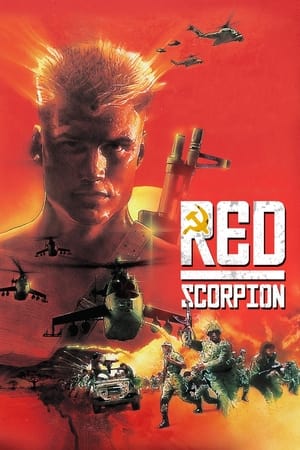
A Soviet commando is sent to eliminate a rebel leader in Africa. Soon he finds himself doubting his mission.
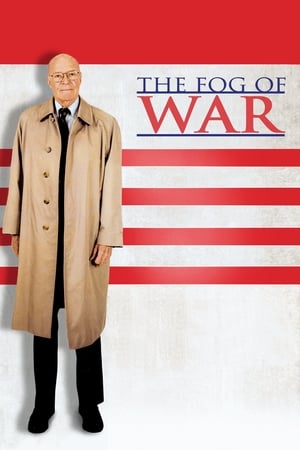
Former corporate whiz kid Robert McNamara was the controversial Secretary of Defense in the Kennedy and Johnson administrations, during the height of the Vietnam War. Augmented by archival footage and cabinet conversation recordings, Errol Morris gives the conflicted McNamara a platform on which he attempts to confront his and the U.S. government's actions in Southeast Asia in light of the horrors of modern warfare, the end of ideology and the punitive judgment of history.
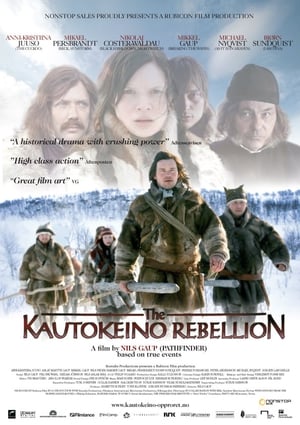
Religious and cultural reawakening inspires rebellion in a 19th century Norwegian village.
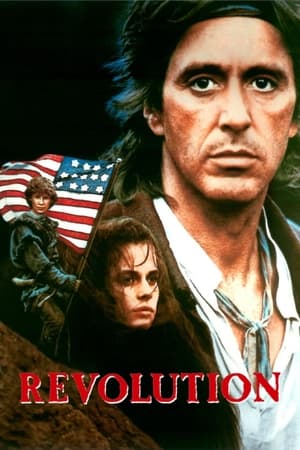
New York trapper Tom Dobb becomes an unwilling participant in the American Revolution after his son Ned is drafted into the Army by the villainous Sergeant Major Peasy. Tom attempts to find his son, and eventually becomes convinced that he must take a stand and fight for the freedom of the Colonies, alongside the aristocratic rebel Daisy McConnahay. As Tom undergoes his change of heart, the events of the war unfold in large-scale grandeur.
Street art, creativity and revolution collide in this beautifully shot film about art’s ability to create change. The story opens on the politically charged Thailand/Burma border at the first school teaching street art as a form of non-violent struggle. The film follows two young girls (Romi & Yi-Yi) who have escaped 50 years of civil war in Burma to pursue an arts education in Thailand. Under the threat of imprisonment and torture, the girls use spray paint and stencils to create images in public spaces to let people know the truth behind Burma's transition toward "artificial democracy." Eighty-two hundred miles away, artist Shepard Fairey is painting a 30’ mural of a Burmese monk for the same reasons and in support of the students' struggle in Burma. As these stories are inter-cut, the film connects these seemingly unrelated characters around the concept of using art as a weapon for change.
This is a story of a great love facing the greatest drama of the history of Russia. Admiral Kolchak is a true war hero and beloved husband and father. One day he meets Anna, the love of his life and the wife of his best friend. The revolution in his heart faces the revolution in his own country His destiny is to become the Supreme Ruler of Russia.
Single mother Anna and her four children live in the front-line war zone of Donbas, Ukraine. While the outside world is made up of bombings and chaos, the family is managing to keep their home a safe haven, full of life and full of light. Every member of the family has a passion for cinema, motivating them to shoot a film inspired by their own life during a time of war. The creative process raises the question of what kind of power the magical world of cinema could have during times of disaster. How to picture war through fiction? For Anna and the children, transforming trauma into a work of art is the ultimate way to stay human.
During World War II, the propaganda engine of the U.S. government made a pivotal decision with unforeseeable results: they tapped John Huston to shoot war documentaries with an expressly patriotic spin. Few could guess the degree to which Huston's documentaries would depict the sheer brutality and horror of modern warfare - particularly his Let There Be Light and The Battle of San Pietro. The films served (by default) as cinematic protests, even as they graced new and brilliant heights within the scope of American documentary. (Indeed, Light was banned by the government for 35 years). Midge Mackenzie's 1998 documentary John Huston: War Stories explores this little known facet of Huston's career, intercutting clips from the various documentaries with a Huston interview shot just prior to his death.
1991. Harrison Lloyd, a renowned photojournalist covering the war in Yugoslavia, is reported missing. Sarah, his wife, convinced that he is not dead, decides to go to Bosnia to find him.
Documentary on the main principles of Sun Tsu "Art of War" illustrated with examples from the second world war, the Vietnam war and the American civil war.
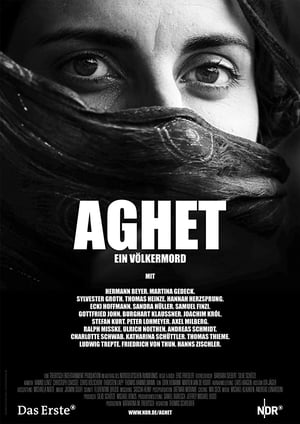
2010 documentary film on the Armenian Genocide by the Young Turk government of the Ottoman Empire during World War I. It is based on eyewitness reports by European and American personnel stationed in the Near East at the time, Armenian survivors and other contemporary witnesses which are recited by modern German actors.
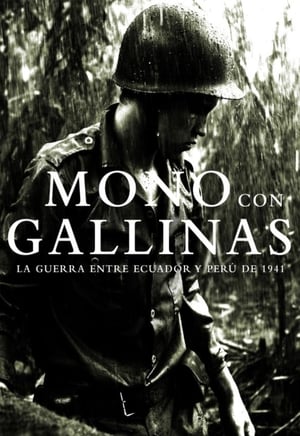
Jorge, a young Ecuadorian, is unexpectedly in the middle of the jungle as an inexperienced soldier. At first, Jorge is confident that military experience makes you a recognized and respected man. But he finds out that the reality is very different; as the private may face neglect, hunger, death and nature, especially human nature. Captive in an enemy camp, Jorge must discover who he has become as he recovers from his injuries and struggles to escape with his fellow prisoner Hugo or stay there under the care of the Peruvian nurse Dolores. Difficult decisions ... beyond the target and border that divides them are abound.
The film Crustaceans treats itself like an impressionist picture or a Japanese Haiku. Crustaceans is a matter of reflection on an instance in life with the social-economical crisis as a landscape. The heartbreak in times of crisis. The film was filmed as demonstrations in the streets against crisis and social welfare cuts took place. For two years, it filmed street demonstrations and incorporated actors in the social landscape. The result, is a film in which the collective and the intimate come together. Both the characters and the people in the street, like identical crustaceans, take to the street to express their shame and rage for what is happening and try to find a solution. A time of anxiety, uncertainty and protest that conforms the landscape in which the characters, such as crustaceans hide their wounds under their hard shell is seen.
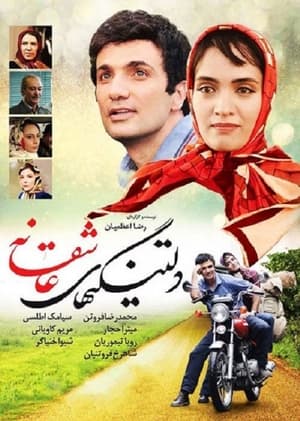
During a demonstration, with the assistance of a man named Manouchehr, Fereshteh succeeds to get rid of the security forces. After victory of the revolution, they accidentally meet each other and consequently get married despite disagreement of Fereshteh’s family. Coming back from the honeymoon, they are encountered with a new situation altering all the peoples’ lives. The men should go to the war front for defending their country after the invasion of Iraqi Army to Iran.
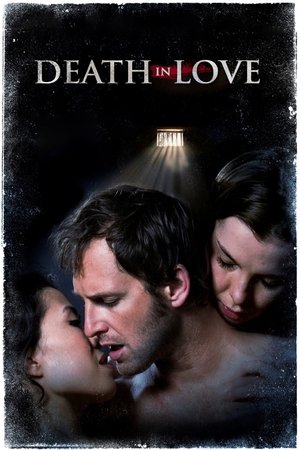
Death in Love is a psychosexual-thriller about a love affair between a Jewish woman and a doctor overseeing human experimentation at a Nazi German concentration camp, and the impact this has on her sons' lives in the 1990s.
The beginning of 1945, Poland. In a newly liberated country, the Communist Security Service is annihilating its enemies under the guise of punishing "national traitors." They organize a labor camp for Germans, Silesians and Poles, on the site of a former Nazi concentration camp called Zgoda / Reconciliation. Franek, who is in love with the Polish prisoner Anna, goes to work as a warder in the camp to save her. He does not know that one of the prisoners - Erwin, his German friend, also loved this girl for a long time. Franek joins the communists in the illusory hope of outsmarting the system.