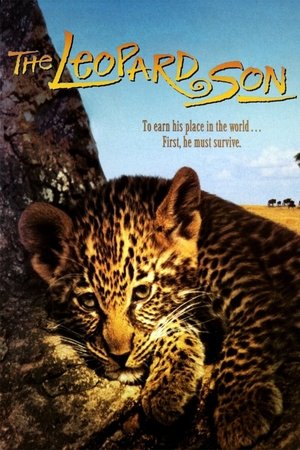
Follow the story of a leopard mother as she raises her cubs near the Luangwa River, facing a constant battle to hunt successfully, defend her territory and protect her cubs against enemies.
This documentary tells the story of the inimitable kea. The 'Clown of the Alps' is heralded as the world’s smartest bird (its intelligence rivals a monkey’s). Kea are famous on South Island tracks and ski fields for their insatiable (and destructive) inquisitiveness. Curiosity almost killed the kea when it was labelled a sheep killer, and tens of thousands were killed for a bounty. After shots of baby kea being fed, there is extraordinary night footage in clip four of the 'avian wolf' in action. The award-winning film makes a compelling case for the charismatic kea as a national icon.
A film crew follows two leopard cubs as they make the fascinating journey from infancy into adulthood in this up-close-and-personal nature documentary.
Gombessa Expedition 3 Protected by an international treaty Antarctica has been spared the effects of hunting and fishing. But signs in ice’s cyclical patterns and its biodiversity have become worrying. Connected to the planet’s global ecosystem via atmospheric circulation and ocean currents, this white haven is suffering the effects of human activities. To document and explain what is unfolding in Antarctica, photographer, diver, and marine biologist Laurent Ballesta and photographer of extreme environments Vincent Munier will be blending their artistic perspectives of a rapidly changing continent. Laurent will tackle technical and human prowess below the ice to bear witness to its remarkable underwater life. His photographs will advance knowledge on Antarctica’s unique and little-known biodiversity. On land, his eye riveted to the lens of his camera, Vincent captures snapshots of life in an Emperor Penguin colony.
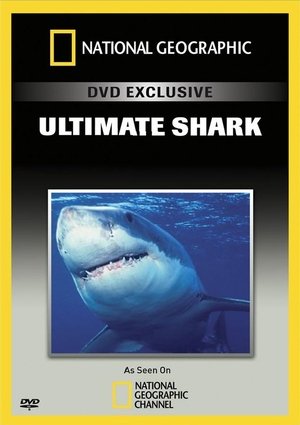
In recent years, an unusual spate of deadly shark attacks has gripped Australia, resulting in five deaths in 10 months. At the same time, great white sharks have begun appearing in growing numbers off the beaches of Cape Cod, Massachusetts, not far from the waters where Steven Spielberg filmed Jaws. What's behind the mysterious arrival of this apex predator in an area where it's rarely been seen for hundreds of years? Are deadly encounters with tourists inevitable? To separate fact from fear, NOVA teams with leading shark experts in Australia and the United States to uncover the science behind the great white's hunting instincts. With shark populations plummeting, scientists race to unlock the secrets of these powerful creatures of the deep in their quest to save people -- and sharks.
Every year, on the steppes of the Serengeti, the most spectacular migration of animals on our planet: Around two million wildebeest, Burchell's zebra and Thomson's gazelles begin their tour of nearly 2,000 miles across the almost treeless savannah. For the first time, a documentary captures stunning footage in the midst of this demanding journey. The documentary starts at the beginning of the year, when more than two million animals gather in the shadow of the volcanoes on the southern edge of the Serengeti in order to birth their offspring. In just two weeks, the animal herd's population has increased by one third, and after only two days, the calves can already run as fast as the adults The young wildebeest in this phase of their life are the most vulnerable to attacks by lions, cheetahs, leopards or hyenas. The film then follows the survivors of these attacks through the next three months on their incredible journey, a trip so long that 200,000 wildebeest will not reach the end.
For 12,000 years wolves roamed Scotland. However, over three centuries ago, we exterminated them. This film reveals the rise and fall of the Scottish wolf and explores the question of whether they should be re-introduced. Wolves arrived as the last ice age ended, following the herds of deer and reindeer that crossed a now-lost land bridge from Europe. For thousands of years, wolves and humans shared the landscape as apex predators, with the wolf entering human art, myth and belief. However, farming put wolves and humans on a collision course, and, after centuries of persecution, wolves became extinct in Scotland. Since then, deer numbers have exploded, and many of Scotland’s woodlands have been stripped bare. Some argue for the wolf’s return. Could we, and should we, hear the howl of the wolf once more in the Highlands?
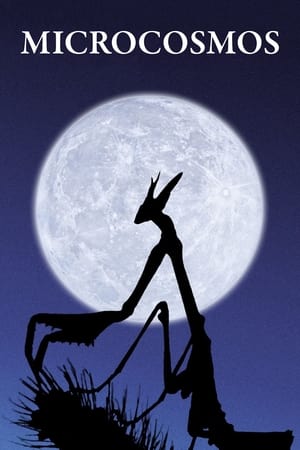
A documentary of insect life in meadows and ponds, using incredible close-ups, slow motion, and time-lapse photography. It includes bees collecting nectar, ladybugs eating mites, snails mating, spiders wrapping their catch, a scarab beetle relentlessly pushing its ball of dung uphill, endless lines of caterpillars, an underwater spider creating an air bubble to live in, and a mosquito hatching.
Gibbons are highly intelligent, agile and acrobatic tree-dwelling apes, found in the tropical forests of Asia. Most of the gibbon species are highly endangered and are on the verge of extinction as a result of the destruction of their tropical rain forest habitat as well as being hunted for food.
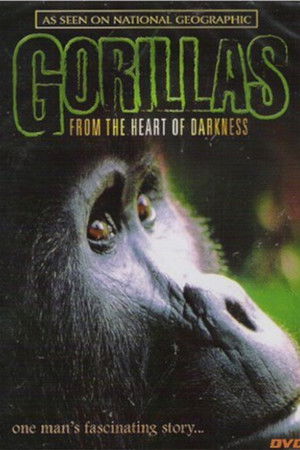
This fascinating film tells the story of one man's struggle to protect a small population of gorillas on the slopes of Mount Kahuzi in Zaire and of his incredible relationship with Kasimir, the great silver-backed male, and his family.
The white chalk cliffs of Rügen are among the most impressive natural monuments on earth, which the painter Casper David Friedrich immortalized for posterity as early as the 19th century. Germany's largest island with its seaside resorts from the Gründerzeit, its smaller side islands and peninsulas that give it its shape, its lagoon-like Bodden waters, the dense beech forests, the yellow rapeseed fields and the meadows, the shady tree avenues and the white sandy beaches is not only a magnet for tourists, but also a unique natural paradise in the middle of the Baltic Sea, a habitat for the rare white-tailed eagle, fallow deer, raccoon dogs and badgers as well as a resting place for huge swarms of migratory birds such as geese and cranes that can be heard trumpeting from afar. In this nature documentary, the unique landscapes and the diversity of the animal world of Rügen are captured with beautiful pictures during the changing of the seasons.
In southern Germany, winter can still be admired in all its glory every year. With its white coat of snow and icicles and myriads of small crystals that look like geometric works of art. In the valleys and on the slopes the snow is still so thick every year that the alpine huts are snowed in up to the windows. Cows and dairymen are safe in their farms at lower altitudes. But not the wild creatures of the mountains! They need strategies to survive the cold season and to defy snow masses, cold and ice. And some seem to do it so easily that they even raise their young in the middle of winter. But how do animals, plants and fungi cope with the annually recurring ice age, which from our perspective is a time of need? The many adaptations in nature prove that winter is an integral part of the natural cycle of the year and the living environment of species. They are adapted to cold and frost. That is why the animals and plants at the edge of the Alps suffer particularly from climate change!
Finland’s first nature documentary. The filmmakers’ expedition leads them all the way to the Åland Islands and the Karelian Isthmus.
Described as being a film about determination, danger and the ocean’s greatest depths, James Cameron's "Deepsea Challenge 3D" tells the story of Cameron’s journey to fulfill his boyhood dream of becoming an explorer. The movie offers a unique insight into Cameron's world as he makes that dream reality – and makes history – by becoming the first person to travel solo to the deepest point on the planet.
Journey alongside a young tigress raising her cubs in the fabled forests of India.
Every year, thousands of Antarctica's emperor penguins make an astonishing journey to breed their young. They walk, marching day and night in single file 70 miles into the darkest, driest and coldest continent on Earth. This amazing, true-life tale is touched with humour and alive with thrills. Breathtaking photography captures the transcendent beauty and staggering drama of devoted parent penguins who, in the fierce polar winter, take turns guarding their egg and trekking to the ocean in search of food. Predators hunt them, storms lash them. But the safety of their adorable chicks makes it all worthwhile. So follow the leader... to adventure!!
Documentary about chimps in Gombe.
When chimps go to war...
The Hoolock Gibbons of Bangladesh have been brought to the brink of extinction by the relentless destruction of their forested habitats throughout the country, even in the most highly protected forest reserves. This species used to number in the tens of thousands, but are now down to the last 200 or so.
In September 2022, Bengaluru made national news when the IT hub region of Bellandur faced major flooding resulting in a nightmare for all its residents. The idea of the film is to explore the two main factors contributing to this - the area’s topography and the rapid urbanization interfering with the natural water network - using visuals of a sprawling, developing metropolis contrasted with that of the chaos and breakdown of essential services that happened during the floods.