69, année pandémique
Amid the civil-military dictatorship implanted with the 1964 coup, Sergio Muniz had the idea of making a documentary about the action of the Death Squad. At the time, the press still had some freedom to disseminate the work of these death squads formed by police officers of various ranks, and that he acted on the outskirts of cities like Sao Paulo and Rio de Janeiro. The victims of police repression (as today) were men, poor and black, and this condition is supposed criminals.
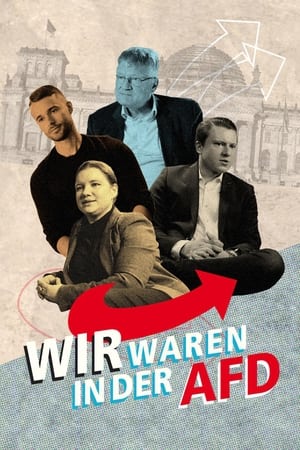
The AfD, founded in 2013, is a right-wing party that has become increasingly radicalized in recent years. To illustrate this, only those who enthusiastically joined the party in its early years are heard. They describe what they looked for and found in the party, but also how and why they left, disillusioned and frightened by the AfD's developments. How did they experience the party's radicalization process? How did friends and family react? When and why did they decide to turn their back on the party? How difficult was the exit process? The documentary provides an illuminating inside view of this party, which has been driving the established parties and the political establishment ahead of it for over ten years, gives viewers a unique look into the AfD's chronicle and world of thought and is at the same time a film about the mechanisms of political radicalization.
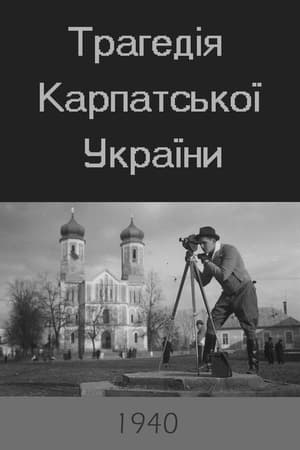
Documentary-filmed events in the Carpatho-Ukraine (aka Ruthenia) during 1939 drive this history of the Ukraine's struggle for independence as a nation.
On January 15, 1972, Leonid Pliouchtch, a Ukrainian mathematician who was unknown at the time, was locked up in a Soviet psychiatric institution and accused of dissidence. His wife, Tatiana, fought for his defense and contacted a committee of French mathematicians to help him. Led by Laurent Schwartz, they launched a three-year campaign to secure his release and succeeded in getting the USSR to back down on the issue.
This documentary film includes never-before-seen footage and exclusive interviews to tell the story of Charity Hospital, from its roots to its controversial closing in the wake of Hurricane Katrina. From the firsthand accounts of healthcare providers and hospital employees who withstood the storm inside the hospital, to interviews with key players involved in the closing of Charity and the opening of New Orleans’ newest hospital, “Big Charity” shares the untold, true story around its closure and sheds new light on the sacrifices made for the sake of progress.
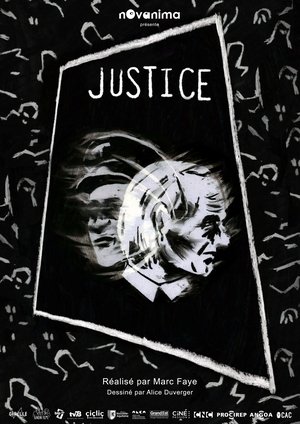
Justice
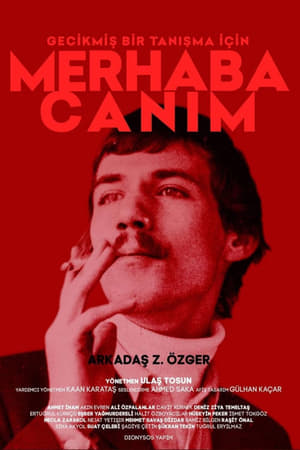
The documentary is titled after Arkadaş Z. Özger’s poem “Hello My Dear” which had caused much controversy in the period it was first published. Considered to be in defiance of heteronormativity, the said poem includes references to the poet’s personality, his family, his relationship to the society, and his “unexpected” death, which came three years after its publication. Today, 50 years after it was written, the documentary follows these same lines in the poem utilising cinematic elements. The documentary also rediscovers the poetics; reaches out to the family, the comrades, the friendships, departing from the official historical accounts, cognizant of his experience of otherness, in pursuit of the “lost” portrait of Arkadaş Z. Özger.
#MladiPitajuPoliticare
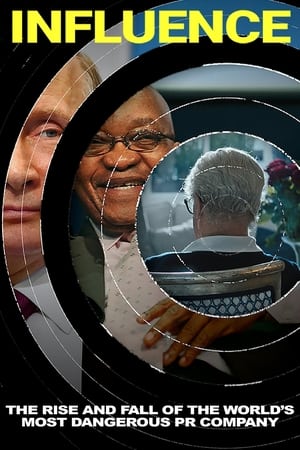
Charting the recent advancements in weaponized communication by investigating the rise and fall of the world’s most notorious public relations and reputation management firm: the British multinational Bell Pottinger.
The documentary Felipe González approaches some of the most important facets and stages of the Andalusian politician's life, before becoming President of the Government of Spain: his early years, his high school studies at the school of the Claretian Fathers in Seville, his years in the Catholic Action University Youth and the Catholic Workers' Youth, his entry into the Spanish Socialist Workers' Party (PSOE).
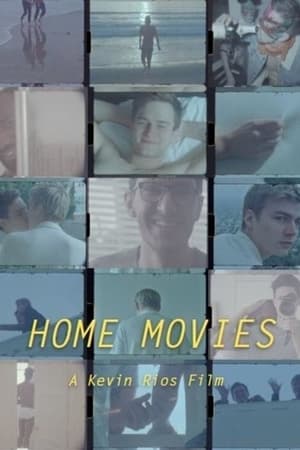
In this home movie collection of gay men, memory serves as an act of hope, power, and above all, resilience.
A behind-the-scenes documentary about the Clinton for President campaign, focusing on the adventures of spin doctors James Carville and George Stephanopoulos.
Le Grand Procès de Macron
A documentary recounting the kidnappings of British Trade Commissioner James Cross and Quebec Vice-Premier & Minister of Labour Pierre Laporte by the FLQ on October 5, 1970 in Quebec.
Un peu, beaucoup, passionnément... Les Présidents et les Français
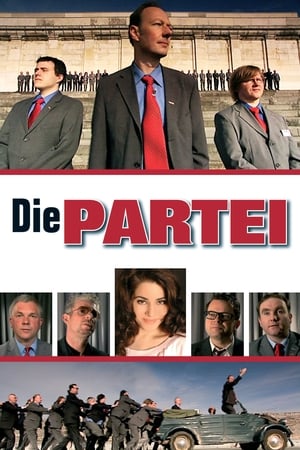
20 years after the fall of the Wall, the economic crisis prevails. In the ruined peripheral areas of West Germany, resentment towards the new federal states is growing. The consequences of decades of uncontrolled transfers from West to East are now clearly visible: while the zone has the highest density of water parks in Europe and the East German cities are being pimped out with designer street lighting, entire city archives are collapsing in the run-down West and weeds are sprouting up on the pothole-strewn streets. The times when Merkel was still locked away behind the Wall and the Federal Republic was in full bloom are long gone. The former people's parties SPD and CDU are just as incapable of acting as the fun party FDP, only Die PARTEI continues to gain popularity and now has over 8,200 members. Is it Germany's last resort?
Alex Jones interviews Walter Burien, commodity trading adviser (CTA) of 15 years about the biggest game in town. There are over 85,000 federal and regional governmental institutions: school districts, water and power authorities, county and city governments – and they own over 70 percent of the stock market.
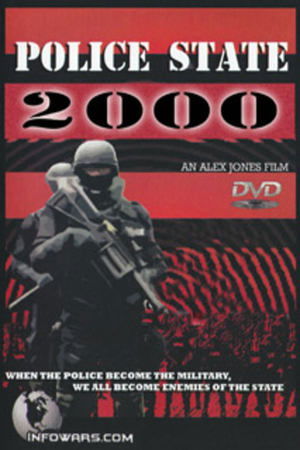
Alex Jones exposes the growing militarization of American law enforcement and the growing relationship between the military and police. Witness US training with foreign troops and learning how to control and contain civilian populations. You will see Special Forces helicopter attacks on South Texas towns, concentration camps, broad unconstitutional police actions, search and seizure and more.
When a private police foundation in Atlanta tries to raze an urban forest to build the country’s largest police training facility, a diverse, decentralized, and intersectional movement defends the forest from what they call “Cop City.” A City in the Forest paints a collective portrait of the country’s most urgent social justice story, where a web of activists fight back against environmental racism, political corruption, police violence, and the criminalization of dissent.