The Czech revival movement is divided at the end of the first half of the 19th century. While the older generation, such as František Palacký, urges restraint, students lean towards radical positions. A report on the revolutionary events in Paris prompts Czech Prague residents to write down the demands of the Czech nation for self-determination and the proclamation of a constitution. Tensions peak during the All-Slavic Congress in Prague's Žofín. Vienna rejects the Czech demands and the congress is brutally dispersed by the Austrian police. Prague begins to build barricades...
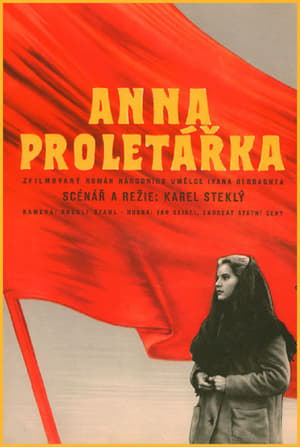
A socialist drama from the time of the February coup. The owner of the brickyard will use several workers before February in order to subvert worker solidarity and continue to do his black business. However, the vigilance of a young, aware worker prevents him from doing so.
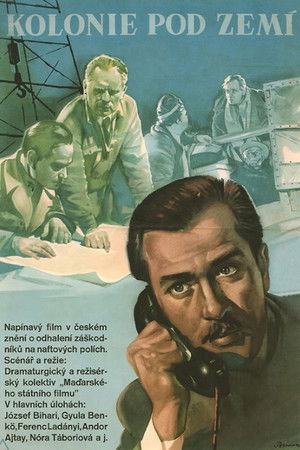
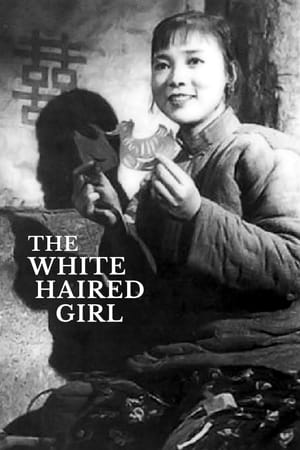
Zhou Mingying, a worker at a power plant in Northeast China, united her fellow workers under the leadership of the Party, overcame all difficulties, demonstrated a high degree of creativity, exposed the enemy's plots and sabotage, and quickly repaired the generators that had been damaged by the Kuomintang, ensuring the supply of electricity.
In 1948, after the Northeast was liberated, enemy sabotage began. The Public Security Bureau learned that spy Li Tianmin had infiltrated the city. Bureau chief and Captain Zhang quickly deployed personnel to capture him. Li Tianmin evaded key questions during interrogation. Clues were found on a milk bottle cap delivered by a boy, who passed it to another spy, Zhou Shaomei. Under surveillance, Zhou Shaomei, fearing Li Tianmin’s capture, killed the boy to erase evidence. Intelligence personnel mobilised the masses, pressuring the hidden enemies. Many deceived individuals provided clues, ensnaring the enemies in the people’s war.
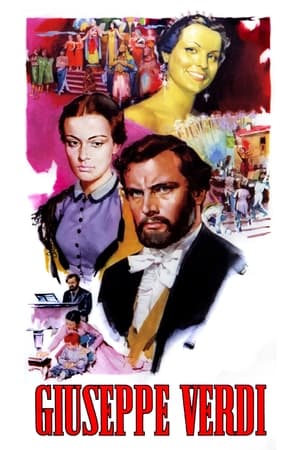
Lyrical biography of the classical composer, depicted as a romantic hero, an accursed artist.
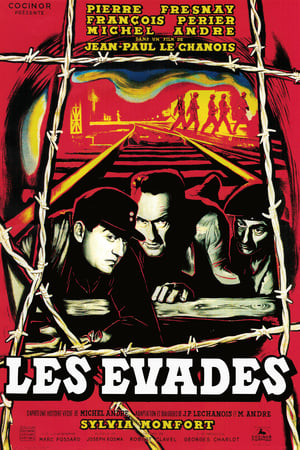
A fiction piece centered around the Czech resistance to the Nazis.
In the first of Hartl's two Mozart biographies, Hans Holt plays the robust and dashing composer who, in keeping with the spirit of the film's time of origin, sets out into the world like a soldier of art after his falling out with the Salzburg authorities. Instead of conquering lands, he conquers the hearts of young ladies, like one of his most famous creations.
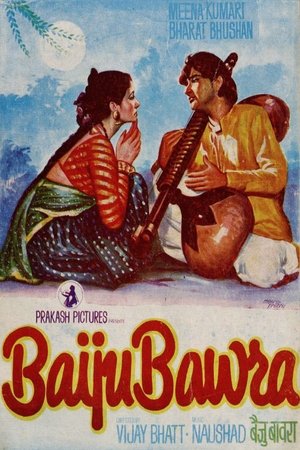
After leaving British Army Ramesh joins a tea plantation as a supervisor, where he is required to harass Indians. Gradually his heart changes and falls in love with local girl and revolts against his British employer.
In May 1919 in a small rural town beside Salgótarján the local high society wants to get the power back with the leadership of dr. Máriáss, exploiting the outside attack launched against the Republic of Councils.
Karwowski, son of a pre-war colonel, is transferred from the West to Poland with the task of assembling a spy and diversion network. The task seems to be easy. However, after landing in Poland, it turns out that nobody wants to cooperate with him. Karwowski's "100% reliable" contacts with potential collaborators turn out to be completely outdated.
In the last days of World War 2, people of various ethnic background meet in a Polish military hospital in a small German town, whereas a Nazi SS division hides in the local forests and tries to move westwards.
Building a bridge is no simple matter. The city council has to decide between two competing proposals, one of which is submitted by villainous scoundrels and scoundrels who would like to enrich themselves everywhere. Although the film was made before the communist coup, it already anticipates the political diction of the stories that the approaching Stalinist period will produce.
A traditional chinese story about a girl, Zhu Yingtai, daughter of the noble Mr. Zhu, who goes to Hangzhou to study, dressed as a boy. There, she meets a student, Liang Shanbo, with whom she becomes good friends. They go to school together for the following years, and Zhu gradually falls in love with Liang.
At the end of the 18th century, the wealthy French scholar Saussure comes to a small Alpine village and offers 1,000 pieces of gold to anyone who can lead him to the summit of Mont Blanc. The young farmer's son Jacques Balmat wants to take on the dangerous task, even though his father has told him from an early age about the mighty mountain spirits who guard a legendary treasure of gold on the mountain peak.
Theater director Falke, dressed as a bat, ends up in prison after a merry carnival night. Director Frank only releases him after some time. Falke decides to take revenge on his friend Gabriel von Eisenstein, to whom he owes the whole affair. The annual masked ball at Prince Orlofsky's provides the opportunity. Falke stages a game of mistaken identity in which Eisenstein does not recognize his own wife and courts her, while maid Adele appears as the countess. Eisenstein is duped, Falke has taken his revenge.
During the unloading of the freighter "Florida", West German dock workers discover napalm bombs instead of the specified precision machines - and a deceptive maneuver by the American occupying forces: the workers had already refused to unload the ship in France, where it was named "Chicago". It was refloated on the voyage to Germany. The German dockers also went on strike. Among them was Hein Jensen, who found it particularly difficult to take part. He had just found work again with difficulty. He needs the money because he wants to get married. His bride Helga has just given birth. When the Americans try to blackmail him into changing his colleagues' minds, he knows where his place is. The strike turns into a huge peace demonstration.
The young Schiller, whose heart and soul are writing and poetry, is forced into the military academy (the pride and joy of the Duke of Württemberg). Schiller is disgusted by the everyday routine of the military, always back and forth between breeding and drills. Conversation, conflict or even critique are discouraged – the oppression insufferable for the young rebel. Disgusted by the brutality, he writes his drama "The Bandit", which he would later publish anonymously. But following a frank conversation with the Duke, Schiller is dishonored and must leave the land.
Joe, who owns a gas station along with his brothers and is about to marry Katherine, travels to the small town where she lives to visit her, but is wrongly mistaken for a wanted kidnapper and arrested.
In the spring of 1905, the water conduit project in the Canadian city of Canitoga is set to be completed. For years, the completion had been marred by sabotage. Engineer Oliver Montstuart commands the last blasting operation. But again, the explosive charge is too large and thus, further construction is forestalled again. When Montstuart confronts foreman Westbrook, the foreman threatens him with a knife. In self-defence, Montstuart shoots him. Now, he has to flee.
A musical film based on biographical facts about Clara Wieck's love for composer Robert Schumann (1810-1856), her marriage against her will, Schumann's triumph, and his tragic end due to mental illness. The film is beautiful and entertaining, full of noble spirit and beautiful words about art and love, which only conflict in a theoretical context; not least thanks to its solid cast, this film is quite serious and far from kitsch. Completed in 1944, during World War II, the film was rejected by the Nazi leadership, but was eventually released and enjoyed success with an audience already weary of war.