The Doku follows the snow owls quest to survive winter. The animals travel from up north to central Europe and back. During their travels they‘ve developed plenty of strategies to make it through the harsh climates they encounter.
Author Helen Macdonald follows Britain’s greatest river over four seasons, encountering salmon, beavers and the microscopic creatures helping to answer science's biggest questions.
Looks at the baobab trees that grow in the dry bush country of Africa and shows the ecosystem created by them.
Bora Bora is the most popular destination in French Polynesia, certainly because of its lagoon, considered the most beautiful lagoon in the world. In this context, the islet could have sunk under concrete and pollution, and the reef could have been irreparably impacted. However, thanks to the will of a handful of inhabitants including the mayor of the island, Bora Bora is today a model of sustainable development, with water treatment technologies that are 15 years ahead of France, programs to rebuild corals and protect wildlife, educational actions and the rehabilitation of Polynesian traditions such as “rahui” and the establishment of a monitoring network using new technologies. All of this makes the island a veritable open-air laboratory that shows the way for all tropical coastal environments around the world.
Six blind Tibetan teenagers climb the Lhakpa-Ri peak of Mount Everest, led by seven-summit blind mountain-climber Erik Weihenmayer.
This astounding documentary delves into the mysteries of the Tunguska event – one of the largest cosmic disasters in the history of civilisation. At 7.15 am, on 30th June 1908, a giant fireball, as bright the sun, exploded in the sky over Tunguska in central Siberia. Its force was equivalent to twenty million tonnes of TNT, and a thousand times greater than that of the atomic bomb dropped on Hiroshima in 1945. An estimated sixty million trees were felled over an area of over two thousand square kilometres - an area over half the size of Rhode Island. If the explosion had occurred over London or Paris, hundreds of thousands of people would have been killed.
A documentary about wild dogs. Features the Arctic fox, the desert jackal, the raccoon dog and the red fox. Produced, directed, and edited by Phil Coles.
A vast, snow-covered forest, untouched by human presence. Two men cross it, bags on their backs, cross a frozen river and finally arrive at the peatland, a vast white expanse. For years, Yves the painter and Olivier the photographer, have traveled the world, meeting wildlife from one pole to the other, privileged and concerned witnesses to the fragile beauty of the planet. But the two men share a common dream: to see a wolf pack live, grow, and spread out. One day, their search leads them to a hideout in no-man's-land between Iceland and Russia, a place conducive to a different temporality. The wait begins. Over the seasons, they will stand there in these eight square meters of wood, silent amid an unchanging scenery, until they gradually become part of the “picture” and immerse themselves in the life of the wolves. A motionless adventure...
Our National Parks takes you on a journey through the four seasons and the many faces of our scenic national parks. Experience an array of lands and waters from Alaska's glacier-clad Denali to the turquoise coves and coral reefs of the Virgin Islands; from the fire of Hawaii Volcanoes to the coolness of Kentucky's Mammoth Cave; from the moonscapes of South Dakota's Badlands to the granite shores of Maine's Acadia. With award-winning filmmaker Wolfgang Bayer you get an in-depth tour of nine of the most popular national parks plus a seasonal overview of many more.
Animals and plants play an important role in the Christian festival. This documentary answers questions about the natural history of Christmas: How are the descendants of the biblical donkey doing? How do Santa's reindeer survive the winter? And what does the robin have to do with all this? Adventurous stories set in dreamlike landscapes around the world.
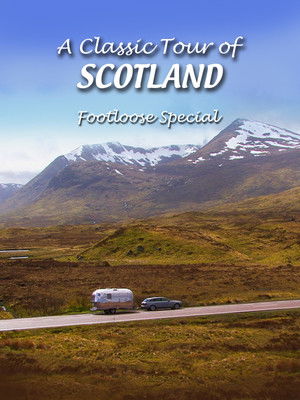
A spectacular feature-length travelogue of many of the best parts of Scotland. Hosted by UK filmmakers Debra Rixon and cameraman husband David, touring with their vintage Airstream travel trailer: Glasgow, Stirling Castle, Loch Lomond, Glencoe, a motoring tour and hike on the Isle of Skye, Loch Ness, Urquhart Castle, Inverness. Ends with a visit to Edinburgh, Castle, and the Royal Yacht Britannia.
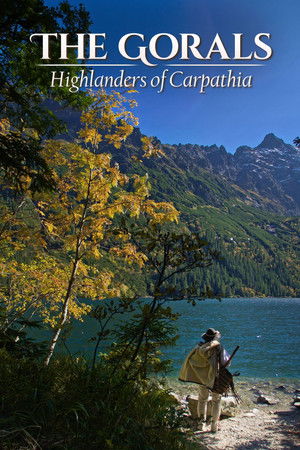
In the Carpathian mountains, a community of highlanders keep their ancient culture alive, from their style of dress to their craftsmanship.
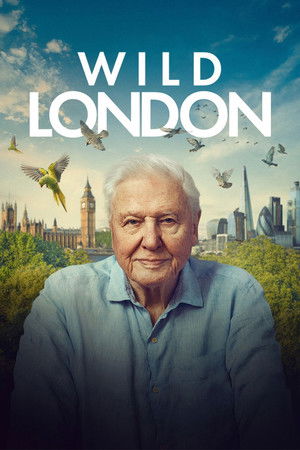
After a life spent travelling the globe, the world’s most famous naturalist turns his attention closer to home to explore the wildlife of England’s iconic capital. Having lived in London for 75 years, Sir David has an intimate knowledge of the city’s natural history, and there's no better guide to introduce us to its most spectacular wildlife secrets. Captured over his centennial year, this personal and poignant film is a timely insight into how cities can become homes for wildlife as well as ourselves.
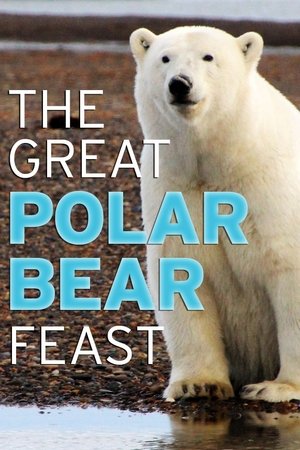
"The Great Polar Bear Feast" is the astonishing story of an annual natural phenomenon that occurs in early September on the north slope of the Arctic. Every year, up to 80 polar bears gather on the frozen shores of Barter Island, near the village of Kaktovik, to feast on the hunter-harvested bowhead whale remains.
A look at the state of the global environment including visionary and practical solutions for restoring the planet's ecosystems. Featuring ongoing dialogues of experts from all over the world, including former Soviet Prime Minister Mikhail Gorbachev, renowned scientist Stephen Hawking, former head of the CIA R. James Woolse
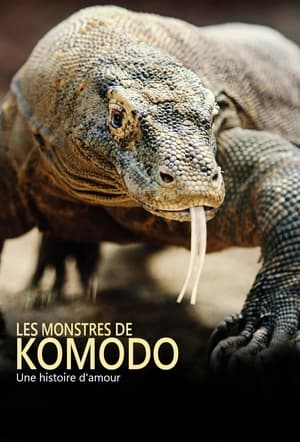
Les monstres de Komodo : une histoire d'amour
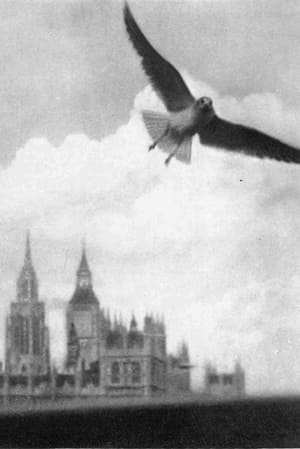
The film takes us to the North of England to follow the migration of the black-headed gull down to London. There, the narrator asks viewers to "listen to their gossip", before demonstrating the bird’s flight in slow motion. We see a polecat feasting on gull eggs, and then a man collecting the eggs for human consumption, with the film telling us that they are considered a “delicacy” in London. Indeed, according to the British Trust for Ornithology, around 300,000 gull’s eggs were sold every year in Leadenhall Market in London during the 1930s, when London Visitors was made.
Madman's dictionary
Galapagos
Planète animale 2 : Survivre