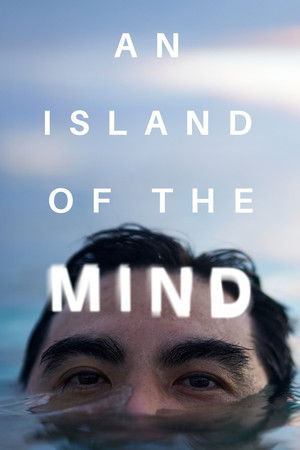
A homeless man with schizophrenia slowly embraces antipsychotic medication under Hawaii's only willing psychiatrist and a court mandate, while a man in recovery offers rare insight into mental illness as he fights to reclaim stability.
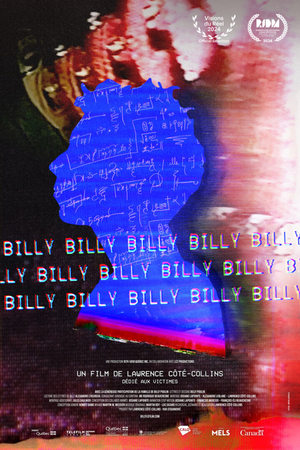
Billy is a film buff who films himself non-stop. During a film shoot, he meets Lawrence Côté-Collins and the two become friends. One night, he assaults her. Years later, in prison for the deaths of two people, Billy is diagnosed with schizophrenia. With the help of the filmmaker, his only remaining relationship apart from his family, his personal archives become an invaluable resource for understanding his illness. A formal deconstruction of schizophrenia through a remarkably open-minded gaze.
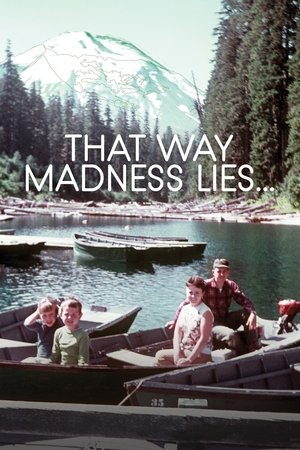
One woman and her family trek the broken mental health system in an effort to save her brother as he descends into madness. Beginning as a testimony of his sanity, his iPhone video diary ultimately becomes an unfiltered look at the mind of an untreated schizophrenic.
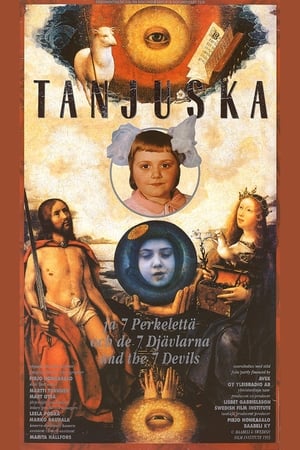
A documentary about Tanjuska who is a 12-year-old White-Russian schoolgirl, with a face like an icon. Two years ago she stopped eating, then talking and finally she stopped growing. The village priest in Estonia has explained to the family that seven devils have made a home inside Tanjuska. These devils are giving her orders and only a daily ceremony can force the devils to leave the girl.
In this horrifyingly modern fairytale lurks an online Boogeyman and two 12-year-old girls who would kill for him. The entrance to the internet quickly leads to its darkest basement. How responsible are our children for what they find there?
The story of the Schofield family, whose daughter January was diagnosed as schizophrenic at five-years old, making her one of only two children to ever receive that diagnosis.
"My uncle is schizophrenic and my grandmother suffers from a terminal illness. My grandfather, who is unable to take care of them both, must decide between his wife and his son." So begins Mijael Bustos Gutiérrez's remarkable documentary about a family caught between love and duty.
Shows masked mental patients enacting various schizophrenic symptoms as they were understood at the time. A disturbing film that raises questions about the condition and treatment of its subjects. (archive.org) “Abstract: This film describes and demonstrates four types of schizophrenia. Filmed at various New York institutions, it shows patients singly and grouped in large, outside recreational areas. Some patients are blindfolded. Symptoms shown include: social apathy, delusions, hallucinations, hebephrenic reactions, cerea flexibilitas, rigidity, motor stereotypes, posturing, and echopraxia.” (Guide to Mental Health Motion Pictures)
In part of the HBO's America Undercover series, this documentary provides an insider's view of mental illness, and the use of psychotropic drugs to alleviate some of its symptoms. Tracks the odyssey of four psychiatric patients, beginning with their arrival at Massachusetts General Hospital and the affiliated Lindemann Center, revealing their personal struggles and inner strength as they enter the world of psychiatric treatment to seek relief from insanity.
A significant number of American children and teenagers - from all social backgrounds - suffer from mental disorders, schizophrenia, autism and emotional problems, leading them to isolation from society while treating their issues in mental health facilities. But there's no end in sight for those young individuals when they face obstacles and mistreatment in inadequate places under the supervision of careless and inexperienced professionals. The documentary follows some of those public mental institutions and another private center dealing with troubled kids and reveals what's wrong with their procedures, and the irreparable harm they cause in those patients.
Filmmaker Jonathan Caouette's documentary on growing up with his schizophrenic mother -- a mixture of snapshots, Super-8, answering machine messages, video diaries, early short films, and more -- culled from 19 years of his life.
It's a sensitive, moving doc chronicling the life of Tétrault's brother Philip , a Montreal poet, musician and diagnosed paranoid schizophrenic. A promising athlete as a child, Philip began experiencing mood swings in his early 20s. His extended family, including his daughter, share their conflicted feelings love, guilt, shame, anger with the camera. They want to make sure he's safe, but how much can they take?
The life of the Nobel Prize-winning mathematician and schizophrenic John Nash — the inspiration for the feature film A Beautiful Mind — is a powerful exploration of how genius and madness can become intertwined.
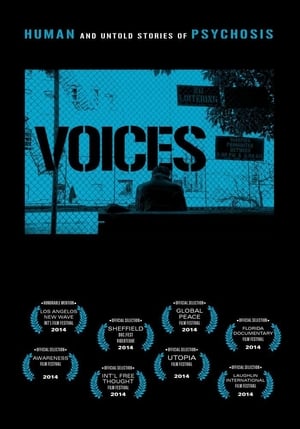
Voices is an award-winning documentary that features the stark and intimate portraits of three very different individuals and their struggle with severe mental illness in America. The stories of Sharon, Thomas and Aaron illuminate the challenges, realities, and often complex emotions and choices that surround people with psychotic mental illness and those who love them.
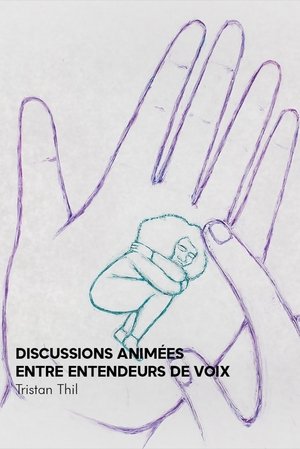
A group of people with schizophrenia meet to discuss their daily lives with the voices in their heads.
The filmmakers' 21-year-old daughter journeys from locked-down psych wards and diagnostic labels toward expansive worlds of creativity, connection, and greater meaning. Featuring insights from trauma experts and others, the film challenges the widespread idea that mental illness should be understood purely in biological terms, revealing the myriad ways that madness has meaning beyond brain chemistry.
Initially airing on HBO's "America Undercover" series, this riveting documentary focuses on three families shattered by the psychiatric disorder of schizophrenia. Subjects "Bob," "Missy" and "Steven" have lived for over a decade with schizophrenia. The film documents the difficult day-to-day existence of both those afflicted with this order and the families searching for answers to their loved ones' suffering. This film also shows the varied and variably successful treatment methods for each of the subjects—one is placed in a group home, one is placed in an institution, and one is cared for at home. The documentary was critically acclaimed for its compassionate treatment of mental illness.
Americans of various walks of live share their experience of schizophrenia.
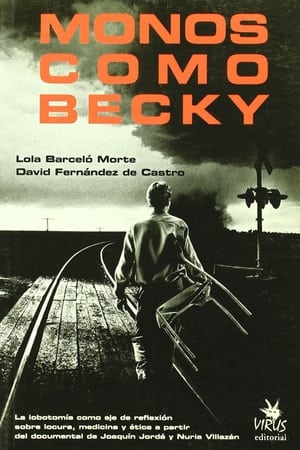
The first part of this documentary deals with the Portuguese neurologist António Egas Moniz, Nobel Prize for Medicine in 1949, one of the first surgeons to apply the technique called lobotomy for the treatment of schizophrenia. The second part deals with the everyday life of people with schizophrenia today: behavior and relationships, and treatment for the disease.
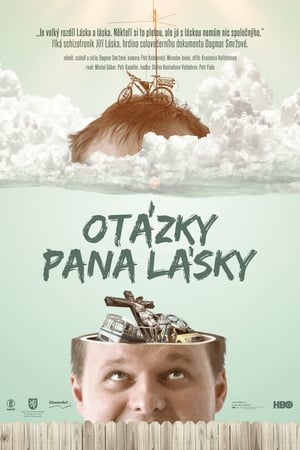
Otázky pana Lásky