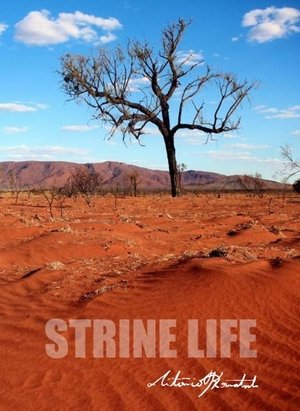
Like an antipodean version of Romeo and Juliet, it emerges that Warri and Yatungka became the last nomads because they had married outside their tribal laws and eloped to the most inaccessible of regions. In 1977 the land was stricken by a severe drought and their tribal elders mounted a search for them with the help of a party of white men led by Dr Bill Peasley and one of their own number, a childhood friend named Mudjon. The film takes Dr Peasley back into the desert to relive his momentous journey with Mudjon and culminates with poignant archival footage of the elderly couple found naked and starving.
In the pinnacle of their Stack Is The New Black national tour, Short Stack play the Sydney Opera House in a sold out mega-show.
Originally broadcast on ABC's True Stories in 1993, Feed Them to the Cannibals tells the story of Sydney's Gay and Lesbian Mardi Gras. It was the first time cameras were allowed at Sleaze Ball and the Mardi Gras Party.
Down Under, just a few nights after the November full moon - when water temperature and tides are just right - one of nature's most extraordinary events explodes into life. Thousands of coral join in an elaborate mating ritual, a synchronized dance of naturally occurring phenomena that help increase the coral's odds of survival. Journey through more than 1,200 miles of Australia's treasured Great Barrier Reef to discover the secrets of the unique marine life that inhabit this dazzling spectacle, considered to be the world's biggest single structure made by living organisms and declared a World Heritage Site by UNESCO.
The Heroes of the Massacre River is a powerful documentary that chronicles the stories of the pioneers behind the construction of the historic Canal of Ouanaminthe, a project that united Haitians across the nation and the diaspora. This film celebrates the groundbreaking efforts of key figures, centering on Dr. Bertrhude Albert, Dr. Naismy-Mary Fleurant, architect Wideline Pierre, economist Etzer Emile as well as dedicated canal workers Milourie Sylfrard, Theodore Johnson and Joseph Pressoir — all guided by the investigative journey of Max Angie Clervil. It also serves as a commentary on the complexity of colonialism and borders, tracing the role that the Massacre River continues to play in the history of Ayiti.
Ranch Album depicts real cowboy life and rough country ranching in Northern Arizona season by season, revealing a sense of spirit and culture that have survived in the American west for a very long time.
Keeping Country Strong is a new documentary by Country Needs People From the heart of the desert to the islands and estuaries of Sea Country, Indigenous Protected Areas span over 110 million hectares of land and sea and now cover over 54% of Australia’s reserves on land. Indigenous Rangers are on the frontline. Working in some of the most remote corners of the planet they are safeguarding endangered species, fighting wildfires and invasive species, and practising culture in the face of a changing climate. FEATURING Indigenous Rangers and Traditional Owners from Budj Bim IPA, Gaagal Wajaarr Proposed Sea Country IPA, Ngururrpa IPA, Tiwi Islands Proposed IPA, Anangu Tjutaku IPA, Lungtalanana IPA, Mayala IPA & SE Arnhem Land IPA.
The landscape of the olive grove is the protagonist of the Mediterranean territory and is shown in this documentary at ground level and from a bird's eye view, in different unique locations of the Iberian Peninsula. From the Somontano de Barbastro in Aragón, to the south of Andalusia, with a sea of olive trees, in the mountain ranges or in the fertile plains and riverbanks. A humanized territory that, for centuries, has been sculpting history and this, not only giving a characteristic identity to our landscape, but also outlining the gastronomic tradition and culture of the Mediterranean.
The silent majority is the Costa Rican peasantry, which has been the object of traditional contempt and which has manifested itself in various forms: unfair salary compensation, bad prices for their agricultural products, financing difficulties, land grabs, precarious housing and educational conditions. health. Precariousness, peasant migrations and the depletion of the agricultural frontier are also analyzed in the film.
WINHANGANHA (Wiradjuri language: Remember, know, think) - is a lyrical journey of archival footage and sound, poetry and original composition. It is an examination of how archives and the legacies of collection affect First Nations people and wider Australia, told through the lens of acclaimed Wiradjuri artist, Jazz Money.
Something in the Water explores the rock phenomenon that is music in WA. How can the most isolated city in the world have exploded with so many successful bands over the years? Across decades and genres, Something in the Water asks "what is responsible for the sparkling talent pool?"
Pachnée
A year in the life of troubled Australian graffiti artist Justin Hughes.
This film examines how, since white settlement, Australians have structured, and restructured, their time. Despite some basic inequalities, Australia was a new nation trying to throw off the conditions of the Old World. Even two world wars and severe economic depression could not deter Australians from pursuit of “the fair go”. By the 1950s most middle class Australians lived in an ordered, protected, prosperous world of school, employment, Saturday afternoon sport and the Sunday roast. Yet today Australia is following the global trend towards a population divided between the overworked and the underemployed. The old 9 to 5 certainties are no longer in place. People work from home via computer; shop in non-stop trading supermarkets seven days a week; and online 24 hours a day. Overtime has increased and penalty rates are disappearing.
This 10-minute short documentary exploring the shifting state of the American poultry industry was preserved in 2015 from an original nitrate print. More information is available on the film's page in the National Film Preservation Foundation's website, where this version can be found featuring original music by Michael D. Mortilla.
King Corn is a fun and crusading journey into the digestive tract of our fast food nation where one ultra-industrial, pesticide-laden, heavily-subsidized commodity dominates the food pyramid from top to bottom – corn. Fueled by curiosity and a dash of naiveté, two college buddies return to their ancestral home of Greene, Iowa to figure out how a modest kernel conquered America. With the help of some real farmers, oodles of fertilizer and government aide, and some genetically modified seeds, the friends manage to grow one acre of corn. Along the way, they unlock the hilarious absurdities and scary but hidden truths about America’s modern food system in this engrossing and eye-opening documentary.
Sacred Ground tells the true story of Aboriginal people fighting to save the last remnants of their ancient heritage and culture.
In Lopera (Jaén), the ecological transition has turned into a nightmare: centuries-old olive groves are being uprooted to make way for massive photovoltaic plants, in an unfair battle between powerful corporations and the local community. Through firsthand testimonies, striking visuals, and an analysis of the current energy model, Forced Renewables reveals how progress, when poorly planned and disconnected from rural life, can lead to an unprecedented ecological, social, and economic disaster.
The Europeans want to be forgiven for the tragic colonial period. The aborigines try to preserve their ancient roots from the present and the future. In the North Territory.
In the Sardinian town of Tonara, where the ancient art of crafting cowbells teeters on the edge of extinction, a family battles to preserve their heritage, passing down skills to a new generation while grappling with personal struggles and the pull of modernity. English subtitles.