Philip Holden is a young dilettante and disappointment to his brother, Miles. His sister-in-law, Louise, attempts to interest him in something beyond literature, leading him to attend a bridge party that changes his trajectory.
Majority of the movie is lost - only 5-7 minutes remain to this day. Two influential Jewish families: The Ezofovichs, famous for their modern views advocating the assimilation of Jews, and the Todros, Karaites preaching a return to the teachings of the Bible live in the same town.
The Passionate Quest is a 1926 American drama film directed by J. Stuart Blackton and written by Marian Constance Blackton. It is based on the 1924 novel The Passionate Quest by E. Phillips Oppenheim. The film stars May McAvoy, Willard Louis, Louise Fazenda, Gardner James, Jane Winton, and Holmes Herbert.
The Co-respondent
A tomboy, raised by a father who wanted a son, runs away from boarding school and gets a job at a firm.
A general ousts the king of Kosnovia, and makes the king's idle son ruler. Unexpectedly, the new ruler begins instituting democratic reforms, angering the General.
Fathers and Sons
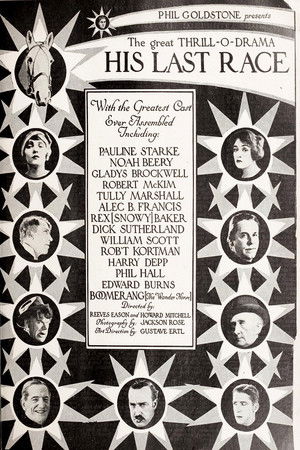
The Hawk's Nest
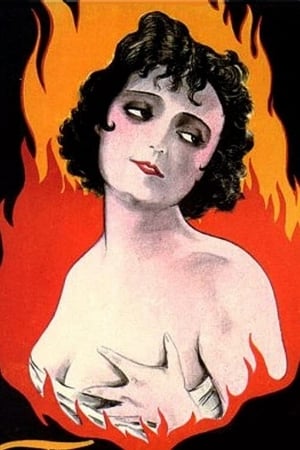
A Parisian artist becomes addicted to the liquor absinthe and sinks to robbery and murder.
Hoping to consolidate their adjoining ranches, Don Fernando and Don Diego betroth their children, Ramón and Dolores, although Ramón is in love with Suzanna, the daughter of a peon on his father's ranch, and Dolores is interested in Pancho, a toreador. When Suzanna learns that she was kidnapped in infancy and is really Don Diego's daughter, she keeps silent; but Ramón finally rebels and steals Suzanna from the altar as she is about to marry Pancho. There are explanations, Ramón marries Suzanna, and Dolores marries Pancho. Suzanna (1923) has been mastered from a good quality but incomplete 35mm print.
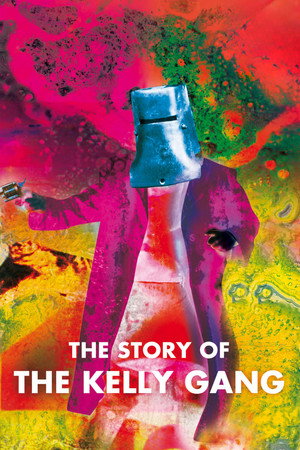
Just as Galeen and Wegener's Der Golem (1915) can be seen as a testament to early German film artistry, The Story of the Kelly Gang (1906) symbolizes both the birth of the Australian film industry and the emergence of an Australian cinema identity. Even more significantly, it heralds the emergence of the feature film format. However, only fragments of the original production of more than one hour are known to exist, preserved at the National Film and Sound Archive, Canberra; Efforts at reconstruction have made the film available to modern audiences.
The authors are unknown. The movie is not fully preserved, without inscriptions.
Behind The Doors Of The Salon
Molly and Me
Flowers Belated
The Little Napoleon
A hotheaded youth in 1880s Meiji Japan apprentices to judo master Shōgorō Yano, trading brute jujutsu bravado for discipline and humility. As Sanshirō matures, he proves judo’s spirit against old-guard challengers—including a deadly duel—while falling for his vanquished opponent’s daughter. Based on the novel by Tsuneo Tomita, son of Tomita Tsunejirō, the earliest disciple of judo.
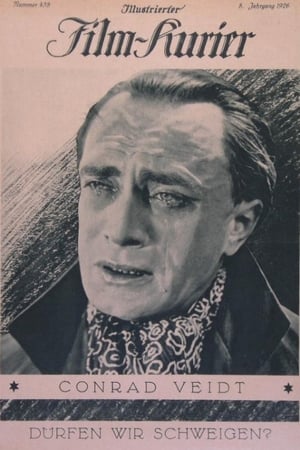
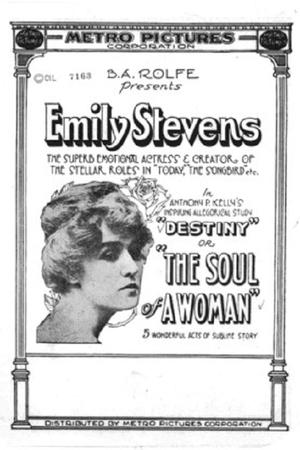
A melodrama about a painter who is infected with syphilis, refuses treatment, turns to the use instead of narcotics, and withers away.
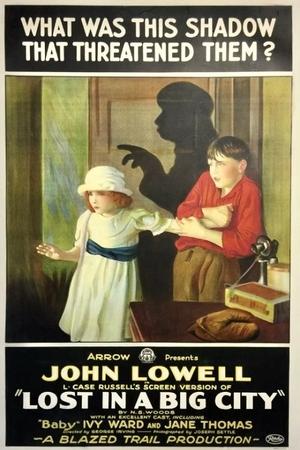
Paul and Rhoda Remsen, having marital difficulties, separate; and each is awarded custody of their child Peggy for 6 months of the year. Rhoda and Peggy move to a farm town, while Paul remains in the big city to write a play for actress Inez Lamont, who is in love with him. Peggy knows that her mother still loves Paul, so she flees to the big city to explain the situation to her father.
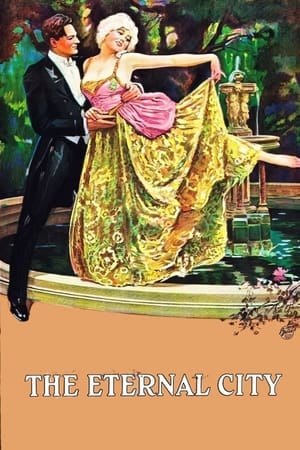
The dashing but arrogant Prince Michael Fedor Lubimoff has to flee Tsarist Russia after falling into disgrace and settles in Monte Carlo, where he resumes his life of debauchery while World War I ravages the fields of Europe… (Partially lost film; reels 3 and 9 of a total of 11 are missing.)