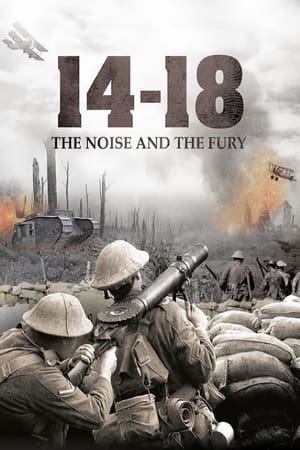
Part of the documentary series looking at the course of the First World War. This volume examines the events of 1917, when the Allies launched desperate attacks on the German lines with huge casualties, but with little result. By the end of the year, the Russians had withdrawn from the conflict following the Revolution, while the Americans were slowly becoming involved.
Benito Mussolini: Anatomy of a Dictator
Through dramatic reconstruction and documentary asides, the spirit of Italian poet, playwright, journalist, aristocrat and army officer Gabriele D’Annunzio is captured, presenting the nascent fascism in his attempts to forge a new state in the aftermath of the First World War.
The story of how newspapers were distributed during the Blitz, stressing the importance of an accurate and objective press on the home front.
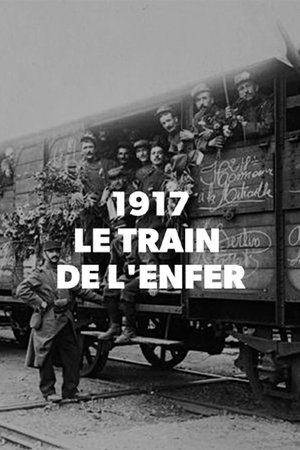
1917, The Train from Hell is an historical documentary about a train accident during WW1.
Documentary concerning the battle of Verdun which, with its weapons of mass destruction, marked the beginning of modern warfare in what is considered to be the most gruesome military confrontation of World War I. The programme conveys the horror of this military inferno, illustrating the similar experiences of the French and German soldiers and their struggle for survival. It also provides the unknown soldier with a face through various letters, diaries and private photographs.
Za trvalý mír
A young filmmaker is commissioned to write a documentary about the First World War. He tries to find a way to tell the story of the war. What is to be done with all these films waiting in the archives to be shown again? He tries his hand at different styles of writing and editing, keeping in mind the question: can you make a montage film without transforming the images?
Tommy's Christmas parcels are despatched to the Front in a fleet of trucks.
This intriguing and beautifully-shot newsreel features sea-faring heroes, feisty females and a generous lick of paint for a Mississippi steamship.
Public anxiety about war from the air is all too real for the people of Ramsgate in this newsreel footage of the aftermath of a Zeppelin raid.
The daughter of famed actor-manager Sir Herbert Beerbohm Tree gets hitched to a military Captain during WWI.
Battered, bandaged and playing croquet on crutches, wounded First World War soldiers get a break from the Western Front.
Esther Johnson’s film uses local archive footage to convey the story of Sunderland's involvement in the First World War, from the men who fought in the fields to those who stayed behind to work in the region’s shipyards and munitions factories.
Neil Oliver describes the worst ever railway accident in the UK, which happened a hundred years ago on 22 May 1915, in which three trains collided at Quintinshill near Gretna Green. One of the trains was a troop train taking soldiers to fight in World War I at the Battle of Gallipoli: many of the dead were in this train which caught fire due to escaped gas from the archaic gas lighting in the carriages. The cause of the crash was attributed to a catastrophic signalman's error, but Neil examines whether there were other contributory factors and whether there was a cover-up to prevent investigation of them, making convenient scapegoats of the signalmen.
The war memorials of 1914-1918 have become so familiar that we no longer see them. They've become an invisible museum, blending into the landscape of France. Then, one fine day, a sculpture catches our eye. Another History appears, perhaps the most gigantic artistic project since the cathedrals...
Documentary to mark the WI's centenary. Lucy Worsley goes beyond the stereotypes of jam and Jerusalem to reveal the surprisingly radical side of this Great British institution.
The Salient
An outlook on Wilhelm von Habsburg, an aristocrat who wanted to become the King of Ukraine and thus became an early fighter for the independence of Ukraine after World War 1.
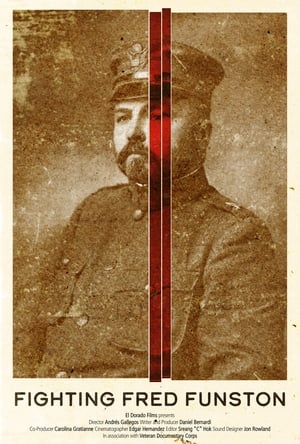
On April 18th, 1906, San Francisco witnessed its most devastating natural disaster – an earthquake that initiated a city-wide fire. The commanding officer of the U.S. Army base at the Presidio, Fred Funston, gathered citizens to fight the fire, patrol the streets, and rebuild the city – all without authorization.