This documentary tells the story of Deborah whom suffered from anorexia.
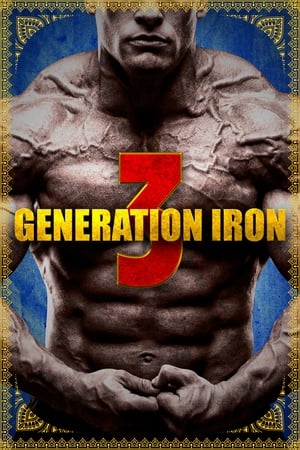
Traveling across the world including India, Brazil, Europe, Africa, Canada, and the USA - Generation Iron 3 will interview and follow bodybuilders, trainers, experts, and fans to determine what the universal ideal physique should look like. With so many divisions appearing within the bodybuilding leagues - what body type should be championed as the absolute best in the world?
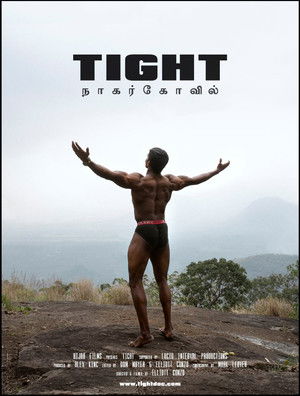
Can Aji's talent and triumphs elevate him from his poor, Tamil background to succeed on the national stage at Mr India? Or will his dreams be shattered by corruption and discrimination? The booming world of Indian bodybuilding is a captivating window through which to observe a rapidly changing society, while Aji's journey is a story of unity, brotherhood and celebration of India's incredible diversity.
Ronnie Coleman is known as "The King" and for good reason. He is the 8x Mr. Olympia champion in the world of bodybuilding - sharing the world record for most Olympia wins. Now retired, he has undergone over 6 surgeries leaving him unable to walk without crutches but his desire to train like a pro bodybuilder has not dissipated. Exploring the history of his career as a bodybuilding legend and following his journey to recovery; for the first time ever discover the true man behind The King.
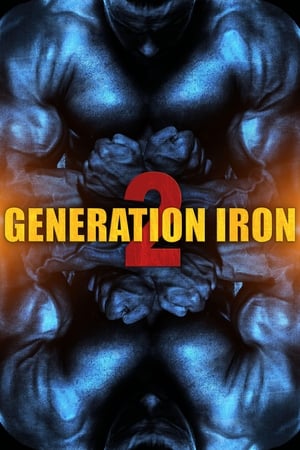
From the director of Generation Iron, comes the anticipated sequel that will depict 5 of the top bodybuilding and fitness mega-stars on a quest of achieving the ultimate physique and taking it to the next extreme level. In the world of social media and internet, the rules have changed as to what makes an iconic bodybuilding mass-monster. Starring Kai Greene, Calum Von Moger, Rich Piana, among others, this film will explore an all new generation of bodybuilders and how this new world, and new people, carve their own path to physique perfection.
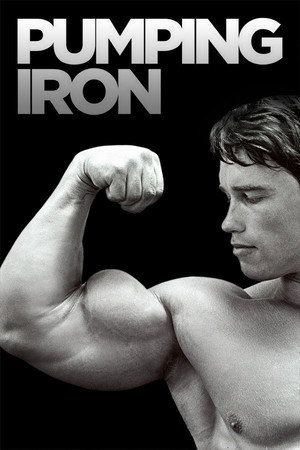
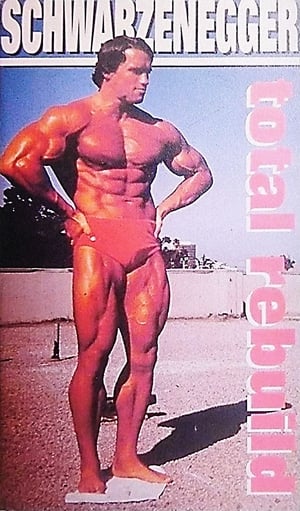
Amateur and professional bodybuilders prepare for the 1975 Mr. Olympia and Mr. Universe contests as five-time champion Arnold Schwarzenegger defends his Mr. Olympia title against Serge Nubret and the shy young Lou Ferrigno.
After an absence of five years, six times Mr. Olympia winner Arnold Schwarzenegger makes a comeback and attempts to take the World Body Building Championship for the 7th time.
The perfect body as an object of cult worship. Based on the mass sports and body worship movement of the 1920s, the film propagates physical training and shows in stylized documentary scenes aspects of physical hygiene, gymnastics, sports and dancing as well as scenes in which supposed sportsmen of antiquity pose naked.
To many in the bodybuilding world, Calum von Moger is seen as the future of the sport. A two time Mr. Universe champion who has proven himself to have one of the greatest physiques currently on the professional stage; Calum was catapulted into social media stardom. Known for his resemblance to Arnold Schwarzenegger and dubbed Arnold 2.0. But a sudden and tragic bicep tear brought his training and goals to a grinding halt. Losing dozens of pounds of muscle and unable to train until fully recovering – Calum was forced to reassess his bodybuilding path and find a way to fight back up to the top. Calum von Moger: Unbroken chronicles his rise, fall, and now recovery as he moves into a promising career in television and film. Showcasing a man with an indomitable will that overcomes all the hurdles in his path and taking him to a place that both skeptics and doctors thought was impossible.
Alberto is dead and can no longer hide it. Make-up and perfume can no longer conceal his quickly decomposing body. Dismayed, he decides to withdraw from the world, whilst forming an unusual friendship with Luly, the manager of the 24-hour gym where he works as a night guard.
A documentary about the making of The Turin Horse, the last film directed by Hungarian master Béla Tarr.
An extraordinary film about memory, and specifically the fading memory of an 86-year-old political activist who has fought tirelessly against historical amnesia and for justice in Argentina. The director’s grandmother, Laura Bonaparte, was one of the founders of the Mothers of the Plaza de Mayo, formed during the 1970s by women whose children and family members had been disappeared by the Videla military dictatorship. Laura herself lost three children and their partners, including the director’s parents. Today, after a lifetime battling that the disappeared never be forgotten, Laura faces her own struggle to remember.
Neuropsychologist Paul Broks travels America in search of the soul of legendary jazz guitarist Pat Martino who was brutally silenced by memory stripping brain surgery. Tracing his remarkable ascent from the depths of amnesia, back to the peak of artistry, Broks explores the nature of memory, self, creativity and the brain systems underlying personal identity. Filmed throughout the US in 2006 and 2007 the film features Delmar Brown, Red Holloway, John Patitucci, Les Paul, Joe Pesci, Carlos Santana and Pete Townshend.
Diana Mariscal reached a moment of fame in the sixties, when at just 18 years of age she was the lead actress of the movie Fando and Lis by Alejandro Jodorowsky. The moment seemed to trigger a promising career, but her public image faded little by little until disappearing. Forty years later the traces of her existence have not been entirely erased.
At the beginning of 2012 the so called war against crime, led by the Mexican Federal Government brought, as consequence, a number of nearly 50,000 casualties and a social climate of violence and distrust. How was this experienced by the men and women who fight this violence from the trenches of science? To the End of Reckoning tells through the eyes of the Jalisco Forensics Institute the development of this engagement, in one of the most violent states in the Country.
During 1950, Miguel Contreras Torres led a group of filmmakers to officially denounce William O. Jenkins' monopoly on film theaters, which was built throughout the country upon crime and corruption. Ever since, Uncle Miguel was ridiculed and eventually forgotten, but it is certain that his proclaim announced the separation of Mexican cinema and its audience. Discoveries may be found in the films made by Miguel, and bringing back to life these moving pictures might recover this history that was never told, a story that is almost lost and that Contreras Torres himself tried to pass on through his writings in The Black Book of Mexican Cinema.
In an unfair country women work day and night far from home while their children learn to survive between loneliness and emptiness. They grow to become teenagers, locked down in one of many low income neighborhoods made up of identical small houses, outlined by overcrowding and scarcity. Their mothers, mostly workers in transnational factories, go in and out in buses that take them to a work place where they carry out twelve hour shifts two hours away from home, while their children muddle through their upbringing in tiny houses of 40 square meters. In spite of everything, they look for a way to move ahead and chase their illusions. This is a story full of youthful aspirations set in a context of difficulties and shortages.
The story of a trade that is dying out, and the strength of those who view this way of life, passed from father to son for generations and now doomed to disappear, with nostalgia and place their hopes for its survival in someone they would never have imagined.
Openland is an art film guided by issues surrounding micro states and its derivative definitions. Through intertwining interviews, meta-narratives, and digital landscapes, Openland unfurls a dialogue between consciousness, individuality and collectivity.
For its reproduction, the megaloprepus dragonfly specifically relies on periodic puddles in tree holes and bromeliacea in tropical rain forests. Territorial males tenaciously defend these resources. Females lay their eggs in the water holes of the territorial males and are guarded by them. Any satellite male - i. e., one without a territory - who tries to grab a female is driven away by the territorial male.