It may be the largest and most densely populated city on Earth, but Tokyo’s 14 million human residents share their home with an astonishing array of wildlife. From jewel beetles and goshawks in the city’s shrines to the forests of Okutama where bears, monkeys and tanuki feast, this film reveals the power of nature in Japan’s capital.
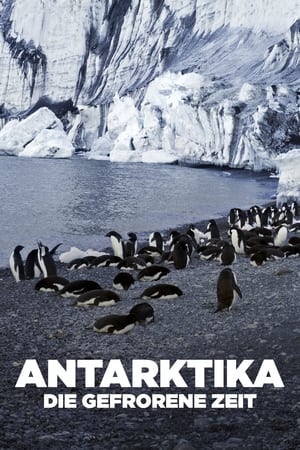
Antarctica is the most extreme continent on our planet—higher, colder, and even drier than any other on Earth, and although it is thousands of miles away, what happens here affects every single one of us.
Some of the world's most majestic birds display delightfully captivating mating rituals, from flashy dancing to flaunting their colorful feathers.
By land, by air, and by sea, viewers can now experience the struggle that millions of creatures endure in the name of migration as wildlife photographers show just how deeply survival instincts have become ingrained into to the animals of planet Earth. From the monarch butterflies that swarm the highlands of Mexico to the birds who navigate by the stars and the millions of red crabs who make the perilous land journey across Christmas Island, this release offers a look at animal instinct in it's purest form.
Greenland
Norman Smith has dedicated his life to protecting and relocating the snowy owls from Boston’s busiest airport runways. Called “the Owl Man of Logan Airport,” Smith has single-handedly relocated more than 900 snowy owls, creating the blueprint for how airports across the US and Canada can manage wildlife conflict.
Arne Sucksdorff’s short documentary observes gulls raiding nests and stealing eggs with ruthless persistence. Though presented as pure nature study, the film was widely read as an allegory of Nazism—a symbolic parable of predation and violence during wartime. Sucksdorff himself denied such intent, but remarked that “a film that is not open to interpretation is a dead film.”
Shot on the Great Barrier Reef in Australia and in the Bahamas, Ocean Wonderland brings to you the amazing beauty of the many varieties of coral and the immense diversity of the marine life thriving there.
A veteran pair of osprey return home to a Connecticut saltmarsh. Over one summer they must battle their enemies, withstand the elements, and hunt hundreds and hundreds of fish, all to raise the next generation of sea raptors.
David Attenborough takes us on a guided tour through the secret world of plants, to see things no unaided eye could witness. Each episode in this six-part series focuses on one of the critical stages through which every plant must pass if it is to survive:- travelling, growing, and flowering; struggling with one another; creating alliances with other organisms both plant and animal; and evolving complex ways of surviving in the earth's most ferociously hostile environments.
In the heart of the Jura mountains, a call resounds through the forest. The silhouette of a Eurasian lynx creeps through the trees. A male is looking for its mate. Suddenly a call answers back. It is the beginning of the story of a lynx’s family we will follow over the seasons. While it is rare to come across this private feline, it is exceptional to discover its daily life in the wild.
From PBS - The fascinating story of beavers in North America - their history, their near extinction, and their current comeback, as a growing number of scientists, conservationists and grass-roots environmentalists have come to regard beavers as overlooked tools when it comes to reversing the disastrous effects of global warming and world-wide water shortages. Once valued for their fur or hunted as pests, these industrious rodents are seen in a new light through the eyes of this novel assembly of beaver enthusiasts and "employers" who reveal the ways in which the presence of beavers can transform and revive landscapes. Using their skills as natural builders and brilliant hydro-engineers, beavers are being recruited to accomplish everything from re-establishing water sources in bone-dry deserts to supporting whole communities of wildlife drawn to the revitalizing aquatic ecosystems their ponds provide.
A vivid journey into the mysterious subterranean world of mycelium and its fruit— the mushroom. A story that begins 3.5 billion years ago, fungi makes the soil that supports life, connecting vast systems of roots from plants and trees all over the planet, like an underground Internet. Through the eyes of renowned mycologist Paul Stamets, professor of forest ecology Suzanne Simard, best selling author Michael Pollan, food naturalist Eugenia Bone and others, we experience the power, beauty and complexity of the fungi kingdom.
Great herds of Asian elephants once roamed from Baghdad to Beijing. Now only remnants of these once mighty herds survive, protected today by the Indian government. It is here that filmmaker Naresh Bedi turns his camera, capturing an intimate portrait of thee largest of land mammals. An adult elephant eats 300 pounds of green fodder and drinks 40 gallons of water a day. This film follows these gentle giants as they forage and feed, wallow in watering holes, dust their skin with dirt, and care for their young.
Wildlife filmmaker Filipe Deandrade hosts a journey into one of the most biologically diverse countries in the world, Costa Rica.
Wallace rents out Gromit's former bedroom to a penguin, who takes up an interest in the techno trousers created by Wallace. However, Gromit later learns that the penguin is a wanted criminal.
In the Nagarhole Tiger Reserve, there is a kingdom named Kabini, which is home to a rogue confederation of animal tribes vying for dominance. But, a lone black panther named Saya is challenging the status quo by staking his claim to the throne.
Something shocking is happening in the abyss around Guadalupe Island. Photos of great whites with strange scars believed to be from giant squids have surfaced. Dr. Tristan Guttridge leads a mission to get a glimpse into the battles between the two beasts.
Follows life of Malika, a lioness in South Africa’s Kruger National Park as she battles to survive.
The giant squid is a creature of legend and myth which, even in the 21st century, has never been seen alive. But now, an international team of scientists thinks it has finally found its lair, 1,000 metres down, off the coast of Japan. This is the culmination of decades of research. The team deploys underwater robots and state-of-the-art submersible vessels for a world first - to find and film the impossible.