In October 2023, a European research team succeeded in generating an enormous amount of energy from very little fuel. A success that fusion research had been working towards for around 70 years. Now the competition for a fusion reactor has been reignited. What role can electricity from nuclear fusion play in the future?
30 years after the Chernobyl catastrophe and 5 years after Fukushima it is time to see what has been happening in the “exclusion zones” where the radioactivity rate is far above normal.
Ma vie à côté de la centrale
Over a year since three nuclear reactors went into full meltdown at the Fukushima Daiichi Nuclear Power Plant, a broad anti-nuclear movement is growing in Japan. Nowhere is that more apparent that in Fukushima Prefecture, where a group of local women protest the deafening silence of the Japanese government. Ignored by their own media, these women share their brutally honest views on the state of the clean up, cover-ups, untruths and the stagnant political climate in modern Japan.
Silent Fukushima
Centrales nucléaire : démantèlement impossible
In a quiet forest, a sign warns of radiation hazard. “Is this the past or the future?” muses the masked figure who appears like a kind of ghost in nuclear disaster areas. At a time when nuclear power may be re-emerging as an alternative to fossil fuels, this calmly observed and compelling tour takes us to places that may serve as a warning.
When tornadoes hit a nuclear power plant, critically damaging the plant's cooling system, the results could be catastrophic. Atomic Twister, a countdown to disaster, traces an extraordinary day in the lives of small town citizens who unexpectedly find themselves facing the possibility of mass destruction.
At 2:46 PM on March 11, 2011, the Fukushima Daiichi Nuclear Power Plant experiences a black out due to the aftermath of the Tōhoku earthquake and tsunami. The cooling system fails at the nuclear power plant and the temperature of the nuclear reactor rises. The worst case is coming. Scientists face an unexpected situation and government officials are confused by lack of information. Residents says goodbye to their hometown before evacuating.
Documentary with Tahara Soichiro and former Japanese Prime Minister Koizumi Junichiro.
Oscar-winning composer Ryuichi Sakamoto weaves man-made and natural sounds together in his works. His anti-nuclear activism grew after the 2011 Fukushima disaster, and his career only paused after a 2014 cancer diagnosis.
We return to Fukushima five years after the nuclear disaster caused by a tsunami. What issues does the clean up operation face? What progress has been made in dealing with this major disaster, especially in the detection and removal of melted nuclear fuel?
An executive in charge of a nuclear power plant in the Mid-East must stop his son-- who turns out to be the Anti Christ -- from blowing it up.
Filmmaker Jean Chabot looks at the use of nuclear energy in Quebec. Do we need this expensive and dangerous energy?
The definitive account of Japan’s struggle as it faced a nuclear catastrophe while still reeling from the devastation of an earthquake and tsunami.
When the prehistoric warm-water beast the Crocosaurus crosses paths with that cold-water monster the Mega Shark, all hell breaks loose in the oceans as the world's top scientists explore every option to halt the aquatic frenzy. Swallowing everything in their paths -- including a submarine or two -- Croc and Mega lead an explorer and an oceanographer on a wild chase. Eventually, the desperate men turn to a volcano for aid.
Since the 3/11 Great East Japan Earthquake, Fukushima is infamous worldwide for the radioactive contamination as a result of the explosion at the Daiichi (No.1) Nuclear Power Plant. However there is an untold story about what happened to the people living in the area after the Tsunami and Nuclear Disaster.
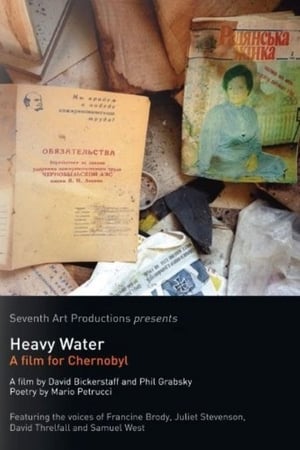
On April 26th, 1986, reactor four at Chernobyl nuclear power station explodes, sending an enormous radioactive cloud over Northern Ukraine and neighbouring Belarus. The danger is kept a secret from the rest of the world and the nearby population who go about their business as usual. May Day celebrations begin, children play and the residents of Pripyat marvel at the spectacular fire raging at the reactor. After three days, an area the size of England becomes contaminated with radioactive dust, creating a 'zone' of poisoned land. Based on Mario Petrucci's award-winning book-length poem (split over two books), 'Heavy Water: a film for Chernobyl', and the shorter version 'Half Life: a Journey to Chernobyl", tells the story of the people who dealt with the disaster at ground-level: the fire-fighters, soldiers, 'liquidators', and their families.
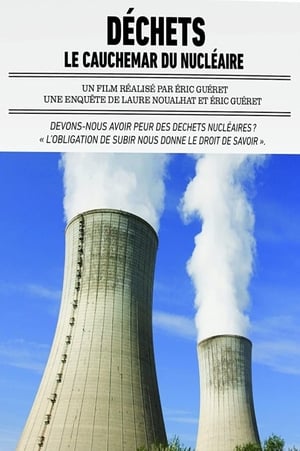
The documentary presents the results of research on nuclear waste management in the U.S., Russia, Germany and France. The authors Eric Noualhat Guéret and Laure were accompanied by the independent French laboratory technicians radiation control, CRIIRAD. They have detected and measured radiation in many places like the U.S. Columbia River or the French plutonium factory called reprocessing plant at La Hague.
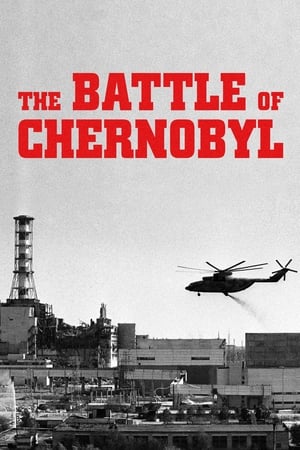
On April 26, 1986, a 1,000 feet high flame rises into the sky of the Ukraine. The fourth reactor of the Chernobyl nuclear power plant just exploded. A battle begins in which 500,000 men are engaged throughout the Soviet Union to "liquidate" the radioactivity, build the "sarcophagus" of the damaged reactor and save the world from a second explosion that would have destroyed half of Europe. Become a reference film, this documentary combines testimonials and unseen footage, tells for the first time the Battle of Chernobyl.