The November 13, 2015 terrorist attack in Paris claimed 130 lives around the city -- 89 of them at the Eagles of Death Metal’s Bataclan Theatre concert. The American rock band recount their experiences before and after the tragic events.
The bombing of the Alfred P. Murrah Federal Building in Oklahoma City in April 1995 is the worst act of domestic terrorism in American history. This documentary explores how a series of deadly encounters between American citizens and federal law enforcement—including the standoffs at Ruby Ridge and Waco—led to it.
On Saturday, July 27, 1996, a terrorist’s bomb exploded in Centennial Olympic Park at the Atlanta Summer Games, killing two and injuring 111. The toll would have been far higher if not for security guard Richard Jewell, who discovered the bag holding the bomb and helped clear the area. Yet within hours, praise of his heroism turned to vicious accusations. Jewell would be hounded for months by investigations and the media. Eventually, the FBI would capture and convict Eric Robert Rudolph for the crime. Judging Jewell revisits the scene in Atlanta where Richard Jewell, a man simply doing his job, lost the one thing he valued most — his honor.
Six elderly retired women, two from Buenos Aires, Argentina; two from Montevideo, Uruguay; and two from Madrid, Spain, have something in common, despite their different interests and lives: they go to the movies almost every day.
When looking at Pedro Almodóvar’s filmography, it becomes evident that women are everywhere; in fact, his work revolves around them. His divas are the best to create a real portrait of Almodóvar and evoke the emotional power of his films. These women are the ideal observers of a cinematic career that, from La Mancha to Hollywood, has changed the image of Spain in the world.
Madrid, Spain, 1949. The Circo Americano arrives in the city. While the big top is pitched in a vacant lot, the troupe parades through the grand avenues: the band, a witty impersonator, the Balodys, acrobats, jugglers, acrobatic skaters, clowns and… Buffallo Bill.
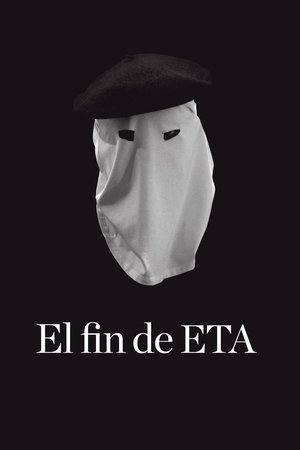
The chronicle of the process, ten long years, that led to the end of ETA (Euskadi Ta Askatasuna), a Basque terrorist gang that perpetrated robberies, kidnappings and murders in Spain and the French Basque Country for more than fifty years. Almost 1,000 people died, but others are still alive to tell the story of how the nightmare finally ended.
Famous Spanish film critic Alfonso Sánchez talks about his personal life, his work and Anouk Aimée. A sentimental tribute to one of the most relevant figures on the Spanish film scene.
For three and a half centuries, from the same day that Diego Velázquez (1599-1660) applied his last brushstroke to the canvas, the enigma of “Las meninas, o La familia de Felipe IV” (1656) has not been deciphered. The secret story of a painting unveiled as if it was the resolution of a perfect crime.
This Traveltalk series short looks at four of Spain's most famous cities, Granada, Seville, Toledo, and Madrid, with an emphasis on the Moors and their influence on the country.
Narrator dreams of Madrid while being caught in a repetitive loop somewhere in Paris. He questions if his interlocutor is a real human being, as their dialogue, mostly built of citations, doesn't seem to be helping with breaking the loop.
This new documentary will look at how Hamas has used rape and sexual terror as weapons of war, inflicting physical, emotional and psychological trauma on women, children and men. The terrorist group’s attack on Israel on Oct. 7 resulted in approximately 1,200 deaths and 250 hostages. During and after the attack, countless cases of sexual violence, particularly against women and girls, were reported and documented at the Supernova Music Festival, as well as the kibbutzims and villages. The documentary will delve into these events though research and investigation, while following the victims’ journeys to recovery.
NYC Graffiti Documentary "Kings Destroy" straight from the boogie down Bronx and right into your living room, with guest appearances by KRS-1, FAT JOE, CASE II, SEEN, and many more...
Horrified by the 9/11 attacks on America, filmmaker Taran Davies and Afghan American, Walied Osman, set out for Afghanistan to observe how the Afghan people have survived 24 years of war. They meet a member of the Afghan royal family once tortured by the Taliban, a refugee family stuck in a one-room apartment, a revered Muslim elder, an aid worker and a warlord. A unique and intimate film, Afghan Stories documents the torment, resolve and dreams of a people whose lives have been torn apart by war.
At the end of the 1960s the post-war generation began to revolt against their parents. This was a generation disillusioned by anti-communist capitalism and a state apparatus in which they believed they saw fascist tendencies. This generation included journalist Ulrike Meinhof, lawyer Horst Mahler, filmmaker Holger Meins as well as students Gudrun Ensslin and Andreas Baader.
On September 16, 1920, as hundreds of Wall Street workers headed out for lunch, a horse-drawn cart packed with dynamite exploded in front of Morgan Bank — the world’s most powerful banking institution. The blast turned the nation’s financial center into a bloody war zone and left 38 dead and hundreds more seriously injured. As financial institutions around the country went on high alert, many wondered if this was the strike against American capitalism that radical agitators had threatened for so long.
Tells the story of two men, Abu Jandal and Salim Ahmed Hamdan, whose fateful encounter in 1996 set them on a course of events that led them to Afghanistan, Osama bin Laden, 9/11, Guantanamo, and the U.S. Supreme Court.
Hackers Wanted explores the origins and nature of hackers and hacking by following the adventures of Adrian Lamo, and contrasting his story with that of controversial figures throughout history.
A benefit concert and telethon organized by George Clooney and broadcast uninterrupted and commercial-free by the four major television networks just 10 days after the September 11, 2001 attacks on the World Trade Center and The Pentagon to raise money for the victims and their families,
Waffen-SS officer Otto Skorzeny (1908-75) became famous for his participation in daring military actions during World War II. In 1947 he was judged and imprisoned, but he escaped less than a year later and found a safe haven in Spain, ruled with an iron hand by General Francisco Franco. What did he do during the many years he spent there?