Who is Kim Yo-jong? In a context of maximum tensions between North Korea and the United States, Pierre Haski paints an unprecedented portrait of the little sister of Kim Jong-un, whose influence in Pyongyang is growing stronger day by day.
A courageous pastor uses his underground network to rescue and aid North Korean families as they risk their lives to embrace freedom.
"A Postcard from Pyongyang" is a journey into a deeply enigmatic and completely isolated country that keeps the world in suspense: North Korea. Friends Gregor Möller, Philip Kist and Anne Lewald visit in 2013 and 2017 and do what is strictly forbidden and for which they might have ended up in a forced labor camp: even though accompanied by state watchers, they secretly film their travels, accompanied by state watchdogs. We get an extraordinary insight into one of the most closed societies in the world and experience the 'beautiful new world' as the state propaganda machinery displays it.
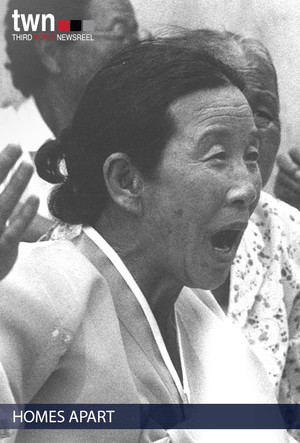
They speak the same language, share a similar culture and once belonged to a single nation. When the Korean War ended in 1953, ten million families were torn apart. By the early 90s, as the rest of the world celebrated the end of the Cold War, Koreans remain separated between North and South, fearing the threat of mutual destruction. Beginning with one man's journey to reunite with his sister in North Korea, filmmakers Takagi and Choy reveal the personal, social and political dimensions of one of the last divided nations on earth. The film was also the first US project to get permission to film in both South & North Korea.
In Maija Blåfield’s documentary, eight former North Koreans talk about what it was like to watch illegal films in a closed society. In addition to the 'waste videos', South Korean films were also smuggled into the country via China.
Sadio's story is the classical heroes journey and and archetype for African football players. Blessed with exceptional talent, he sets out from his village to find his destiny in the world - defying his family, social structures, doubters and injuries - to come back triumphant and able to help those around him.
Pyongyang, a city full of happy people and flowers. A city of factories with smiling seamstresses and welders of locomotives. A city of power plants the illuminate department stores offering the fruits of the labour of its workers and peasants. Everybody spends their free time in sports palaces with synchronized swimming and white doves, or in the palace of cultures, where young pioneers play the accordion. Old men and women go on walks and young lovers rent boats by the river, above which arches a rainbow, a symbol of happiness and contentment.
A contemporary history of Korea(s) from a unique point of view that embraces the inner history of both South and North Korea in a single narrative.
They’ve become the human face of inhuman barbarity. Leaders like Hitler, Idi Amin Dada, Stalin, Kim Jong Il, Saddam Hussein, Nicolae Ceausescu, Bokassa, Muammar Kadhafi, Khomeini, Mussolini and Franco governed their countries completely cut off from reality. These paranoid leaders were driven to abuse their power by the pathology of power itself. Dictators are driven by a relentless, thought-out determination to impose themselves as infallible, all-knowing and all-powerful beings. But they are also men ruled by their caprices, uncontrollable impulses, and reckless fits of frenzy, which paradoxically render them as human as anyone else. The abuses they committed were clearly atrocious, yet some of them were as outlandish as the characters portrayed in the film The Dictator. They sunk to depths worthy of Kafka: so incredibly absurd, they are outrageously funny.
Cristiano Ronaldo: The World at His Feet follows the footballer from his beginnings in Portugal, breakthrough start with Manchester United and current career at Real Madrid.
Shrouded in secrecy and notoriously cash-strapped the North Korean regime has resorted to running one of the world's largest slaving operations - exploiting the profits to fulfil their own agenda. These bonded labourers can be found in Russia, China and dozens of other countries around the world including EU member states. Featuring undercover footage and powerful testimonials, we reveal the scale and brutality of the operation and ask what, if anything, is being done to stop it.
From 1950 to 1953, one hundred thousand children were orphaned by the Korean War. With no resources to mend the wounds, the two sides, North and South, took different paths to find homes and families for the war orphans. While the children of South Korea were sent to Europe and the United States through ‘International Adoption’, the children of North Korea were distributed across Eastern Europe through a method called ‘Commissioned Education’. As a result, more than five thousand children from the North had to spend nearly a decade living in foreign lands across Eastern Europe. This story is a record of their lives, which used to be kept hidden from the rest of the world. There is a key to understanding how North Korea's closed political structure began and how the ‘Juche ideology’ was formed in this documentary movie. Understanding North Korea in the 1950s is an important way to understand North Korea at present.
North Korea. The last communist country in the world. Unknown, hermetic and fascinating. Formerly known as “The Hermit Kingdom” for its attempts to remain isolated, North Korea is one of the largest sources of instability as regards world peace. It also has the most militarized border in the world, and the flow of impartial information, both going in and out, is practically non-existent. As the recent Sony-leaks has shown, it is the perfect setting for a propaganda war.
A real-life undercover thriller about two ordinary men who embark on an outrageously dangerous ten-year mission to penetrate the world's most secretive and brutal dictatorship: North Korea.
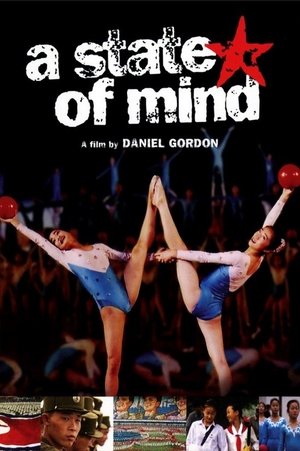
Over the course of one year, this film follows the life of an ordinary Pyongyang family whose daughter was chosen to take part in Day of the Shining Star (Kim Jong-il's birthday) celebration. While North Korean government wanted a propaganda film, the director kept on filming between the scripted scenes. The ritualized explosions of color and joy contrast sharply with pale everyday reality, which is not particularly terrible, but rather quite surreal.
Haílton Corrêa de Arruda, better known as Manga, maintained his residence in Ecuador. His and his wife's dream was Maria Cecília Cisneros to return to live in Brazil. At the beginning of the announcement of the pandemic, Manga arrived in Brazil to be honored by the players of Botafogo, to meet his only son who has not been there for years and to come across the transforming invitation of actor Stepan Nercessian.
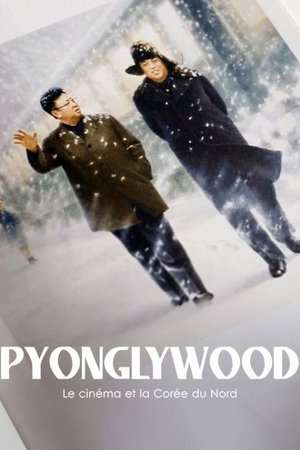
Hong Kong, 1978. South Korean actress Choi Eun-hee is kidnapped by North Korean operatives following orders from dictator Kim Jong-il.
The decisive years of Swedish soccer player Zlatan Ibrahimović, told through rare archive footage in which a young Zlatan speaks openly about his life and challenges. The film closely follows him, from his debut with the Malmö FF team in 1999 through his conflict-ridden years with Ajax Amsterdam, and up to his final breakthrough with Juventus in 2005.
The tragic story of the greatest soccer player the most have never heard of.
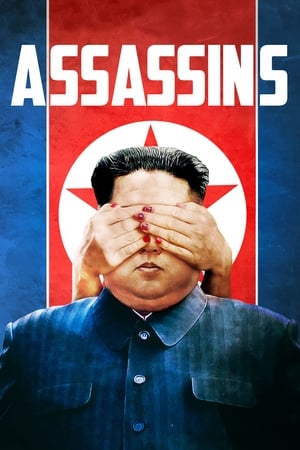
A journey through several countries to find those who really know Kim Jong-un, North Korea's leader, in an attempt to profile a contradictory dictator who seems to rule his nation with both disturbing benevolence and cold cruelty while being worshipped as a living god by his subjects in exalted displays of ridiculous fanaticism.