Vienna’s Prater is an amusement park and a desire machine. No mechanical invention, no novel idea or sensational innovation could escape incorporation into the Prater. The diverse story-telling in Ulrike Ottinger’s film “Prater” transforms this place of sensations into a modern cinema of attractions. The Prater’s history from the beginning to the present is told by its protagonists and those who have documented it, including contemporary cinematic images of the Prater, interviews with carnies, commentary by Austrians and visitors from abroad, film quotes, and photographic and written documentary materials. The meaning of the Prater, its status as a place of technological innovation, and its role as a cultural medium are reflected in texts by Elfriede Jelinek, Josef von Sternberg, Erich Kästner and Elias Canetti, as well as in music devoted to this amusement venue throughout the course of its history.
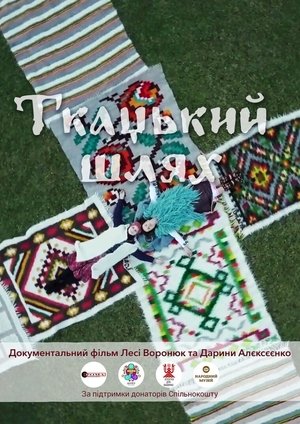
The story of the everyday life of one of the most unknown countries on the European continent. The film tells the stories of heroes from different parts of Ukraine, their life and life, crafts and art, interesting initiatives and culture. The characters of this film are not interconnected, their worlds are different, however, this difference unites the country.
Every year, thousands of Antarctica's emperor penguins make an astonishing journey to breed their young. They walk, marching day and night in single file 70 miles into the darkest, driest and coldest continent on Earth. This amazing, true-life tale is touched with humour and alive with thrills. Breathtaking photography captures the transcendent beauty and staggering drama of devoted parent penguins who, in the fierce polar winter, take turns guarding their egg and trekking to the ocean in search of food. Predators hunt them, storms lash them. But the safety of their adorable chicks makes it all worthwhile. So follow the leader... to adventure!!
Examines the subject of homosexuality in animals. Scott Capurro visited various collections of captive animals to observe animals which had been reported to exhibit homosexual behaviour, and interviewed the staff about this. The show also included an interview with anti-gay rights campaigner and politician, Janet Young, where Capurro showed Young a video of a variety of male-male intercourse and female-female mating attempts in various animal species, and then asked her to comment on whether this influenced her views about its "unnaturalness"
The Pickle Family Circus was founded by Lorenzo Pisoni's parents in 1974. The film documents the spirit, the lunacy, the daring, the danger and the dynamics of growing up in a circus family.
Life on the road in India, showing the traffic, people and animals.
A short documentary where we learn about the endangered lemurs, owls and otters from the Knockhatch Conservation staff.
Drawing upon a vast and richly visual archive and featuring a host of performers, historians and aficionados, this four-hour mini-series follows the rise and fall of the gigantic, traveling tented railroad circus and brings to life an era when Circus Day would shut down a town and its stars were among the most famous people in the country.
Laika, a stray dog, was the first living being to be sent into space and thus to a certain death. A legend says that she returned to Earth as a ghost and still roams the streets of Moscow alongside her free-drifting descendants. While shooting this film, the directors little by little realised that they knew the street dogs only as part of our human world; they have never looked at humans as a part of the dogs’ world.
Following Sir Brian May over a decade-long journey to understand the crisis caused by bovine tuberculosis and his opposition to the controversial badger cull, implemented to curb the spread of the disease in cattle. It’s a story surrounded by controversy, but one little known to many - a tale of tragedy for both humans and animals.
A young girl has already seen everything there is to see and her world has lost all meaning. Her anger shatters her world and she finds herself in the universe of QUIDAM, where she is joined by a playful companion, as well as another mysterious character who attempts to seduce her with the marvelous, the unsettling and the terrifying.
Alegría is a mood, a state of mind. The themes of the show, whose name means "jubilation" in Spanish, are many. Power and the handing down of power over time, the evolution from ancient monarchies to modern democracies, old age, youth - it is against this backdrop that the characters of Alegría play out their lives. Kings' fools, minstrels, beggars, old aristocrats and children make up its universe, along with the clowns, who alone are able to resist the passing of time and the social transformations that accompany it.
From the Italian 'saltare in banco' – which literally means 'to jump on a bench' – Saltimbanco explores the urban experience in all its myriad forms. Between whirlwind and lull, prowess and poetry, it takes spectators on an allegorical and acrobatic journey into the heart and soul of the modern city.
Icarus is the main character of Varekai, who falls to the ground, breaking his legs as he does. He is suddenly in a strange, new world full of creatures he has never seen before. Parachuted into the shadows of a magical forest, a kaleidoscopic world populated by fantastical creatures, this young man sets off on an adventure both absurd and extraordinary.
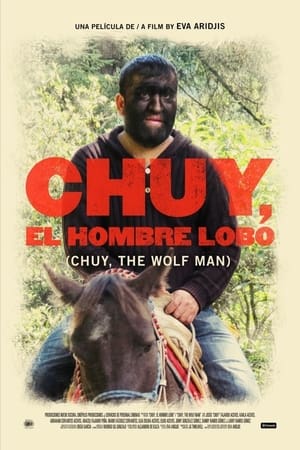
Jesus 'Chuy' Aceves and a dozen living members of his extended family suffer from the very rare condition of congenital hypertrichosis, meaning they were born with excessive hair on their faces and bodies. Due to their appearance, they suffer from discrimination in all areas of their lives: the children are made fun of at school and abandoned by their 'non-hairy' parents, and the adults cannot find work unless they choose to exhibit themselves as freaks in circuses. This moving and visually arresting documentary is a portrait of Chuy and his family members. It examines their day-to-day lives and their struggle to find love, acceptance and employment.
This documentary highlights the evolution of Brazil's Circo Voador venue from homespun artists' performance space to national cultural institution.
Thirty years after the Chernobyl disaster, which occurred on the night of April 26, 1986, its causes and consequences are examined. In addition, a report on efforts to strengthen the structures covering the core of the nuclear plant in order to better protect the population and the environment is offered.
Travel around the globe to some of the best zoos, which are striving to fill a new role that relates directly to environmental education.
The feature-length documentary Fakir portrays the success of fakirism in Brazil, Latin America and France. This circus art origin show is presented and analyzed through archives that reveals the success of these presentations with their pain resistance championships and the great public presence, including politicians and government officials. Fakir spans current footage from contemporary artists who keep this art alive in performances and shows.
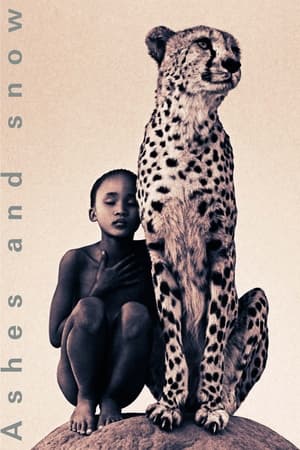
Ashes and Snow, a film by Gregory Colbert, uses both still and movie cameras to explore extraordinary interactions between humans and animals. The 60-minute feature is a poetic narrative rather than a documentary. It aims to lift the natural and artificial barriers between humans and other species, dissolving the distance that exists between them.