The Indian government announces a country-wide lockdown for 21 days due to the pandemic. India Lockdown encapsulates the story of four out of lakhs of individuals whose lives came to a standstill.
A heartwarming tale of good-samaritanism: A poor but large-hearted young man gives shelter to three helpless, forlorn people in his home--an abandoned railway coach. However, tensions arise in the group when he marries one of the inmates, a destitute young girl, since one of the other inmates loves her too. The group breaks up and the coach is abandoned. Time passes, fortunes turn, and penitence brings the group back together.
Two lovers are separated by the girl's conniving uncle, who marries her off to another man. Heartbroken, the man wanders around aimlessly until a common friend decides to reunite the two lovers.
The film, set in the 1980s and 90s, chronicles the transformation of Bombay to Mumbai. The story is a cat and mouse game between a deadly don, Amartya Rao, who doesn’t think twice before killing, and there’s nobody who could stop him and a cop, who is dogging his every step.
Chandramukhi, the city educated daughter of the village zamindar returns to Ramnagar, a typical village. There she meets her childhood friend Birju aka Brij Mohan. He has a lovely voice and she encourages him to pursue singing. Eventually Brij and Chandramukhi fall in love, but Chandramukhi's father cuts it abruptly and sends her to Lucknow. A short while later Brij arrives at Lucknow. Gitanjali, Chandramukhi's friend, is thrilled by his voice and helps him get a job at Aakashvani through her father. Brij returns to Ramnagar to ask Chandramukhis hand in marriage but is once again rebuked. He returns and goes on to become a great singer in Mumbai with Gitanjali by his side. All through he yearns for Chandramukhi as she yearns for him. How he manages to marry her forms the rest of the story.
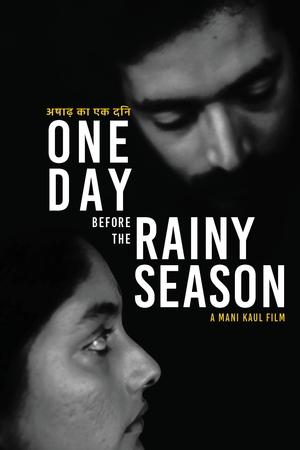
In a poetic hour and a half, director Mani Kaul looks at the ancient art of making pottery from a wide variety of perspectives.
The story centers around a small town entrepreneur named Maniram who makes a major profit by cheating people and selling them tainted food. His business is run by his daughter-in-law Tejo, who is married to Maniram's mentally challenged younger son. When Maniram's elder son comes back into town to get married, things start to go awry.
This film suggests a network of hierarchical relations between people through sometimes subtle and at other times blunt illustrations.
When he experiences chest pains, hopeless hypochondriac Bhagwant checks into the hospital for a checkup and overhears his doctor discussing the diagnosis of a terminally ill patient with an associate. Assuming he is the one scheduled to die, he asks his friend to help him find a new husband for his wife Priya so he'll know she won't be alone once he's gone. He locates Priya's old college beau Fernandes. Meanwhile, Priya mistakes her husband's machinations for an attempt to cover up an extramarital affair and throws him out of the house.
Durgadevi rules her household with her brother, Makhanlan, and treats daughter Shanti worse than she treats servants; her other daughter is Roopa. When the younger women are approached for marriage, Durgadevi refuses.
Karan hires Lata as his secretary and asks her to move to one of his cottages with her family. However, things take a turn when she is accused of stealing a valuable necklace.
Dr. Anand Kumar joins a village clinic, works hard despite difficulties. He marries Nisha but later neglects her after becoming a successful doctor. Nisha leaves him when she realizes his changed priorities.
Rajputana, India, 13th century. The tyrannical usurper Alauddin Khilji, sultan of Delhi, becomes obsessed with Queen Padmavati, wife of King Ratan Singh of Mewar, and goes to great lengths to satisfy his greed for her.
A young lawyer is involved with a ghostly woman in his new house, where the builder and his fiancée died shortly after it was built.
A caretaker is trapped in a time loop with her husband on one hand, and his brother and ruthless sister-in-law on the other.
This portrayal of the rhythm of life and work in a gigantic textile factory in Gujarat, India, moves through the corridors and bowels of the enormously disorienting structure—taking the viewer on a journey of dehumanizing physical labor and intense hardship.
Jennie, the atheist foreign wife of Akbar, son of pious and honest institutional head, finds life in her in-laws house stifling and agrees to participate in a dance program much against their protestations. A paralytic stroke makes her turn towards reading the Koran, which miraculously cures her of her ailment. She decides to devote the rest of her life in prayers.
A naive bullock-cart driver falls for a traveling dancer.
Shahjehan (a raw Rehman in one of his first releases) is approached by a Rajput chieftain, Jwala Singh, narrating the plight of his foster daughter, Ruhi (Ragini), who is blessed with unheard of beauty. This gives rise to an army of suitors, who indulge in violence to prevent her from getting married by scaring her to-be grooms. Her beauty, confined to four walls of Jwala's haveli becomes part of folklore, and street gossip, through the poetry of Sohail (Saigal) who accidentally catches her glimpse, and falls in love with her.
Set in Mumbai, the story unfolds in a hospital that is under siege, where Vivaan Ahuja and his wife Anshika are trapped. Does he manage to rescue her and other hostages from the dangerous hoodlums?