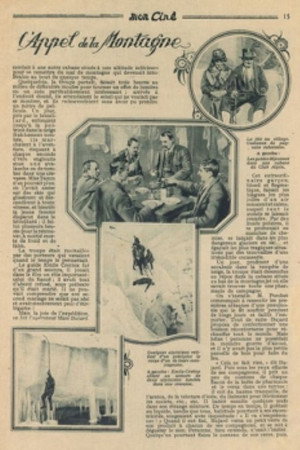
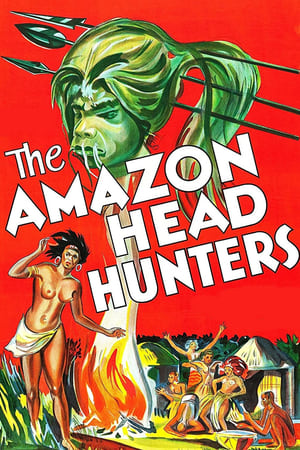
It is thanks to this film that the Marquis gained notoriety with a wider audience. The film is the result of film footage shot between May 1926 and June 1930 in several South American countries. Departing from Guayaquil, he first went to the Galapagos Islands in the Pacific. Upon returning to the capital of Ecuador, chance brought him to the Ocaina Indians, the Boro, the Napo, the Jivaro and the Piro. He explored the Incan mines of Machu Picchu, discovered only a few years prior, and ended his journey on the famed Guano islands. The musical score, inspired by traditional Indian music, was created by Maurice Jaubert.
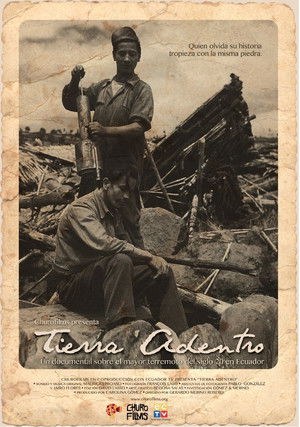
Atahualpa works on the construction of a road that will cross the Llanganates Mountain Range, where it is said that the treasure of Inca Atahualpa was hidden in 1533. One night, Atahualpa is the guide of an expedition that goes in search of the treasure at the beginning of the 20th century.
Picchu is a story that follows the journey of an Andean girl named Mayu and the unconditional support of her mother. The path will not be simple. Mayu will rely on her determination and her mother's teachings to overcome her fears and doubts to fulfill her destiny. Picchu reflects the reality of many children around the world.
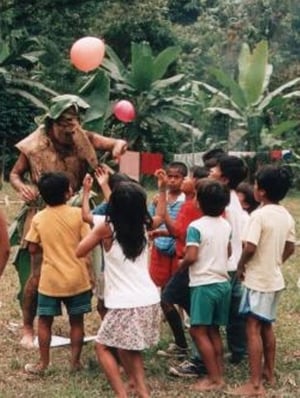
A 13-year-old Indian boy is found unconscious after being attacked in the jungle by the evil spirit Fayu Ujmu. A shaman attempts to ritually tame the spirit and advises the boy’s father to capture it. This story is based on a Chachi Indian legend; it was shot with indigenous inhabitants of the jungle community of Loma Linda, on the Rio Cayapas.
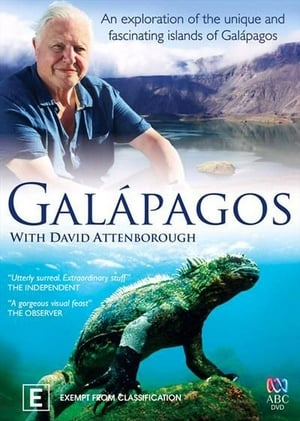
Two hundred years after Charles Darwin set foot on the shores of the Galápagos Islands, David Attenborough travels to this wild and mysterious archipelago. Amongst the flora and fauna of these enchanted volcanic islands, Darwin formulated his groundbreaking theories on evolution. Journey with Attenborough to explore how life on the islands has continued to evolve in biological isolation, and how the ever-changing volcanic landscape has given birth to species and sub-species that exist nowhere else in the world. Encompassing treacherous journeys, life-forms that forge unlikely companionships, and survival against all odds, Galápagos tells the story of an evolutionary melting pot in which anything and everything is possible.
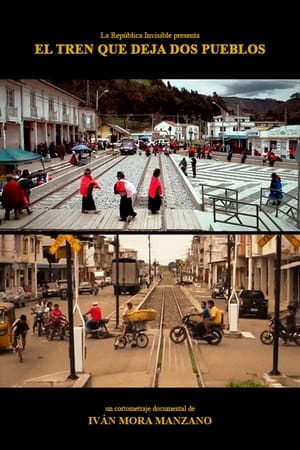
In Ecuador, in a single day, the train passes from the mountainous Andes to the tropical coast. The roads were built between 1861 and 1908 to connect the country. Until this date, the two regions live as separate countries, although the roads connect them in less than a day. The film is an observational work that talks about space and collective memory.
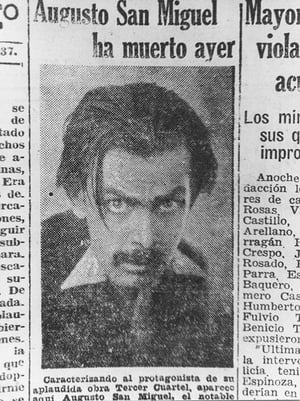
During the 1920's, Augusto San Miguel (1905-1937) directed, produced and starred in the first feature films made in Ecuador. Unfortunately, San Miguel's films -like many episodes of his life- disappeared in time. The only remains are the movie ads on old newspapers and a mysterious legend, by which San Miguel was buried with his films.
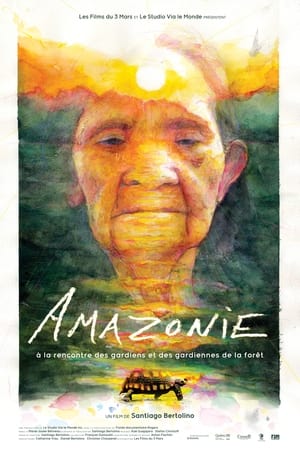
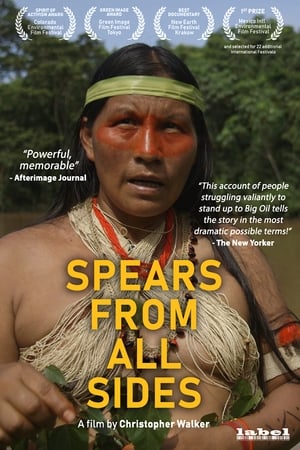
With a hybrid style blending political essay and road movie, this documentary by Santiago Bertolino takes us into the heart of the Amazonian reality. Following Marie-Josée Béliveau, an ecologist and ethnogeographer, they journey together along the 4000 km from the mouth of the Amazon River in Brazil to one of its sources in Ecuador where they meet with the guardians of the forest. As a result, we witness powerful and spontaneous testimonies from local communities who are doing everything to preserve what remains of their lands, which are disappearing due to the inexorable advance of Western modernity.
POLITICAL DOCUMENTARY: Presents various aspects of the political, economic, military, and cultural interests of the U.S. abroad, showing some of the ways in which the foreign service protects and advances these interests in Ecuador. Shows views of the city jail in Quito where an imprisoned American is in need of help, of docks at Guayaquil where the American Attache works among laborers and officials of the banana loaders trade union, and of the Presidential palace where U.S. Ambassador Maurice Burnbaum discusses the Alliance for Progress with the ruler of Ecuador.
Scenes of daily life in the Indian communities of Ecuador.
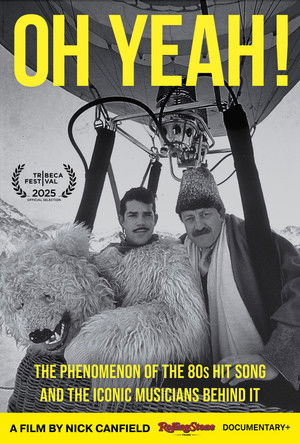
The story of the iconic electronic music group Yello and the phenomenon of their 1980's hit song, exploring the song’s cultural impact and its enduring place in the American psyche.
November 7th, 2001. After a seventy years absence, the Ecuadorian national soccer team is close to qualifying for the first time to a Soccer World Cup. This documentary follows the events that took place during that historic date, when a whole country lived under the shadow of a soccer game.
In preparation for a feature-length film about windmills, an assistant director travels through the Vaud region to search for locations with windmills. The research leads to a serious engagement with the meaning and purpose of windmills, which has something Don Quixote-like about it in the age of nuclear power stations. The transitions between document and fiction flow constantly and result in a charming and intellectual mixture of seriousness and fun, determination and coincidence, weightlessness and the weight of meaning.
The life and works of Ecuadorian writer Marcelo Chiriboga, a key figure of the Latin American literature and member of the “boom” generation. Through interviews, visits to different cities, archival footage and his most important book, a puzzle is woven that blurs the boundaries between reality and fiction.
Starting from the Swiss village of Zermatt, two people and a guide make a perilous ascent of the Matterhorn. Local villagers mount a torchlight rescue of a British couple trapped on the famous mountain. Irving Allen shot footage for this documentary while filming his feature film 'High Conquest'. Filmed in Ansocolor, the documentary won the Academy Award for Best Short Film in 1947.
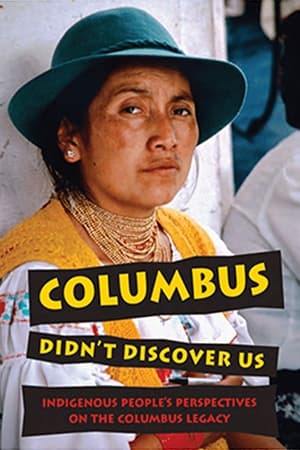
The historic gathering of three hundred indigenous activists from North, South and Central America who met in Quito, Ecuador, in July 1990 to organize a cross-continental indigenous resistance to the Columbus Quincentennial.
For consumers, bananas are a delicious and nutritious start to the day, a healthy snack and a fixture in our fruit bowls. For millions of residents in the banana lands, the production of bananas means social upheaval, violence and pesticide poisoning. Banana Land explores the origins of these disparate realities, and opens the conversation on how workers, producers and consumers can address this disconnect.
Geislemacher
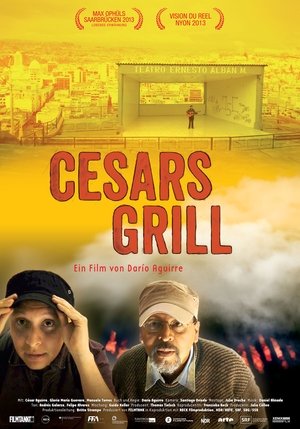
In order to rescue his father's ramshackle grill restaurant, filmmaker and vegetarian Dario Aguirre is traveling back to his homeland Ecuador. What starts out as a strange debate about opening times, chips and Excel spread sheets, develops into a moving family drama.
Lisa, the brothel madam of the luxurious “Le Vénusia” in Geneva, and Lena, an artless prostitute as unpredictable as she is lazy, are filmed in the intimacy of a smoking room—where their relationship will combine tenderness and cruelty.