Adapted from the series aired in 2001. Looking for inspiration during the holidays, Nando sees Anita as the ideal character for his novel. She lives in a townhouse where a passionate crime happened in the past. Intense, Anita seduces Nando and awakens to
Ah Hing is made pregnant by her master Fan Chun-kit. Fan soon leaves for his studies overseas while Ah Hing suffers gross prosecution and is reduced to becoming a prostitute. In a momentary slip of a struggle, Ah Hing commits manslaughter. Now a qualified lawyer, Fan acquits Ah Hing of the charge, and intends to marry her to redeem his negligence in the past. Ah Hing, however, is determined to pursue an independent life.
Five Sydney-based youngsters navigate life, experience friendship, seek love, delve into their sexuality, and face the challenges of being a part of the LGBTQ+ community.
Bus Money dons various disguises on public buses to protect the defenceless from the bullies and receives heroic praise. Money meets Tai Ngau, a righteous journalist, when they bear witness to the callous response of Manager Mo to the death of his servant Ah-kwai. Tai writes to redress grievances of the deceased. When visiting the family of orphans, he chances on his kindred spirit giving the eldest daughter Ah-yin a gift of gold. Money exploits the weakness of Mo and her connection with his son Sze-fu to swindle a fortune out of the lewd man for the benefits of the fatherless children. Her rage grows learning that Mo's friend Fong Hak-sang has pulled off a lucrative fraud on returned overseas Chinese and forces Ah-yin to pledge herself in paying off her father's debts. Money, who has all kinds of tricks up her sleeve, teams up with Tai and gives Mo and Fong their comeuppance before setting off on her next mission.
Industrialist Tam Kar-cheung knowingly puts the lives of his workers at risk so as to line his pocket with insurance payments. The chivalrous Bus Money gets into fisticuffs with Tam's chauffeur, Tam Biu, who bears a grudge against the assailant. When Money catches wind of Kar-cheung's vicious plot to set fire to a squatter area to clear the path for a property development project, she moves in and watches vigilantly for signs of arson. Soon, she saves Ah-hau, Biu's girlfriend and a young victim of drug rape, from her suicidal attempt by drowning. Money pursues fragments of clues which lead her to the victim's boss, Taipan Cheung who sucks up to his master Kar-cheung by drawing his prey to her trap. Money then organises squatter residences into fire brigade to guard against arson attacks and exposes Kar-cheung's evil. Realising he has been exploited for his blind loyalty, Biu teams up with Money to dispense justice.
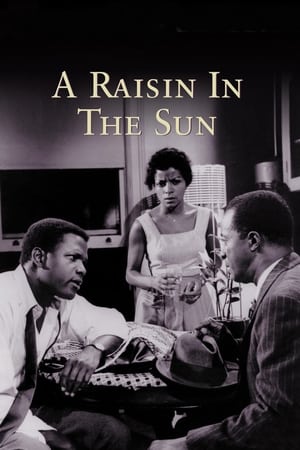
Walter Lee Younger is a young man struggling with his station in life. Sharing a tiny apartment with his wife, son, sister and mother, he seems like an imprisoned man. Until, that is, the family gets an unexpected financial windfall.
A poor taxi driver offered a chance for a better financial future must weigh up the cost of walking away from what he most values. // In a world first omnibus collaboration between emerging Asian movie powerhouses, China, Korea and Australia, comes the classic adaptation of Loa She’s The Rickshaw Boy. Set in three locations, across three countries each thirty minute chapter tells the story of one man’s struggle for survival amidst the age of disruptive technology and explores the intimate relationship that has come to exist between man and machine and the evolution of that relationship.
Shun and Nagisa first meet and fall in love during their first year of high school. While Shun is graduating from university, Nagisa tells him that he doesn't see a future for them. Despite Shun's strong feelings, they go their separate ways. Years later, Shun is now a store owner, living alone in a rural area. Out of the blue, Nagisa arrives with his six-year-old daughter, Sora. Spending time together, Shun realizes he still harbors feelings for Nagisa. Can Nagisa reconcile with his feelings for Shun, which have been there all along?
At the strong insistence of his father, Ushimatsu Segawa conceals his origins from a “buraku” area of low-class “untouchables,” leaving his hometown to serve as an elementary school teacher where he excels and is loved by his students. But he constantly struggles with the secret of his low-birth status and is disturbed by all of the discrimination levelled upon his class. It prevents him from pursuing a romance with Shiho, whom he meets at the temple where he resides, but who descends from a samurai family.
Lee Sun-fung is renowned for adapting literary classics for the silver screen. To commemorate the seventh anniversary of the Union Film Enterprise known for producing quality films and co-founded by Lee, Human Relationships is adapted from writer Ba Jin's novel into film. The Yiu family moves into a manor. Mrs Yiu, while frustrated by the way her step-son is spoiled by her husband and mother-in-law, develops a friendship with a kid (Michael Lai) who steals flowers from the mansion's garden. She later learns that he is the son of the place's former owner whose downfall at middle age is the result of being spoiled when young. Lai was only a child but gained a foothold among seasoned veterans like Cheung Wood-yau, Ng Cho-fan and Pak Yin.
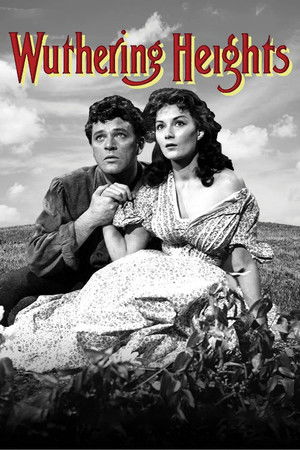
Mistreated foundling Heathcliff and his stepsister Catherine fall in love, but when she marries a wealthy man, he becomes obsessed with getting revenge, even well into the next generation. [Originally aired on CBS's DuPont Show of the Month.]
Songstress Mui Yee-wah falls head over heels for painter Wai Tik-fung despite their age difference. Because Wai is a married man, Mui's mother is against the match. Mui falls ill from grief. Rich heir Siu Kar-wai seizes the chance to successfully propose to Mui. However, Siu is unable to let go of Mui's past. In a fit of anger, he fires a deadly shot at Wai.
Ko Suk-ying is saddened over her arranged marriage as manipulated by her father Hak-ming. Ko Kok-sun's Cousin Chow Wai's spends the Mid-Autumn Festival before her marriage with the Kos. She has been in love with Sun. Sun finds out about her love for him when she is about to be married off, he is too weak to oppose to Wai's betrothal to another man. Sun's son, Hoi-sun, falls ill. Fearing the displeasure of his elders, Sun dares not consult a western doctor. Meanwhile, another dispute arises among members of the family over the ancestral land. When accused of being incompetent in his management, Sun takes the blame silently. Wai dies of grief while Hoi-sun becomes a victim of mistreatment. Sun is devastated at this double blow. Hak-ming instructs Sun to arrange for Ying's wedding. Knowing the kind of man Ying's fiancee is, Sun is reluctant. Not wanting to follow in Wai's footsteps, Ying fights for her own rights, and backed by an enlightened Sun, she leaves for a new start.
An adaptation of the J.P. Sartre story "Le Mur". What goes on in his mind and what happens outside when he has left only few more hours left to live. The existential dilemmas of a prisoner condemned to death from a repressive regime for his participation in a resistance movement and his friendship with the leader of this resistance. When all seems lost and he has already given up the most unlikely coincidence changes the course of events and his life.
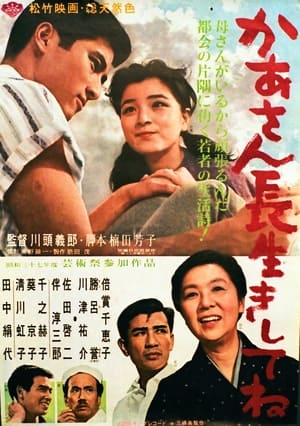
After finishing the course of junior high school, Kazuo comes up to Tokyo, leaving his mother alone in the unproductive northern district. He finds a job in a small laundry in downtown Tokyo and works hard till late at night. At a nearby restaurant a brother and sister are working, and Kazuo becomes friendly with the girl, Yoneko. Love blossoms between the two. However, Yoneko's brother objects to his sister marrying Kazuo.
Three intertwining stories that take place in La Salada — the largest unregulated market in Buenos Aires: a Korean father prepares his daughter for an arranged marriage, a young Bolivian man searches for work, and a Taiwanese DVD seller tries to woo a young woman to be his girlfriend.
Framed for murder and left for dead, a local legend comes back to make the guilty pay as he seeks revenge on those who killed his family, in this traditional Western about one man who stood against injustice.
"Family" (1953), which launched the Union Film legacy, "Spring" (1953) and "Autumn" (1954) are adaptations of Ba Jin's highly regarded novel "Torrent Trilogy". In "Family", director Ng Wui skilfully condenses the voluminous first part of the novel into an emotionally powerful and intellectually focused story of youngsters struggling to survive oppression and repression in a feudalistic family. This well-received film quickly established the company's reputation.
Based on a short story by Sinclair Ross, this short film recalls rural life on the Prairies in the 1930s. In the film a farmer's young son, sent to town to hire a man for the harvest, readily accepts when an itinerant trumpet player, down on his luck, begs a chance. He is hardly the kind of man the boy's father had in mind, but that night his trumpet speaks from the shadows and everyone pauses to listen.
In the affluent, gated community of Camelot Gardens, bored wives indiscriminately sleep around while their unwitting husbands try desperately to climb the social ladder. Trent, a 21-year-old outsider who mows the neighborhood lawns, quietly observes the infidelities and hypocrisies of this overly privileged society. When Devon, a 10-year-old daughter from one family, forges a friendship with Trent, things suddenly get very complicated.