In 2025, as MLB's Dodgers and Cubs clash in Tokyo for a historic season opener, their games become a lens into Japan's passionate baseball culture and the values that bind two nations through America's pastime.
On Oct. 17, 1989, at 5:04 p.m. PT, soon after Al Michaels and Tim McCarver started the ABC telecast for Game 3 of the World Series between the San Francisco Giants and the Oakland Athletics, the ground began to shake beneath Candlestick Park. Even before that moment, this had promised to be a memorable matchup: the first in 33 years between teams from the same metropolitan area, a battle featuring larger-than-life characters and equally colorful fan bases. But after the 6.9 Loma Prieta earthquake rolled through, bringing death and destruction, the Bay Area pulled together, and baseball took a backseat.
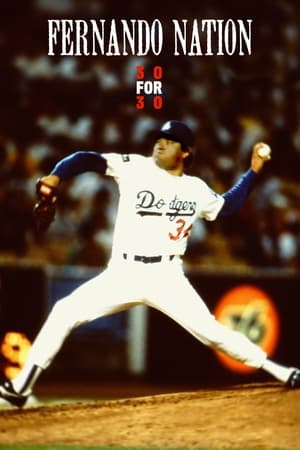
In Fernando Nation, Mexican-born and Los Angeles-raised director Cruz Angeles traces the history of a community that was torn apart when Dodger Stadium was built in Chavez Ravine and then revitalized by one of the most captivating pitching phenoms baseball has ever seen. Nicknamed “El Toro” by his fans, Fernando Valenzuela ignited a fire that spread from LA to New York—and beyond. He vaulted himself onto the prime time stage and proved with his signature look to the heavens and killer screwball that the American dream was not reserved for those born on U.S. soil. In this layered look at the myth and the man, Cruz Angeles recalls the euphoria around Fernando’s arrival and probes a phenomenon that transcended baseball for many Mexican-Americans. Fernando Valenzuela himself opens up to share his perspective on this very special time. Even 20 years later, “Fernandomania” lives.
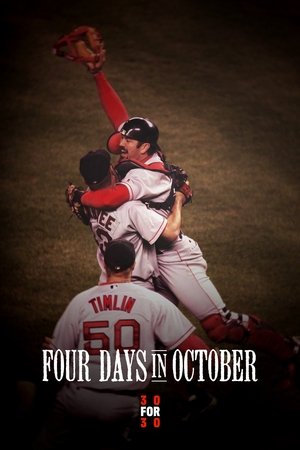
When the night of October 16, 2004 came to a merciful end, the Curse of the Bambino was alive and well. The vaunted Yankee lineup, led by A-Rod, Jeter, and Sheffield, had just extended their ALCS lead to three games to none, pounding out 19 runs against their hated rivals. The next night, in Game 4, the Yankees took a 4-3 lead into the bottom of the ninth inning, then turned the game over to Mariano Rivera, the best relief pitcher in postseason history, to secure yet another trip to the World Series. But after a walk and a hard-fought stolen base, the cold October winds of change began to blow. Over four consecutive days and nights, this unlikely group of Red Sox miraculously won four straight games to overcome the inevitability of their destiny. Major League Baseball Productions will produce a film in "real-time" that takes an in-depth look at the 96 hours that brought salvation to Red Sox Nation and made baseball history in the process.
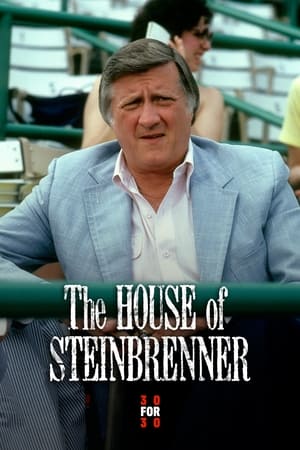
Love them or hate them, the Yankees dominated baseball for more than four decades, then sagged under ownership by CBS until a 42-year-old shipbuilder named George Steinbrenner led a purchase of the team in 1973. He turned that $10m investment into a billion-dollar business, and the 'House that Ruth Built' inspired generations of fans. Deteriorating facilities and changing revenue streams inspired Steinbrenner to build an impressive new stadium marking the end of one grand era and the beginning - perhaps - of another.
One of sport’s first and most influential megastars, beloved baseball icon and 5-time World Series champion Reggie Jackson contemplates his legacy as a trailblazing Black athlete fighting for dignity, respect, and a seat at the table in this intimate and revealing documentary exploring his life and barrier-busting career.
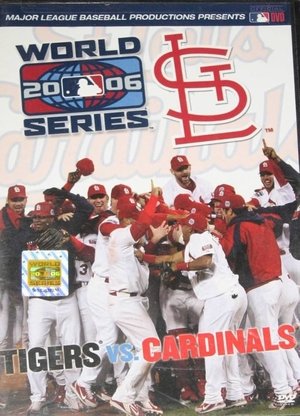
This DVD tells the story of the men who made the season memorable -- the players and personalities who made the first season at Busch Stadium unforgettable. The surprising rookies and reliable veterans, the superstars and the role-players, the fan favorites and the late-season new faces, are all saluted here, in a tribute to the heroes who brought Baseball Heaven to life and a joyful Cardinals Nation to its feet in 2006.
The film will tell the story of Mackey Sasser, a talented catcher for the New York Mets, who could hit, call pitches, block the plate and fire missiles down to second base but he couldn't throw the ball back to the pitcher. Through interviews with Mackey, his sports psychologists and commentators, as well as footage of his playing days and his treatment (which involved using a baseball to find the boyhood traumas underlying his career-ending anxiety), this program will look at the mental side of sports and probe what takes a player in and out of the "zone".
"letters to eleanore" is a poignant feature-length documentary that explores the intertwined journeys of two remarkable girls, Keith from Canto Grande in Lima, Peru, who bravely navigates life with cerebral palsy alongside her devoted mother, and Olivia from Litchfield, Minnesota, whose experiences highlight the stark contrasts in societal attitudes towards disability in their respective countries. As their narratives unfold, they are beautifully interwoven with the legacy of Eleanore and her family, whose life, untimely death, and the impact of her wheelchair ignited a powerful movement of hope for countless children and their families facing similar challenges. This film is not just a story of perseverance and love; it is a testament to the strength of community, brought to life through the collaborative efforts of volunteers, students, and communities across Peru and the United States, embodying a true grassroots style of storytelling that resonates with authenticity and compassion.
The San Francisco Giants' first mascot "Crazy Crab" rooted against the crowd, taunting players and fans to distract from the team's lackluster performance. But as the 1984 season went south, the crab quickly became a punching bag for fans who pelted it with beer bottles and batteries. Sweating inside that foam suit resembling a hamburger with claws: classically-trained actor, dancer and mime Wayne Doba.
Baseball can be a stately game. It can even seem slow and a little old-fashioned. However, this Major League Ball production, which edits together a collection of professional baseball players committing errors, blunders, collisions, tumbles, stumbles, and pratfalls, makes it look like the Keystone Kops have taken up America's Pastime. And that tends to make people laugh. Includes a segment titled "The Field of Bad Dreams."
Part of ESPN's 30 for 30 Shorts. On October 30, 2001, with the United States of America still reeling from the aftermath of the September 11 terrorist attacks, George W. Bush took to the mound at Yankee Stadium to throw the "first pitch" of the 2001 World Series' third game. Includes interviews with former United States Secretary of State, Condoleezza Rice; former New York City mayor, Rudy Giuliani; Yankees shortstop, Derek Jeter; former Yankees manager, Joe Torre; former United States Director of Central Intelligence, George Tenet; members of the Bush family; and the 43rd President of the United States, George W. Bush.
Follows the Boston Red Sox' Tim Wakefield and the New York Mets' R.A. Dickey - the only two major league pitchers who use the unpredictable knuckleball - during the 2011 season.
An examination of the 1998 MLB season and the home run race between Mark McGwire and Sammy Sosa. The two sluggers' race to hit the most home runs, later overshadowed by the steroid scandal, left a permanent mark on baseball history.
An elderly choir group brings back erased violent history by singing songs that were written in prison and have been silenced for more than 50 years.
A look at Hall of Fame inductee Mike Piazza's improbable rise from a 62nd-round draft pick to baseball immortality.
Spike Lee's Lil' Joints: Of the Father and of the Son
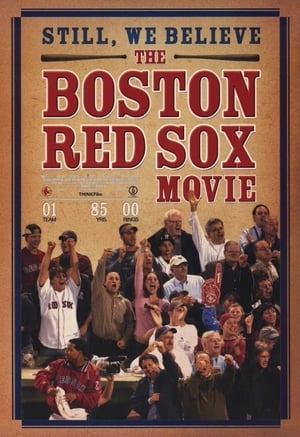
This 100-year celebration has rare footage of Red Sox southpaw Babe Ruth, Jimmie Foxx and Lefty Grove. This superb documentary bridges the gap to Ted Williams, whose hitting heroics are captured in living color along with the history of Fenway Park itself, from Opening Day, 1912, through the "Impossible Dream" season of 1967.
The Toronto Blue Jays — the defending champions — sleek, corporate, efficient — featuring an offensive arsenal that hit a collective 0.311 in the six-game series. The Philadelphia Phillies — a last-to-first success story — with their long hair, beards, and blue-collar work ethic — a softball team in pinstripes. This was a World Series that won't soon be forgotten. A six-game slugfest that sent pitchers scurrying to the showers. The heroes were named Dykstra, Molitor, Schilling and Alomar. The games were unforgettable. The sheer drama of Game Four — with its runs, hits, and duration — all records. The surgical precision of Curt Schilling's shutout in Game Five. And Joe Carter's incredible three-run blast to win Game Six — just the second time in history a home run has ended a World Series.
Dandara: Enquanto Morar for um Privilégio, Ocupar é um Direito