Lágrimas rojas
A documentary chronicling the adolescent years of Elie Wiesel and the history of his sufferings. Eliezer was fifteen when Fascism brutally altered his life forever. Fifty years later, he returns to Sighetu Marmatiei, the town where he was born, to walk the painful road of remembrance - but is it possible to speak of the unspeakable? Or does Auschwitz lie beyond the capacity of any human language - the place where words and stories run out?
An account of a young Italian boy who was taken in by a Canadian military unit during World War II.
The 1992 suicide of a young Iranian refugee in a small Canadian town prompted filmmaker Masoud Raouf to examine his own past as a political prisoner in Iran who helped fight for democracy, only to be persecuted by the ayatollah's regime. Raouf's documentary features historical footage and interviews with veterans of the 1979 revolution, who watched with dismay as their homeland traded a despot for a religious dictatorship.
When his family moves from their home in Berlin to a strange new house in Poland, young Bruno befriends Shmuel, a boy who lives on the other side of the fence where everyone seems to be wearing striped pajamas. Unaware of Shmuel's fate as a Jewish prisoner or the role his own Nazi father plays in his imprisonment, Bruno embarks on a dangerous journey inside the camp's walls.
A sickly scrawny man in a striped uniform takes a shaving brush and foam, and with a sharp blade, he shaves the back of the head of Rudolf Höss, the commandant of the Auschwitz camp himself. They will never speak with one another, and Joseph (we only learn his name during the credits) will never harm Höss, will not stop the flood of horrible murders with yet another murder. This short sketch about life of a death camp makes us feel pain and grief of millions of people who had passed beyond the walls of the shaving room during the imprisonment of Joseph, the man who outlived his torturer.
Based upon the final confession of Adolf Eichmann, made before his execution in Israel, of his role in Hitler's plan for the final solution.
Free-spirited writer Juliet Ashton forms a life-changing bond with the delightful and eccentric Guernsey Literary and Potato Peel Pie Society, when she decides to write about the book club they formed during the occupation of Guernsey in WWII.
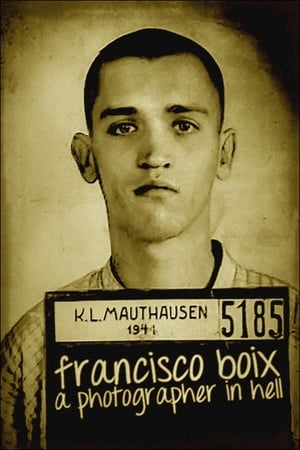
During World War II, the photographer Francisco Boix and other Spanish Republican prisoners of the Mauthausen concentration camp, where 120,000 people died, managed not only to survive their indescribable experience, but also, after the war, to reveal to the world what really happened in that hell, saving from destruction thousands of official photographs taken by the SS.
See Kenneth W. Rendell's collection of over 6,000 artifacts that range from the end of World War I and the rise of Nazism to the start of World War II and the fight in Europe and the Pacific.
Easy Company, the 2nd Battalion of the 506th Parachute Infantry Regiment of the 101st Airborne Division, fought their way through Europe, liberated concentration camps, and drank a victory toast in April 1945 at Hitler's hideout. Veterans from Easy Company, along with the families of three deceased others, recount their horrors and victories, bonds they made and the friends they lost.
Reinhard Heydrich was considered the most dangerous man in Nazi Germany after Hitler himself. The plot to kill him masterminded in England and carried through to finality in Prague in 1942, is told in this gripping dramatised documentary special. Featuring meticulous reconstructions, coupled with authentic historical film, some of it never shown before the film powerfully presents a vivid account of the only successful assassination of a leading Nazi in World War II. It also chillingly recreates the terrible human cost of SS savagery against the Resistance and the total obliteration of the village of Lidice.
1914, et soudain la guerre !
After the World War I, Mussolini's perspective on life is severely altered; once a willful socialist reformer, now obsessed with the idea of power, he founds the National Fascist Party in 1921 and assumes political power in 1922, becoming the Duce, dictator of Italy. His success encourages Hitler to take power in Germany in 1933, opening the dark road to World War II. (Originally released as a two-part miniseries. Includes colorized archival footage.)
Black marketeers Marko and Blacky manufacture and sell weapons to the Communist resistance in WWII Belgrade, living the good life along the way. Marko's surreal duplicity propels him up the ranks of the Communist Party, and he eventually abandons Blacky and steals his girlfriend. After a lengthy stay in a below-ground shelter, the couple reemerges during the Yugoslav Civil War of the 1990s as Marko sees the opportunity to exploit the situation.
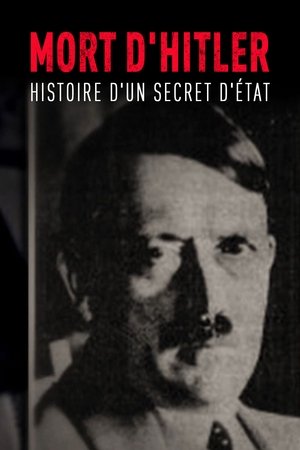
The Final Days of Adolf Hitler
Island of Java, 1942, during World War II. British Major Jack Celliers arrives at a Japanese prison camp, run by the strict Captain Yonoi. Colonel John Lawrence, who has a profound knowledge of Japanese culture, and Sergeant Hara, brutal and simpleton, will witness the struggle of wills between two men from very different backgrounds who are tragically destined to clash.
Joe Enders is a gung-ho Marine assigned to protect a "windtalker" - one of several Navajo Indians who were used to relay messages during World War II because their spoken language was indecipherable to Japanese code breakers.
Armenia, Spring 2021. Léon, a Frenchman of Armenian descent, returns to his family to bury his cousin Hrant, who died six months earlier during the 44-day war.
Italy’s biggest political party, the Five Star Movement, promotes direct democracy through internet voting. Five Star Movement uses a digital platform named Rousseau, that allows Movement’s members to vote online and express their opinion on various issues. But who governs this data?