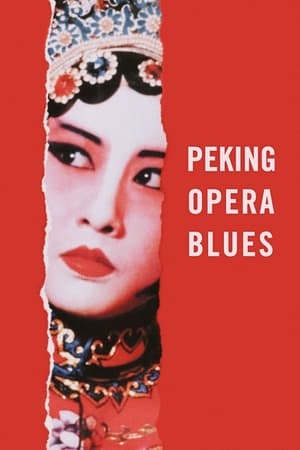
Film version of Suo Lin Nang, the popular Peking opera written by Weng Ouhong.
Gu Lingxiu's dream of becoming an actress is opposed by her grandmother. Her father Zhongqi remains ambivalent. Years ago, Zhongqi was in love with a Peking opera diva Hua Yanhong, but the lovers were separated by the matriarch. Regretful of the mistake, the matriarch discards her prejudice and allows Lingxiu to pursue her career. She also urges Zhongqi to look for Hua.
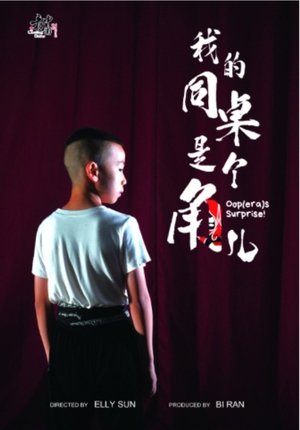
The desire of a 7 year old boy to be a member in a Chinese opera, his hard life at school and acceptance of his society.
In 1913 Beijing, three fierce women—disguised rebel Tsao Wan, jewel-seeking Sheung Hung, and opera heiress Pai Niu—embark on a daring quest filled with intrigue and betrayal, challenging societal norms amidst political turmoil and the vibrant world of Peking Opera.
天女散花
This short film delves into the Peking Opera club of the Fourth Primary School of Donggaodi in Fengtai District, Beijing, to explore what Peking Opera is like in the eyes of children. When sweat flows over the oil paint and the tender voices sing in the old tunes, what we witness is not only the inheritance of national treasures, but also the unique journey of a little soul growing between its role and itself.
She smells her fragrance, she sees her talent... The ancient love story of Cui Jianyun and Cao Yuhua. The plight of these two women is told as they fall in love due to the admiration for each other's stunning beauty and literary craft. Adapted from the Kunqu opera & story by Li Yu, "Fragrant Companion/Lianxiang Companion", this short film includes a parallel between the play and "reality." The ending has been altered from the original play.
Takes a look at the Peking Opera artist, Ah Fung, who defected to the United States after the Cultural Revolution and is now a dishwasher in Los Angeles' Chinatown
Beginning with the First Symphony, Bernstein reveals Mahler's position at the hinge of modernism, while emphasizing his emotional extremism. The uplifting Second "Resurrection" Symphony, with which Bernstein had an especially long and close association, is recorded here in a historic performance from 1973, set in the Romanesque splendor of Ely Cathedral. In the Third, Bernstein encompasses the symphony's spiritual panorama like no other conductor, with the Vienna Philharmonic players alive to every nuance.
Known for its radical and reckless theatricality, avant-garde New York troupe Radiohole's Whatever, Heaven Allows is a star-spangled American meta-melodrama inspired by film director Douglas Sirk's 1950s potboilers and Milton's epic Paradise Lost.
LUMEN & ORCHESTRA
The Bârzoi manor comes back to life when the lady of the house, Chirița, sends news that she will be soon coming back from Paris. As the City of Light has changed her views on the world, the family and the help must follow.
Musical comedy in 2 acts. The scenery represents "a country manor house", with the main character, Chirita Barzoi's house on the left, on the right "a grass couch" (for the outside), and the fence and the gate in the back, with the village in the background.
This film envisions the patriotic and tragic life of Romanian composer Ciprian Porumbescu.
During the Second World War, a fascist warden takes over a prison in Romania and plans to kill communist prisoners under the pretext of attempted escape during their forced transfer to another penitentiary.
林海峰是但噏求其大合唱
In Autumn of 1941, the German army, determined to put down a Communist-led uprising in Serbia, is conducting a policy of killing 100 hostages for any German soldier killed. The city of Kraljevo is the site of one of those massacres, portrayed in this movie.
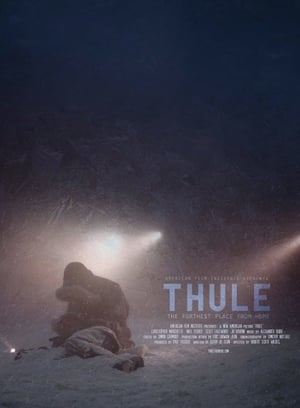
In 1962, a group of young men, stationed at a remote Air Force base, band together to undergo a dangerous mission to retrieve mail lost in the frozen landscape of Greenland.
In 2001, twelve singing divas from all over the world gathered in Taormina, in the world-famous Greek amphitheater. Under the direction of André Heller, they let their unique voices ring out in the magically illuminated venue. This "festival of the last prima donnas" included, among others, the American star soprano Jessye Norman, the "Voice of Africa" Ami Koita, the jazz singer Dee Dee Bridgewater, hailed as the "new Ella Fitzgerald," as well as the highly successful Israeli pop singer Noa and her Arab-Palestinian counterpart Amal Murkus, the "Piaf of the Gypsies" Esma Redzepova, and the reincarnation of Naples music, Lina Sastri.
Psychic TV performs live at the Berlin Atonal Festival, December 2nd, 1983.