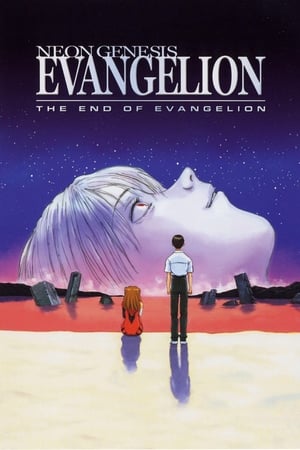
SEELE orders an all-out attack on NERV, aiming to destroy the Evas before Gendo can advance his own plans for the Human Instrumentality Project. Shinji is pushed to the limits of his sanity as he is forced to decide the fate of humanity.
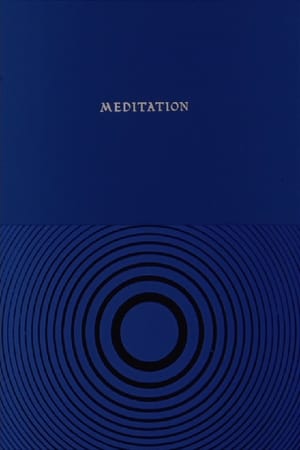
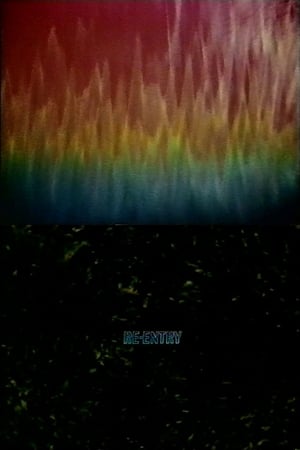
An abstract experimental short film from Jordan Belson.
An anthology of surreal films by Patrick McGuinn featuring Vincent, a puppet who is obsessed with Twinkies and pasta.
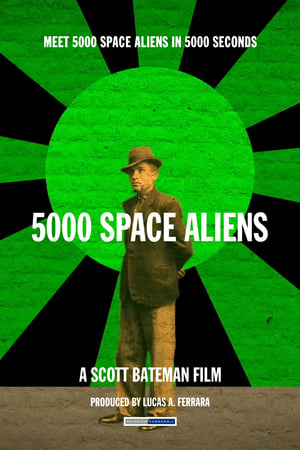
Meet 5000 space aliens in 5000 seconds in this bonkers animated film.
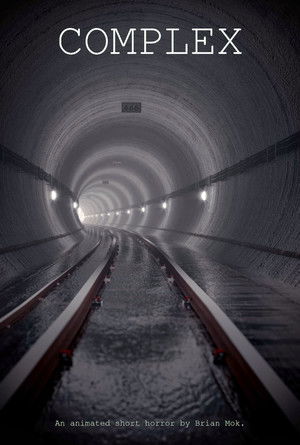
You are locked in an empty room with a camera. The room is dark. It is raining hard outside. You are a subject of Complex, a scientific experiment, whose purpose is to test the limits of the human mind. The objective is simple: stay alive.
An animated cartoon about the Creation myth reviewed and corrected by two women. God the magician has decided to create a paradise: Switzerland. He covers it with trees and cows, until Adam is born. After exploring his paradise, Adam creates Eve from one of his ribs. Man is shown as an erect penis, woman by a limbless trunk.
An anthology of one-minute films created by 51 international filmmakers on the theme of the death of cinema. Intended as an ode to 35mm, the film was screened one time only on a purpose-built 20x12 meter public cinema screen in the Port of Tallinn, Estonia, on 22 December 2011. A special projector was constructed for the event which allowed the actual filmstrip to be burnt at the same time as the film was shown.
"In Re-entry he successfully synthesizes the Yogic and the cosmological elements in his art for the first time by forcefully abstracting and playing down both of them..." P. Adams Sitney
Director's cut release of the war/mecha anime series "FLAG" features famous scenes from the series edited together into a cohesive, realistic story about war. Camerawoman Shirasu Saeko's photo of residents of a war-torn Asian country struggling to raise the flag of the UN became the symbol for the movement of peace across the land. However, on the eve of a truce, the actual flag captured in the photo is stolen and war once again threatens to plague the land. To return the flag and establish peace in the land, the UN sends a lone mechanical army called the SDC (pronounced as Seedac—Special Development Command).
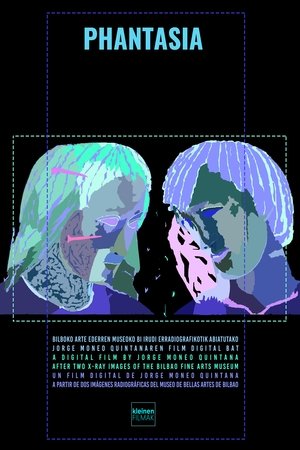
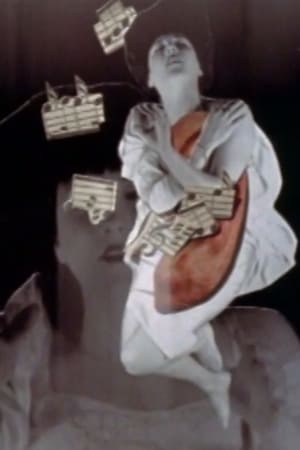
X-ray images were invented in 1895, the same year in which the Lumière brothers presented their respective invention in what today is considered to be the first cinema screening. Thus, both cinema and radiography fall within the scopic regime inaugurated by modernity. The use of X-rays on two sculptures from the Bilbao Fine Arts Museum generates images that reveal certain elements of them that would otherwise be invisible to our eyes. These images, despite being generally created for technical or scientific purposes, seem to produce a certain form of 'photogénie': they lend the radiographed objects a new appearance that lies somewhere between the material and the ethereal, endowing them with a vaporous and spectral quality. It is not by chance that physics and phantasmagoria share the term 'spectrum' in their vocabulary.
A visual representation, in four parts, of one man's internalization of "The Divine Comedy." Hell is a series of multicolored brush strokes against a white background; the speed of the changing images varies. "Hell Spit Flexion," or springing out of Hell, is on smaller film stock, taking the center of the frame. Montages of color move rapidly with a star and the edge of a lighted moon briefly visible. Purgation is back to full frame; blurs of color occasionally slow down then freeze. From time to time, an image, such as a window or a face, is distinguishable for a moment. In "existence is song," colors swirl then flash in and out of view. Behind the vivid colors are momentary glimpses of volcanic activity.
We watch white shapes dancing on black background, which changes when the white shape fills up the screen completely, and black lines and figures bounce around on the now white background.
A corridor of an apartment is transformed into a claustrophobic and vertiginous vortex that swallows and imprisons you in an infinite fall through a mise en abyme: it’s a pure enclosure inside the image world, it’s the Descent into the Maelstrom.
Animation using cutout animation to craft a bizarre science fiction experiment. Moving spheres, such as balloons and bubbles, are superimposed on static backgrounds to suggest travel and discovery.
Hans Richter, noted for his abstract shorts, has everyday objects rebelling against their daily routine.
In the 1920s, Man Ray directed four films which, although largely unknown by the general public, made him into a major figure in avant-garde cinema. His films were to be as radical as his images or objects. Included: Le Retour à la Raison, Les Mystères du Château du Dé, Emak-Bakia, L'étoile de Mer and collected shorts.
In a nightmarish world, dominated by the decline and degradation of Man , Christ resurrected wandering, across three different eras of human history.
Initially commissioned to accompany a Danish production of Alban Berg’s LULU, Lewis Klahr’s cut-out animation refigures the opera's themes in a torrent of images. With an ever-inventive approach to color and symbol, Klahr distills the title character's moral predicament, along with a great many of German Expressionism’s characteristic motifs, in the span of a pop song.
The first part depicts the heroine's toothache consequent to the loss of a very valuable watermelon, her dentistry and transportation to heaven. Next follows an elaborate exposition of the heavenly land, in terms of Israel and Montreal. The second part depicts the return to Earth from being eaten by Max Müller on the day Edward VII dedicated the Great Sewer of London.
In this short slice of transgressive punk cinema, a woman achieves accidental revenge on her boyfriend after he cruelly kills and eats the fish-stick that she had magically brought to life. Despite this tragic event, not all is lost for Lolita, as she soon meets an unexpected new friend.