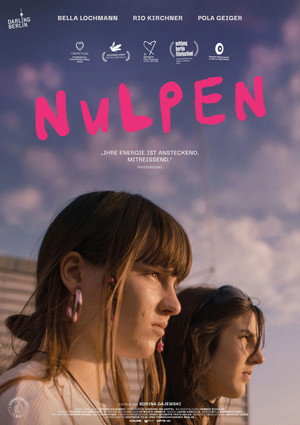
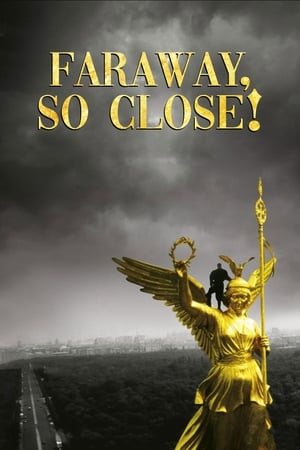
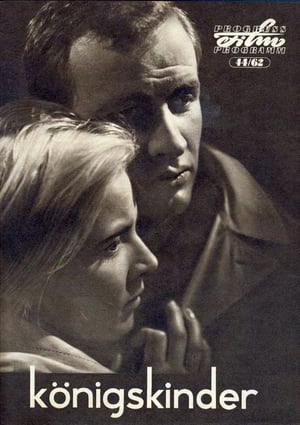
Nina, a mentally ill teenage orphan, starts a new job as a garden cleaner when she meets Toni. They fall in love but soon Toni starts betraying Nina. Meanwhile, Francoise is picked up at a Berlin psychiatric hospital by her husband, Pierre. After spotting Nina, Francoise believes that she has found her kidnapped daughter Marie, but no one believes her.
Edward Wilson, the only witness to his father's suicide and member of the Skull and Bones Society while a student at Yale, is a morally upright young man who values honor and discretion, qualities that help him to be recruited for a career in the newly founded OSS. His dedication to his work does not come without a price though, leading him to sacrifice his ideals and eventually his family.
As Tobias, a young director, supposes that his girl-friend Ellen had an affair with his brother Markus, front man of "Hansen", one year ago, he decides to shoot a documentary about the band's next tour. When Ellen joins the project, everybody's emotions boil over, although they are observed all the time.
18-year-old school boy Helmut falls in love with fellow pupil Britta. He starts working for a Peace movement to get to know Britta. Britta, however, suddenly moves to San Francisco to live with her father and whilst there, finds a new boyfriend. Helmut studies, literature and politics in his home town and have a relationship with another girl from his former school, now studying medicine at the same university but they break up after having an affair with her roommate. Helmut begins a lot of short affairs with different women but still searches for his first girl.
Undine is a historian and tour guide at the Berlin City Museum specializing in urban development, while Christoph is an industrial diver. Linked by a love of the water, the two form an intense bond, which can only do so much to help Undine overcome the considerable baggage of her former affair.
Inside the Kit Kat Club of 1931 Berlin, starry-eyed singer Sally Bowles and an impish emcee sound the clarion call to decadent fun, while outside a certain political party grows into a brutal force.
Tom Ripley - cool, urbane, wealthy, and murderous - lives in a villa in the Veneto with Luisa, his harpsichord-playing girlfriend. A former business associate from Berlin's underworld pays a call asking Ripley's help in killing a rival. Ripley - ever a student of human nature - initiates a game to turn a mild and innocent local picture framer into a hit man. The artisan, Jonathan Trevanny, who's dying of cancer, has a wife, young son, and little to leave them. If Ripley draws Jonathan into the game, can Ripley maintain control? Does it stop at one killing? What if Ripley develops a conscience?
Two angels, Damiel and Cassiel, glide through the streets of Berlin, observing the bustling population, providing invisible rays of hope to the distressed but never interacting with them. When Damiel falls in love with lonely trapeze artist Marion, the angel longs to experience life in the physical world, and finds — with some words of wisdom from actor Peter Falk — that it might be possible for him to take human form.
This is a metaphorical story about the tragic and mysterious death of the most powerful poet of 1960s, human rights activist, hero of Ukraine Vasyl Stus and his struggle with the Soviet system. The events of the film unfold during the last attempt by the KGB to seduce the poet with a whimsical "freedom".
Suffering from insomnia, disturbed loner Travis Bickle takes a job as a New York City cabbie, haunting the streets nightly, growing increasingly detached from reality as he dreams of cleaning up the filthy city.
Lola receives a phone call from her boyfriend Manni. He lost 100,000 DM in a subway train that belongs to a very bad guy. She has 20 minutes to raise this amount and meet Manni. Otherwise, he will rob a store to get the money. Three different alternatives may happen depending on some minor event along Lola's run.
The story of a German singer named Willie, who while working in Switzerland, falls in love with a Jewish composer named Robert, whose family is helping people to flee from the Nazis. Robert’s family is skeptical of Willie, thinking she could be a Nazi as she becomes famous for singing the song “Lili Marleen”.
From the youth directed novel of the same name by Greogor Tressnow comes a film by Detlev Buck that is a realistic portrait of life in the section of Berlin called Neukölln. It’s about power and weakness, delinquents and victims, and the difficulties a 15-year-old faces in a poor and criminal environment.
Lichter is an episodic tale from Hans-Christian Schmid about the life on the border between Germany and Poland. The film sheds light on the everyday stories of escape and desperateness.
When Gelsomina, a naïve young woman, is purchased from her impoverished mother by brutish circus strongman Zampanò to be his wife and partner, she loyally endures her husband's coldness and abuse as they travel the Italian countryside performing together. Soon Zampanò must deal with his jealousy and conflicted feelings about Gelsomina when she finds a kindred spirit in Il Matto, the carefree circus fool, and contemplates leaving Zampanò.
Lakshmi is a thirteen-year-old girl who lives with her family in a small hut on a mountain in Nepal. When the Himalayan monsoons wash away all that remains of the family's crops, Lakshmi's father says she must leave home and take a job to support her family. He introduces her to a glamorous stranger who tells her she will find her a job as a maid in the city. Glad to be able to help, Lakshmi journeys to India and arrives at "Happiness House" full of hope. But she soon learns the unthinkable truth: she has been sold into prostitution...
Comedian Harmonists tells the story of a famous, German male sextet, five vocals and piano, the "Comedian Harmonists", from the day they meet first in 1927 to the day in 1934, when they become banned by the upcoming Nazis, because three of them are Jewish.
One out of three silent adaptations of the novella "Les quatre diables" written by Danish author Herman Bang. The most famous one, although unfortunately lost, is without any doubt F.W. Murnau's "4 Devils". This German version, by Danish director A.W. Sandberg, was done eight years prior to Murnau's American one, and was a big success at the time.
A teen girl in 1970s Berlin becomes addicted to heroin. Everything in her life slowly begins to distort and disappear as she befriends a small crew of junkies and falls in love with a drug-abusing male prostitute.
An extroverted, cheerful, dreamer, Rosetta was raised in the “Traveling Circus of Pitibiribas”. From a very young age, she dreamed of following her parents' profession and become a circus clown, but when offered the opportunity to perform in public for the first time, she gets nervous and gets her number wrong. Consumed with the feeling of failure, she runs away before she could fulfill her dream