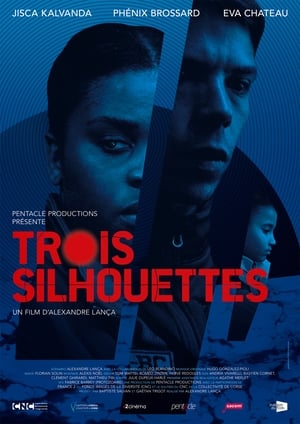
Chilean exiles in Paris discuss the problems facing them. They kidnap and attempt to re-educate a touring singer from their fatherland.
In a remote mountain village of 15th-century Joseon, humble headman Heung-do hears a rumor that any village hosting an exiled nobleman will be blessed with abundance and fortune. Hoping to bring prosperity to his impoverished community, he eagerly submits a petition to host one—unaware that his guest is none other than the fallen monarch, deposed boy-king Danjong.
After going through a series of tragic events in his life, martial arts master Huo Yuanjia returns to Tianjin and must fight four international soldiers, in order to safeguard his nation's pride.
In 1375, China was in chaos between Yuan Dynasty and Ming Dynasty. Coryo (an ancient kingdom of Korea then) sent a delegation of many diplomats, soldiers and a silent slave to make peace with the new Chinese government. However, this delegation got charged as spies and sent in exile to a remote desert.
In 11th-century feudal Japan, following the exile of an idealistic governor, his wife and children are separated by slave traders; the children, Zushio and Anju, are sold into brutal servitude under the cruel bailiff Sansho.
A sorcerer (played by the director himself) controls all activities in a village. Manipulating the different parties, the sorcerer promises love, good health and riches in exchange for the most extravagant rewards. One day someone exposes him, and the sorcerer becomes the laughing stock of the whole village. Desperate, he throws himself of a cliff.
No hay olvido, composed of three parts, each directed by a young Chilean filmmaker forced to flee his country, is about the difficult condition of exiles in a specific political and social context, in this case, Quebec. The first part, entitled J'explique certaines choses, is in Spanish with French subtitles, and shows us more precisely the lifestyle of a group of Chileans. In Slowly, which forms the second part, we are asked, through Lucia, a young Chilean exile, the problem of integration into a new social environment. Finally, Jours de fer (Steel Blues), the third and only part available in English, is a cruel reminder of the harsh condition of the uprooted man who must find work at all costs to ensure his survival.
This is the story of Pablo, a young uruguayan exiled in México, whose father was disappeared during the military dictatorship.
In a time of war and disease, a young officer gallantly tries to help a young woman find her husband.
Collin
A Stalinist assassin tracks exiled revolutionary Leon Trotsky to Mexico in 1940.
Spanning several decades, this powerful biopic offers a glimpse into the life of famed Cuban poet and novelist Reinaldo Arenas, an artist who was vilified for his homosexuality in Fidel Castro's Cuba.
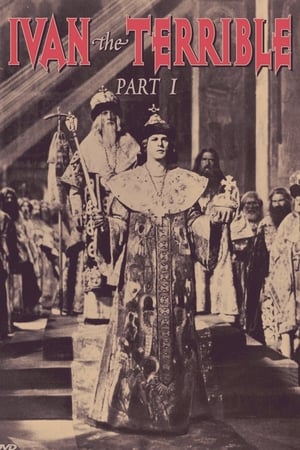
Set during the early part of his reign, Ivan faces betrayal from the aristocracy and even his closest friends as he seeks to unite the Russian people. Sergei Eisenstein's final film, this is the first part of a three-part biopic of Tsar Ivan IV of Russia, which was never completed due to the producer's dissatisfaction with Eisenstein's attempts to use forbidden experimental filming techniques and excessive cost overruns. The second part was completed but not released for a decade after Eisenstein's death and a change of heart in the USSR government toward his work; the third part was only in its earliest stage of filming when shooting was stopped altogether.
Unit 2 of the StB receive information from their Polish counterparts on a suspicious Indonesian diplomat. He is to be stationed in the Indonesian Embassy in Warsaw but flew early and is headed towards Prague instead. He was seen to be carrying a nondescript box. Agent Tomáš of the StB is assigned to stalk him and find out why he decided to go to Prague.
Russian exiles in Paris plot to collect ten million pounds from the Bank of England by grooming a destitute, suicidal girl to pose as heir to the Russian throne. While Bounin is coaching her, he comes to believe that she is really Anastasia. In the end, the Empress must decide her claim.
A Central American revolutionary is captured and tortured by government forces. He escapes and flees to the US, hiding out in a rural area where he is sheltered by a Christian sanctuary movement. His wife gets a job at a local diner run by one of the town's shadier women, and soon a CIA assassination team shows up, looking for him.
A White enclave in Johannesburg, South Africa, in the 1960s. Molly Roth, 13 years old, is the daughter of leftist parents, and she must piece together what's happening around her when her father disappears one night, barely evading arrest, and, not long after, her mother is detained by the authorities. Some of Molly's White friends turn against her, and her family's friendships with Blacks take on new meaning. Relationships are fragile in the world of apartheid. How will she manage?
Napoleon, exiled, devises a plan to retake the throne. He'll swap places with commoner Eugene Lenormand, sneak into Paris, then Lenormand will reveal himself and Napoleon will regain his throne. Things don't go at all well; first, the journey proves more difficult than expected, but more disastrously, Lenormand enjoys himself too much to reveal the deception. Napoleon adjusts somewhat uneasily to the life of a commoner while waiting, while Lenormand gorges on rich food.
In 1950s Australia, beautiful, talented dressmaker Tilly returns to her tiny hometown to right wrongs from her past. As she tries to reconcile with her mother, she starts to fall in love while transforming the fashion of the town.
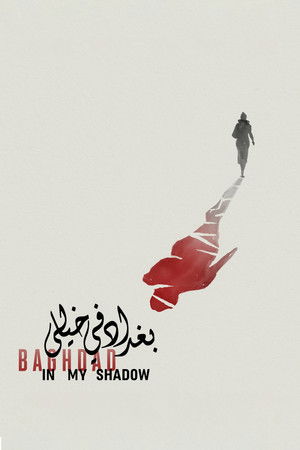
A wide variety of Iraqis in exile meet at Café Abu Nawas in London, including the architect Amal, the poet Taufiq and the gay IT specialist Muhannad. They all want to finally feel free in London - something that was denied them in their homeland. But adversity threatens...