Liu Bo-Jiun is the first female international baseball umpire. “First” seems to be an honor, but in a male-surrounded baseball field, the first female must experience an unprecedented review. As she fixes her eyes on every pitch coming forward, people fix their eyes on every judgment she made. If judgments on pitches were personal out of technical aspects, how about those judgments on people? The game begins at three balls, two strikes and two outs. What about her?
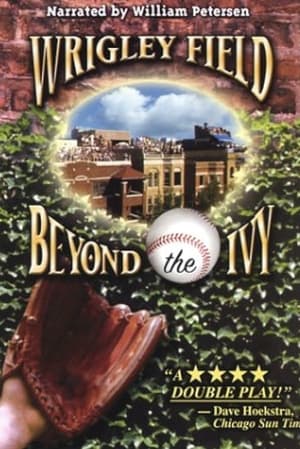
Actor William Petersen narrates this documentary about Chicago's venerable baseball stadium, Wrigley Field, focusing on a variety of quirky fans who've spent so much time there that they've become part of the stadium experience. These colorful Cubs enthusiasts tell their stories and discuss how both baseball and Wrigley Field have become an integral part of their lives. A bonus feature on Comiskey Park -- home of the rival White Sox -- is included.
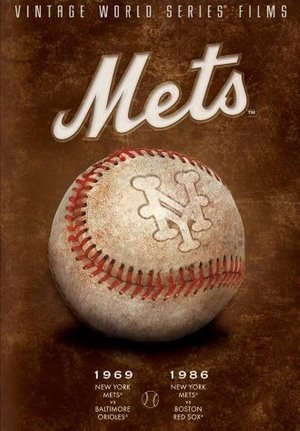
The World Series champion Mets of 1969 and 1986 were embraced by fans for their pitching, personalities, and perseverance. In 1969, the world was mesmerized by man's first steps on the moon. The world of baseball was equally transfixed by the Mets. New York relied on pitching from Tom Seaver and Jerry Koosman, and the hitting of Tommie Agee and Cleon Jones to register the Club's first 100-win season. It took the 1986 Mets two games to recover from a grueling NLCS, and then the fiery Lenny Dykstra led the charge. With two road victories pushing the Fall Classic back to Shea Stadium, the stage was set for Game Six--and arguably the most remarkable comeback in baseball history...
"The Last Season" follows the stadium's last year, the fans' communal last look, the witnessing of the wrecking ball and the great fall of the Memorial Wall.
Acclaimed Florida novelist Randy Wayne White travels to Cuba with former pitchers Bill "Spaceman" Lee (Boston Red Sox) and Jon Warden (Detroit Tigers), and a band of baseball enthusiasts to find and revive the children's baseball league founded by American writer Ernest Hemingway in the days before Fidel Castro came to power.
The Portland Pickles are upending the entertainment world without compromising the essence of America’s pastime. As the #1 attended collegiate wood bat team in America, they draw fans from all walks of life with a bold embrace of local culture and community spirit. Experience the beauty, excitement, and passion of local summer baseball with the next wave of MLB stars.
The Zen of Bobby V focuses on former MLB manager Bobby Valentine and his current job managing the Chiba Lotte Marines in Japan.
The Orioles defied expectations and took the AL East by storm during an enthralling 2023 season.
1969, New York City, 3 teams won World Championships, the Jets, the Mets and the Knicks.
The film delves into the lives of baseball legends and tells the story of how one man, Chico Heron, came to impact so many icons that the sport now cherishes, including MLB Hall of Famer Mariano Rivera.
The 1995 World Series featured the two best teams in baseball. The Cleveland Indians won 100 games in a shortened season, and they made it to the World Series for the first time in 41 years. The Atlanta Braves had been here before, twice in the previous four years. With the best pitching staff in baseball, they were called the team of the '90's. Still they needed a World Series Title to claim that crown. This official documentary of the 1995 World Series includes all the dramatic moments of the six-game battle between the Indians and the Braves including: Eddie Murray's game-winning single at frenzied Jacobs Field. Orel Hershiser's gutsy performances against the incredible Greg Maddux. Dave Justice talking the talk...and then walking the walk. Tom Glavine, the series MVP, pitching one-hit baseball under phenomenal pressure.
"This film explores how freedom of speech — including dissent — is afforded to all Americans, and shows freedom of expression in art, music, dance, architecture, and science. The film also emphasizes the importance of the individual’s contribution to the whole of society and demonstrates how a productive and creative society is formed by the open and respectful exchange of ideas. The film was written, produced, and directed by William Greaves" (National Archives).
In Fernando Nation, Mexican-born and Los Angeles-raised director Cruz Angeles traces the history of a community that was torn apart when Dodger Stadium was built in Chavez Ravine and then revitalized by one of the most captivating pitching phenoms baseball has ever seen. Nicknamed “El Toro” by his fans, Fernando Valenzuela ignited a fire that spread from LA to New York—and beyond. He vaulted himself onto the prime time stage and proved with his signature look to the heavens and killer screwball that the American dream was not reserved for those born on U.S. soil. In this layered look at the myth and the man, Cruz Angeles recalls the euphoria around Fernando’s arrival and probes a phenomenon that transcended baseball for many Mexican-Americans. Fernando Valenzuela himself opens up to share his perspective on this very special time. Even 20 years later, “Fernandomania” lives.
When the night of October 16, 2004 came to a merciful end, the Curse of the Bambino was alive and well. The vaunted Yankee lineup, led by A-Rod, Jeter, and Sheffield, had just extended their ALCS lead to three games to none, pounding out 19 runs against their hated rivals. The next night, in Game 4, the Yankees took a 4-3 lead into the bottom of the ninth inning, then turned the game over to Mariano Rivera, the best relief pitcher in postseason history, to secure yet another trip to the World Series. But after a walk and a hard-fought stolen base, the cold October winds of change began to blow. Over four consecutive days and nights, this unlikely group of Red Sox miraculously won four straight games to overcome the inevitability of their destiny. Major League Baseball Productions will produce a film in "real-time" that takes an in-depth look at the 96 hours that brought salvation to Red Sox Nation and made baseball history in the process.
In the fall of 1993, in his prime and at the summit of the sports world, Michael Jordan walked away from pro basketball. After leading the Dream Team to an Olympic gold medal in 1992 and taking the Bulls to their third consecutive NBA championship the following year, Jordan was jolted by the murder of his father. Was it the brutal loss of such an anchor in his life that caused the world’s most famous athlete to rekindle a childhood ambition by playing baseball? Or some feeling that he had nothing left to prove or conquer in basketball? Or something deeper and perhaps not yet understood?
In 1982, Cody Webster and a small group of friends from Kirkland, Washington, sat anxiously in a dugout waiting to take the field for the championship game of the Little League World Series. Their focus was just about what you’d expect from any 12-year-old: hit the ball, throw strikes, cross your fingers and then maybe – maybe – you’ll win. Adults in the stands and watching from home saw a much broader field of play. The memories of American hostages and a crippling oil crisis were still fresh; the economic malaise of the late 1970s still lingered; and the new President was recovering from an assassination attempt even while confronting new threats from the Soviet Union. Meanwhile, back on that tiny baseball field in Williamsport, Pennsylvania, no American team had won a true international Little League World Series Championship in more than a decade. When the Kirkland players rushed from their dugout that day, they stepped onto a much bigger field than the one they saw.
Love them or hate them, the Yankees dominated baseball for more than four decades, then sagged under ownership by CBS until a 42-year-old shipbuilder named George Steinbrenner led a purchase of the team in 1973. He turned that $10m investment into a billion-dollar business, and the 'House that Ruth Built' inspired generations of fans. Deteriorating facilities and changing revenue streams inspired Steinbrenner to build an impressive new stadium marking the end of one grand era and the beginning - perhaps - of another.
In the late 80's/early 90's North America's favorite pastime was collecting baseball cards. People would invest millions, in this game of pirates treasure, by putting their mint condition gold in plastic sleeves, locking it away and hoping it's value would continue to rise year after year. Unfortunately, this house of cards would soon collapse, leaving the pieces of cardboard along with the hopes and dreams of fathers and sons worthless. Stu Stone was one of those sons, and his relationship with his father Jack, who was in the card business, would crumble with the industry. 25 years later, Stu is on a mission to discover why his beloved baseball cards are worth nothing more than the memories they hold of a happy childhood. What he didn't plan on finding though, was the most elusive card of them all, his father Jack.
In the summer of 2001, a controversy unlike any other led to the disqualification of the Bronx baseball team from the Little League World Series. At the center of the bizarre story was a quiet, unassuming 14-year-old kid named Danny Almonte. Nicknamed "The Little Unit," the hard-throwing left-hander was exposed by Sports Illustrated as being too old to have competed in the tournament. The story instantly caught national and even international attention, as Danny was pushed into the spotlight and accused of cheating in the most sacred of all amateur sports. Twelve years later, the reclusive Almonte finally tells the truth about one of the strangest chapters in youth sports history: a hoax that would forever change the way people view amateur athletics in America.
The T206 Honus Wagner is the most famous baseball card in the world. Bought and sold many times over, the card has now appreciated to nearly $3 million dollars. But, this gem may have been doctored. From mere speculation, the accusations of alteration have risen all the way to federal indictments. But this is still 'just' a baseball card. It is a small square in the tapestry of our national pastime. And, as the art world readily illustrates, it may be that no matter what was done or not done to 'The Card,' its value really does lie in the eye of the beholder.