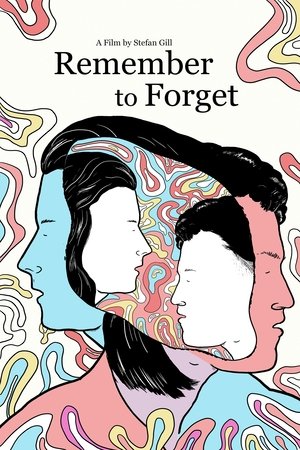
A short film written by Hussain Manawer about 2020 and mental health.
Nipodocumentário Demo
"The Inner Demon" consists of a red-saturated pallet that subconsciously produces a danger response in the viewer's mind. This along with the repetitive nature and monosyllabic delivery gives the piece an unnerving feel designed to replicate that of experiencing an intrusive delusion. "The Inner Angel" is the complete antithesis of the first piece both in sound and visuals. The cool tones used were designed as a pallet cleanser to the previous piece, producing a natural soothing reaction in the viewer's mind. This represents the effect of adrenaline kicking in with your fight, flight and freeze response. The final scenes of this piece represent a movement in mental state from delusional to illusional through the acceptance of the grounding state of nature and our planet. This can be seen as a wave of light passing through a particle of matter as a representation of brain waves passing across our neurons.
Covert Action is a stunning melange of rapid-fire retro imagery accomplishing Child’s proclaimed goal to "disarm my movies." "I wanted to examine the erotic behind the social, and remake those gestures into a dance that would confront their conditioning and, as well, relay the multiple fictions the footage suggests (the ‘facts’ forever obscured in the fragments left us). The result is a narrative developed by its periphery, a story like rumor: impossible to trace, disturbing, explosive."
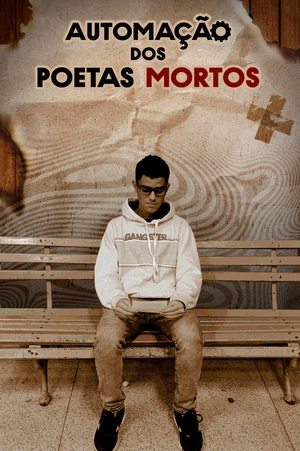
At an elite, old-fashioned boarding school in New England, a passionate English teacher inspires his students to rebel against convention and seize the potential of every day, courting the disdain of the stern headmaster.
Half lullaby for the dead, half lamentation on the twilight of the cinema.
In the fall of 1986, Richard Fung made his first visit to his father's birthplace, a village in southern Guangdong, China. This experimental documentary examines the way children of immigrants relate to the land of their parents, and focuses on the ongoing subjective construction of history and memory. The Way to My Father's Village juxtaposes the son's search for his own historical roots, and his father's avoidance of his cultural heritage.
"An experimental documentary on Reverend L.O. Taylor, a black Baptist minister from Memphis, Tennessee who was also an inspired filmmaker with an overwhelming interest in preserving the social and cultural fabric of his own community in the 1930′s and 40s. I combine his films and music recordings with my own images of Memphis neighborhoods and religious gatherings" -Sachs
My Mother's Place is an experimental documentary focusing on the artist's mother, a third-generation Chinese-Trinidadian who at 80 still has vivid memories of a history lost or quickly disappearing. She conveys these with a storytelling style and a frankness that is distinctly West Indian. A tape about memory, oral history, and autobiography, My Mother's Place interweaves interviews, personal narrative, home movies, and verité footage of the Caribbean to explore the formation of race, class, and gender under colonialism.
shows visual and metaphorical representation using rope as a motif through various rope images and meanings.
It shows Korea’s traditional colors and culture through the use of superimposing. It is an experimental film, which not only tries to show Korean traditional culture through the use of color, but also tries to show the modern history of Korea.
A reality show star leaves her family's TV show fame and unknowingly joins a supernatural cult.
A short student film about life through the eyes of an assassin stalking his prey, using the poem The Tyger by William Blake.
Using a 35mm strip of motion picture slug featuring the recently deceased American comedian Richard Pryor, this extended Rorschach assault on the eyes moves out of a flickering chaos created by incompatible film gauges into a punchline involving historically incompatible racial stereotypes.
A short treatise on the semiotics of capital, happiness, and phenomenology under the flickering neon of global capitalism.
This cine-portrait of New York City uses digital effects to turn the countless riders of the subway system into living, breathing paintings.
In the Mojave Desert, fields of solar panels follow the sun’s daily journey in perfect synchronicity.
Time to Remove Superman It is fragmentarily a story of death and it can also be connected to the opposite - birth. When I did research for this work, what was really interesting was an article read that 'We came from dirt and we go back to dirt' is everywhere in all religions and philosophies of all cultures. And I found that sentence and thought over different things and I reached it was meant to be only that way. Regardless of primitive or modern society, religions or philosophies couldn't help but think human body is rotten away and it is cremated and made dirt. We know the process but we haven't seen that. I thought it would be meaningful if I made that out to show. We've watched a mummy disappearing in a movie using CG but I thought I could visually display a message that things we cherished or in which knowledge was contained were made dirt or on the other way, they had been dirt before they came to us.
"A fine fine example of spaces between existing as objects themselves. A patternistic and memorializing offering to natural totems. Two kinds of reversal at play involving black and white as well as reflection and overlap. These simple elements create a hurried maze of twisting antler branches, twigs, and dissected slices of pure “space.” I can hear the crackling fires, echoing elk calls and frosty despair…" - JT Rogstad, The International Exposition
The Displaced View traces a personal search for identity and pride, within the unique and suppressed history of the Japanese in Canada. Through an examination of the emotional and cultural links between the women of one family, the processes of the construction of memory and the re-construction of history, are revealed. Utilizing an innovative combination of experimental, dramatic and documentary forms, the film emerges as a deeply moving and compassionate love letter. Just as the official history of the Japanese Canadians has been thrown into question, so does the film’s fictionalized narrative, question documentary as truth.