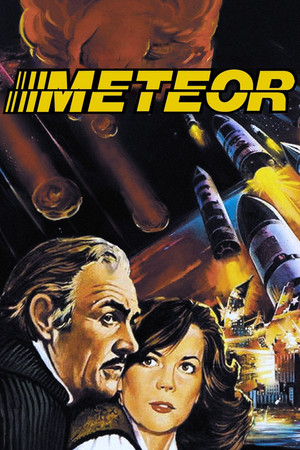
After a collision with a comet, a nearly 8km wide piece of the asteroid "Orpheus" is heading towards Earth. If it hits, it will cause an incredible catastrophe that will probably extinguish mankind. To stop the meteor, NASA wants to use the illegal nuclear weapon satellite "Hercules," but discovers soon that it doesn't have enough firepower. Their only chance to save the world is to join forces with the USSR, which has also launched such an illegal satellite. But will both governments agree?
Five bizarre stories with no apparent connection to one another eventually become intertwined, resulting in surreal circumstances.
A war veteran tries to investigate the murder of his son who was working as a Russian translator for the British intelligence service during the Cold War. He meets a web of deception and paranoia that seems impenetrable...
An American writer moves to Paris to be closer to his daughter and finds himself falling immediately on hard times.
Alice, a young translator, finds the real world slowly merging with her recurring nightmares as she tries to solve the puzzle of her recent memory loss. A postcard leads her to the island of Garma where the locals seems to know her. Is she who she thinks she is? And what significance does her dream of an astronaut abandoned on the moon have?
An interpreter is deceived into reading a passage from an ancient book that unleashes a demon that begins to possess people inside her home.
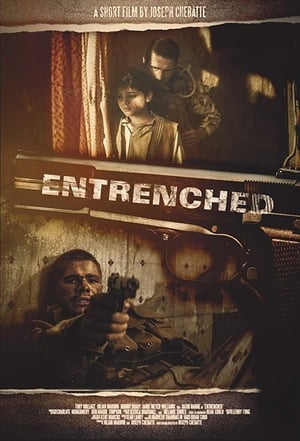
Four Australian soldiers become compromised when they capture a young Afghani boy spying on their reconnaissance position.
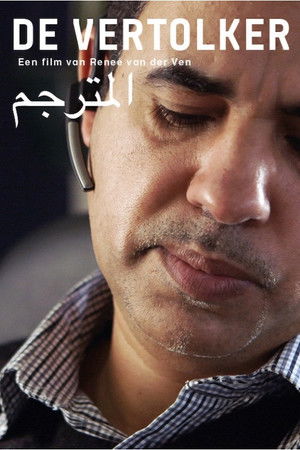
Fadil is an Iraqi refugee who works as a telephone interpreter. From his attic room he translates calls between refugees and government agencies. At the start of every contact, he says: ‘I am your interpreter, I am impartial and will not interfere with this conversation.’ Even though Fadil lives in the Netherlands with his family, he knows people who still reside in war zones. How does it affect him when the witnessing of these conversations confront him with various dilemmas and let him relive his own past?
Donya, a lonely Afghan refugee and former translator, spends her twenties drifting through a meager existence in Fremont, California. Shuttling between her job writing fortunes for a fortune cookie factory and sessions with her eccentric therapist, Donya suffers from insomnia and survivor's guilt over those still left behind in Kabul as she desperately searches for love.
Petr Michal‘s meditative documentary follows the current life of an esteemed Czech literary translator, Anna Karenina. The film largely treats the relationship with her late husband, poet Petr Kabeš, and the feeling of loneliness she has been facing since his death. It is definitely not a conventional documentary portrait, since the director does not ask questions, and instead lets Karenina voice out her thoughts and feelings, observing her with a casual camera during work or on her mountaineering trips. The film also serves as an implicit proof of love to analogue medium: not only the book, but analogue film as well, with its invisible, yet almost tangible features.
There's a film subtitler. There's a film she must urgently subtitle. There's the plot of that film, with which she relates on a level that will remain enigmatic to us. And in that film within the film there's a main character, whose dreams are being devoured, and other characters, interested in dreams as well, but far more practical. And there¹s music, and a promise of music. Timelessly wandering through the world.
Amélie, a young Belgian woman, having spent her childhood in Japan, decides to return to live there and tries to integrate in the Japanese society. She is determined to be a "real Japanese" before her year contract runs out, though it precisely this determination that is incompatable with Japanese humility. Though she is hired for a choice position as a translator at an import/export firm, her inability to understand Japanese cultural norms results in increasingly humiliating demotions. Though Amelie secretly adulates her, her immediate supervisor takes sadistic pleasure in belittling her all along. She finally manages to break Amelie's will by making her the bathroom attendant, and is delighted when Amelie tells her the she will not renew her contract. Amelie realizes that she is finally a real Japanese when she enters the company president's office "with fear and trembling," which could only be possible because her determination was broken by Miss Fubuki's systematic torture.
Set in 1985 post-war Vietnam, Khang moves to Saigon after securing a position to translate "The Little Prince." Due to his family connections, Khang's life under the new regime is secure. But everything changes when he meets Ky Nam, a reserved older widow who lives in Khang's new community.
Two newly dead young people meet in the streets of Athens, amid the pulsing cityscape and the ghosts of history. One a translator, the other a photographer, they were outsiders in life; in death they struggle with the residue of their longings and mistakes. They wander the city together, finding consolation in the difficult beauty of existence and its aftermath.
During a professional conference in Prague, two interpreters in the Hungarian booth hilariously vie for the attention of one listener.
Blúdiaci Holanďan Ľubomír Feldek
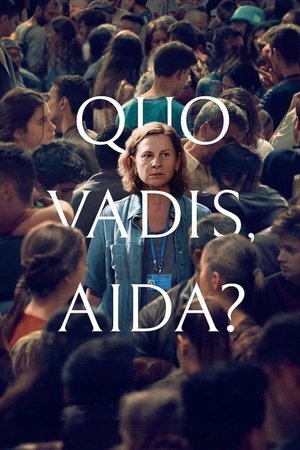
Bosnia, July 1995. Aida is a translator for the UN in the small town of Srebrenica. When the Serbian army takes over the town, her family is among the thousands of citizens looking for shelter in the UN camp. As an insider to the negotiations Aida has access to crucial information that she needs to interpret. What is at the horizon for her family and people – rescue or death? Which move should she take?
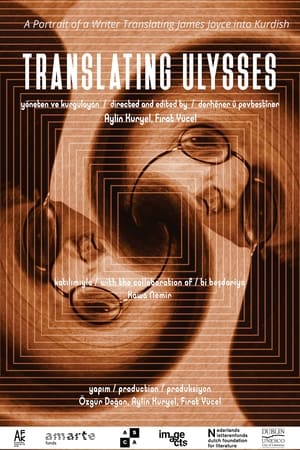
Kawa Nemir is like a walking dictionary of the Kurdish language. He flees Turkey and takes refuge at Anne Frank's former house in Amsterdam. Will he be able to finish the translation of Ulysses and publish it?
Focuses on the Trial of Iva Toguri D'Aquino, a Japanese-American radio broadcaster who broadcast English language propaganda for Japan during World War II.
Russian sociologist Maxim Shugaley and his translator colleague Samer Sueifan are still being held in a Libyan prison. For more than a year, they have been subjected to torture and psychological violence on a daily basis. While in custody, Maxim Shugaley encounters various people who turn out to be, sometimes unknowingly, sources of information about the situation in Tripoli. Listening to their stories, the sociologist literally collects valuable information bit by bit, which can be decisive for the entire world community.