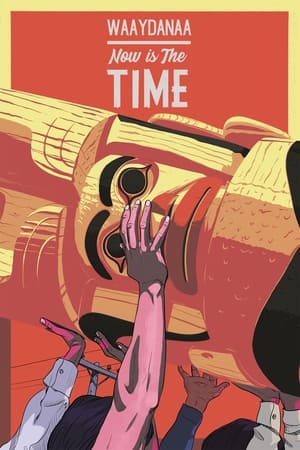
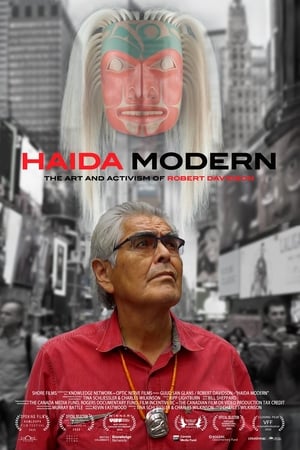
When internationally renowned Haida carver Robert Davidson was only 22 years old, he carved the first new totem pole on British Columbia’s Haida Gwaii in almost a century. On the 50th anniversary of the pole’s raising, Haida filmmaker Christopher Auchter steps easily through history to revisit that day in August 1969, when the entire village of Old Massett gathered to celebrate the event that would signal the rebirth of the Haida spirit.
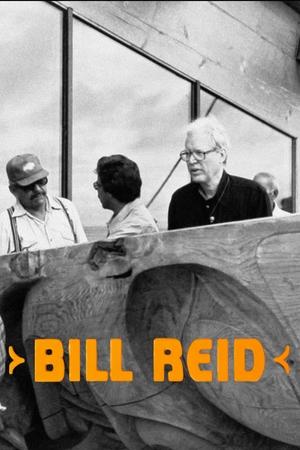
Follows Haida artist Bill Reid, from British Columbia. A jeweller and wood carver, he works on a traditional Haida totem pole. We watch the gradual transformation of a bare cedar trunk into a richly carved pole to stand on the shores of the town of Skidegate, in the Queen Charlotte Islands of B.C.
In the 50 years since he carved his first totem pole, Robert Davidson has come to be regarded as one of the world’s foremost modern artists. Charles Wilkinson (Haida Gwaii: On the Edge of the World) brings his trademark inquisitiveness and craftsmanship to this revealing portrait of an unassuming living legend. Weaving together engaging interviews with the artist, his offspring, and a host of admirers, Haida Modern extols the sweeping impact of both Davidson’s artwork and the legions it’s inspired.
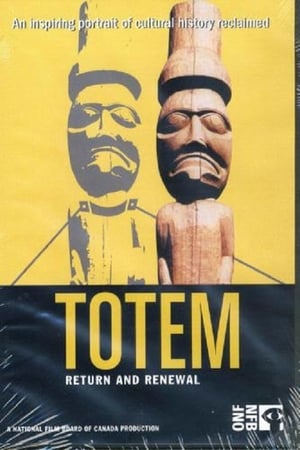
In this follow-up to his 2003 film, Totem: the Return of the G'psgolox Pole, filmmaker Gil Cardinal documents the events of the final journey of the G'psgolox Pole as it returns home to Kitamaat and the Haisla people, from where it went missing in 1929.
When Masset, a Haida village in Haida Gwaii (formerly known as the Queen Charlotte Islands), held a potlatch, it seemed as if the past grandeur of the people had returned. This is a colourful recreation of Indigenous life that faded more than two generations ago when the great totems were toppled by the missionaries and the costly potlatch was forbidden by law. The film shows how one village lived again the old glory, with singing, dancing, feasting, and the raising of a towering totem as a lasting reminder of what once was.
Dos Antigos aos Filhos do Amanhã
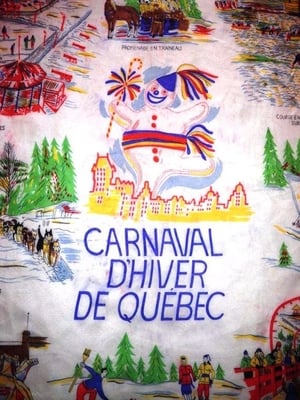
Carnival time in Quebec, Canada, is also time for racing with sled-dogs, horse-drawn sleighs, hockey, curling the carving of ice-statues, obstacle races by youngsters, fireworks, and also the selection of a Carnival Queen.
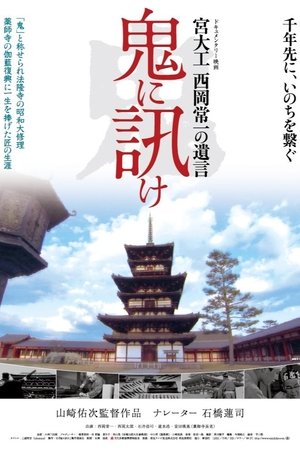
In-depth look at the twilight years, spent training apprentices, of temple builder Nishioka Tsunekazu, who was called the "devil" as he devoted his life to temple architecture. His insistence on the gargantuan timescale of linking life to the next millennium emerges from people who knew him. Remarkable as well for showing the unknown backstage of temple architecture. Nishioka, known as "the last temple carpenter," handled the major Showa-era repairs of Horyuji temple, and in 1990 was at the scene of the reconstruction work for Yakushi temple.
Ethnologist Marius Barbeau introduces us to indigenous mythology. Masks, dances, songs, and totems are used to give the audience a highly suggestive representation of the "biblical" history (Mr. Barbeau's word) of Indigenous tribes.
Prelude to a portrait of Jean-Pierre Facquier, ch’l’eintailleu (wood carver) in the Saint-Leu district of Amiens: a free mind self-removed from social determinism, who gives new life to wood through constant dialogue, both with nature and his alter ego, the puppet Lafleur..
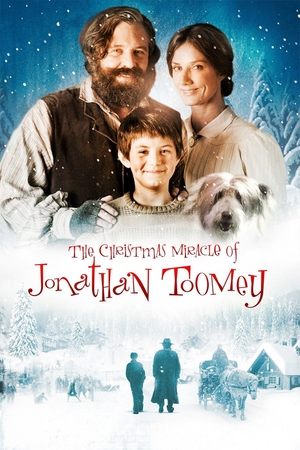
When a broken hearted boy loses the treasured wooden nativity set that links him to his dead father, his worried mother persuades a lonely ill-tempered woodcarver to create a replacement, and to allow her son to watch him work on it.
In this entertaining Puppetoon animated short film, a young boy, Jasper, gets trapped inside a pawnshop at midnight. All the musical instruments come to life and play jazz. A whooping wooden Indian chief self-animates as well, and goes on the warpath.
A documentary that follows several American fighters as they train for and fight in the first world open karate tournament in Japan.
Frank Sinatra: In Concert at the Royal Festival Hall was an CBS musical television special starring Frank Sinatra broadcast on February 4, 1971, of a concert given by Sinatra at London's Royal Festival Hall on November 16, 1970. The special was directed by Bill Miller, and produced by Harold Davison. Sinatra was introduced on stage by Grace Kelly. Kelly had starred alongside Sinatra in the 1956 film High Society, the last film she made before her marriage to Rainier III, Prince of Monaco. Sinatra had been follicularly challenged for many years, hence all the hats in publicity stills, album covers etc. TV directors were forbidden to photograph him from the back because of this. However, at this concert, Sinatra had completed a very successful hair transplant and deliberately turned his back on the main audience a couple of times to acknowledge the audience sitting backstage, along with running his hand over the back of his head to draw attention to his new coiffure.
Charged with the electricity of a heavyweight prizefight, " The Main Event " was filmed live at Madison Square Garden, a venue usually reserved for sporting events and rock 'n' roll concerts. Sinatrra dazzies the crowd with contemporay numbers as " You are the Sunshine of My Life ", " Let Me Try Again " and delivers the knockout blow with signature tunes " My Kind of Town " and " My Way ".
For over thirty years, three women have languished in Missouri State prison under unjust sentences for killing their abusive husbands. Denied the opportunity to enter the abuse into evidence, each of the women represents a system broken by outdated and media-sensationalized stereotypes. When a greater understanding of the "battered" syndrome change legal practices in 2000, Missouri's Governor crafts a new law demanding the parole board reevaluate each woman's case.
An exploration of the rise of Héroes del Silencio, the seminal 1980s Spanish rock band anchored by Enrique Bunbury.
The story of the mysterious artist known by the signature “Kâr-ı Üstat Mehmet Siyah Kalem” — the Master Mehmet Siyah Kalem, whose enigmatic works continue to intrigue and fascinate to this day.
Thirty miles from Manhattan a group of mysterious mountain people fight for recognition as a legitimate Native American tribe from the Bureau of Indian Affairs. What begins as their journey travels the country as Native American’s fight for their rights at Standing Rock, Apache Junction and throughout the United States. Examining through expert interviews and unbridled access to the community, the film provides an in depth look at the complex past, volatile present and endangered future of the Ramapough Mountain Indians and what it truly means to be a “Native American”.
Tsé