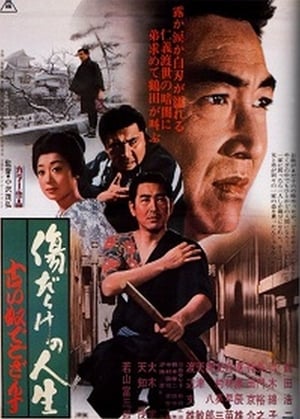
Young coal miner Takeda leaves Kyushu in search of a better job in Tokyo, only to fall into the lucrative yet dangerous life of a yakuza.
A man who was released from prison wanders around the Kanto region and gets involved with the local yakuza.
Floating Vessel (源氏物語 浮舟 , Ukifune) is a 1957 color Japanese film directed by Teinosuke Kinugasa. Drawn from parts of the famous Genji monogatari by Lady Murasaki.
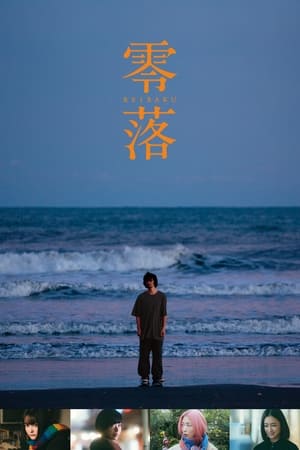
Mika works as a nurse by day; by night she entertains covetous men at a girls' bar. Shinji is blind in one eye and ekes out a living as a construction worker. Young and grown-up at the same time, they both lead a lonely existence, but somehow their paths keep miraculously crossing under the Tokyo sky.
Ichi is a blind entertainer that travels the countryside with her traditional Japanese guitar and walking stick. She’s in search for the kind man that brought her up as a child, but because of her beauty she encounters problems every step of the way. Fortunately for Ichi, she is also a gifted swordswoman and carries a lethal blade within her walking stick.
A submarine expedition to salvage the remains of Mechagodzilla is thwarted by a massive dinosaur named Titanosaurus. An Interpol investigation leads biologist Ichinose to uncover the work of Dr. Mafune and his mysterious daughter Katsura. Aligned with the Black Hole Aliens, Katsura's life becomes entwined with the resurrected machine.
A classmate from Ushijima's middle school days, Takemoto, shows up. He was a kind man, but now is jobless and without a home. Adrift and unable to borrow money from Ushijima, Takemoto heads for Seiai Home where he can stay while doing work.
Jun is a girl whose words have been sealed away so that she cannot hurt anyone with them. But, one day, she is nominated to become an executive member of the "community outreach council." On top of that, Jun is also appointed to play the main lead in their musical...
A look at the relationship between a young blind samurai and his wife, who will make a sacrifice in order to defend her husband's honor.
In 11th-century feudal Japan, following the exile of an idealistic governor, his wife and children are separated by slave traders; the children, Zushio and Anju, are sold into brutal servitude under the cruel bailiff Sansho.
Set during Japan's Shogun era, this film looks at life in a samurai compound where young warriors are trained in swordfighting. A number of interpersonal conflicts are brewing in the training room, all centering around a handsome young samurai named Sozaburo Kano. The school's stern master can choose to intervene, or to let Kano decide his own path.
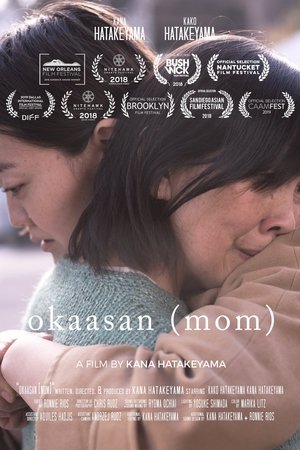
An elderly Nagasaki hibakusha spends a summer caring for her four grandchildren, whose curiosity about the 1945 bombing stirs buried memories and moral questions. When an American nephew from Hawaii visits, the family confronts grief, guilt, and the possibility of reconciliation across generations.
Kiyoha rises from the lowly courtesan ranks to the high class position of Oiran in the steamy red-light district of Yoshiwara. She is determined to stand on her own two feet and live life as she pleased.
In a poor district of Edo lives a young samurai named Soza. He has been sent by his clan to avenge the death of his father. He isn't an accomplished swordsman however, and he prefers sharing the life of the residents, teaching the kids how to write etc. When he finally finds the man he is looking for, he will have to decide whether he follows the way of the samurai or chooses peace and reconciliation.
Eddie Kenner is given a special assignment by the Army to get the inside story on Sandy Dawson, a former GI who has formed a gang of fellow servicemen and Japanese locals.
Six directors picked a favorite song by Japanese punk rock band "The Blue Hearts" and made a short film inspired by the song.
High school student Tomoyuki (Hoshi Ishida), his father (Kazuhiro Sano), and Yuki (Miwako Wagatsuma), a girl that Tomyuki likes, gather together as a family and performs road shows out of their truck. A sense of loss, farewells, and relations are all brought out.
Betrayed and disgraced, big-city reporter Kazuya Mizuno is banished to a desk at Kaname's boring little town newspaper. But Kaname isn't as boring as it seems on the surface. Not with characters around like Shimeko, a girl genius with a childlike lack of propriety, and her ace fisherman/folk-singer dad. Or the overbearing and unpleasant local Shinto priest, a former Christian cultist. Or Endo, Kazuya's new colleague, a bitter drunk after his son's suicide. Or Kin, a former terrorist, now a hermit on his boat engaging in secret "research." Or perhaps most importantly Teruko, the hypnotically beautiful bar owner, the focus of all manner of innuendo and intrigue. Something mysterious, even mystical, is going on Kaname, and hapless Kazuya is about to be thrown into the middle of it.
It is the early 1930s and the command of the Japanese Imperial Navy determines to construct the world's biggest and most formidable battleship, Yamato. One of the admirals, Yamamoto Isoroku, disagrees. He recruits the upstart and mathematics' expert Tadashi Kai who discovers there are discrepancies between the official cost estimates and the actual figures. They soon find out that they have stumbled upon a conspiracy.
A surprising and humanistic drama that questions the meaning of happiness through the strange fate of one man who caused an accident. One night, a taciturn and clumsy man working at a scrap iron factory in the suburbs of Tokyo, causes an irreparable accident with his colleague. The two try to hide the incident but the man’s fate takes a turn for the worse and his colleague and family are faced with threats to their survival. A psychologial thriller that reveals the ills of Japanese society along with the darknesses of the human heart based on a script full of surprises written by the director Dai Sakō. Tomomitsu Adachi, who plays the lead role, exudes an eerie charm, and is flanked by many of Japan's best supporting actors such as Yutaka Matsushige and Shohei Uno.