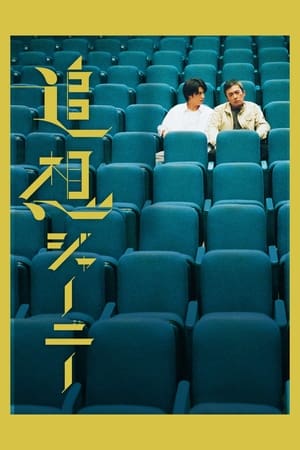
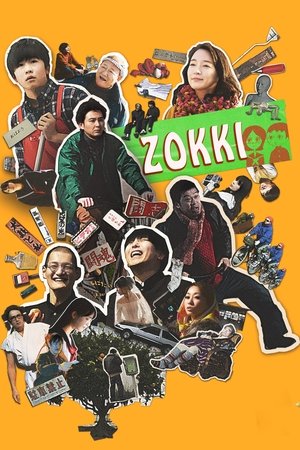
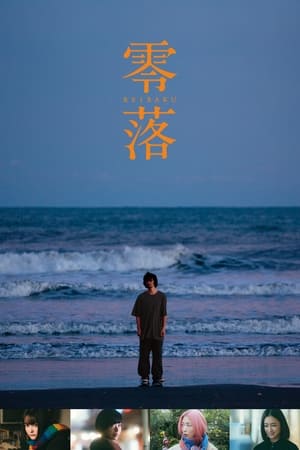
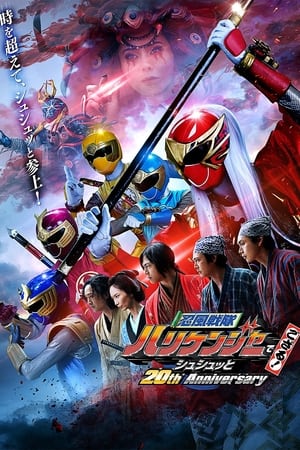
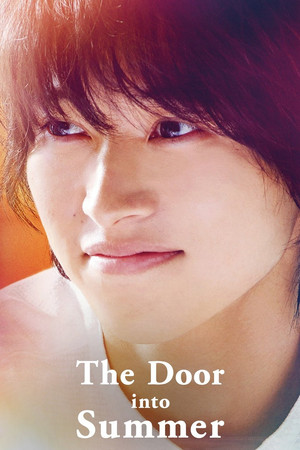
The time spent between professional Shogi player Kiriyama and his three stories helps to heal his wounds. As he prepares to secure another win in an upcoming tournament, the father who left the three sisters appears and disturbs the peace.
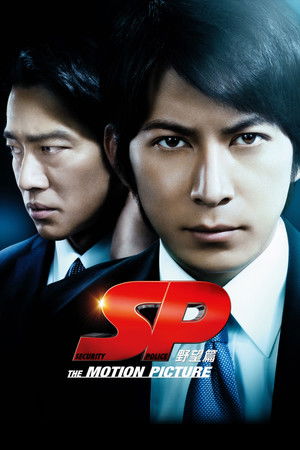
Narumi is on bad terms with her husband, Shinji, when, one day, Shinji goes missing. He comes back a couple of days later, but he seems like a totally different person, and he is now gentle and tender. He goes for a walk every day. Meanwhile, journalist Sakurai covers the story of a family that was brutally murdered, when an unexplained phenomenon takes place.
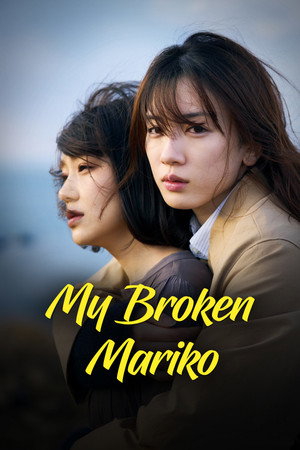
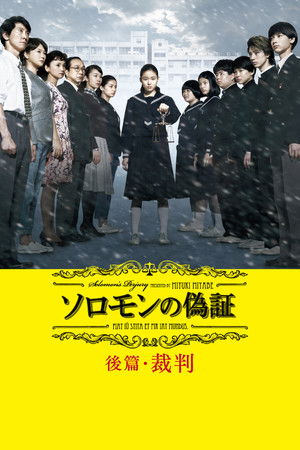
A teenage girl's accidental death incites a media frenzy and causes her harsh father to turn his rage against those he believes are responsible.
Set 10 years after "Kids Return." Shinji and Masaru have graduated from high school with different paths in their lives. Shinji attempted to become boxer and Masaru a yakuza. They both tried to rise to the top of their respective fields.
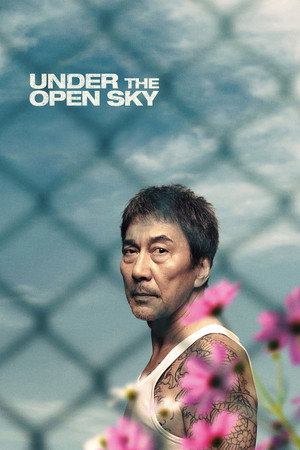
Mika works as a nurse by day; by night she entertains covetous men at a girls' bar. Shinji is blind in one eye and ekes out a living as a construction worker. Young and grown-up at the same time, they both lead a lonely existence, but somehow their paths keep miraculously crossing under the Tokyo sky.
Young coal miner Takeda leaves Kyushu in search of a better job in Tokyo, only to fall into the lucrative yet dangerous life of a yakuza.
Yoshie is a member of the theatre club in high school. Due to her older sister Keiko, Yoshie begins acting in a indie film with her friend Akari and theatre club president Aki. Their sadistic director Naomi pushes them psychologically and their relationship begins to change.
Ai's mother sends her to live with a cult commune, where she remains for seven years. After the cult is broken up by the police, Ai struggles to fit in with society.
A dying girl meets a nonchalant boy who found out her secret. She decided to fulfill her bucket list with none-other-than the boy who couldn't care less about the world.
Five years after the all-out war between the Sanno and Hanabishi crime families, former yakuza boss Otomo works in South Korea for Mr. Chang, a noted fixer. When tensions rise between Chang and the Hanabishi, and Chang's life is endangered, Otomo returns to Japan to settle things once and for all.
Five loosely connected storylines concerning the secrets and lies, the fears and tears, and the puerile potty jokes that punctuate the characters' daily (and in one eerie case, nightly) encounters.
Two high school girls who are about to graduate also happen to be highly-skilled assassins. When the organization they work for orders them to share a room, their relationship quickly sours. But when they become targets of the yakuza, the girls realize they'll have to work together to survive.
The movie begins in the year 1995 where there were 5 peculiar murder cases. The murderer would always get someone close to the victim to witness how he would strangle the victim from behind with a rope but he would let the witnesses go and speak to the media on how the murders happened. Ito plays the role of Makimura, the police detective who was in charge of investigating the serial murders but failed to catch the cunning murderer and his respected superior ended up being killed as well. 22 years later in 2017 when the case is nearing its statute of limitations, a man named Sonezaki claims to be the culprit for the 1995 murders and even publishes a book titled "Watashi ga satsujinhan desu" to talk about the cases. Despite the disgust towards Sonezaki's actions, the intensive attention showered on him via the media and SNS makes him become the talk of town.
Jun is a girl whose words have been sealed away so that she cannot hurt anyone with them. But, one day, she is nominated to become an executive member of the "community outreach council." On top of that, Jun is also appointed to play the main lead in their musical...
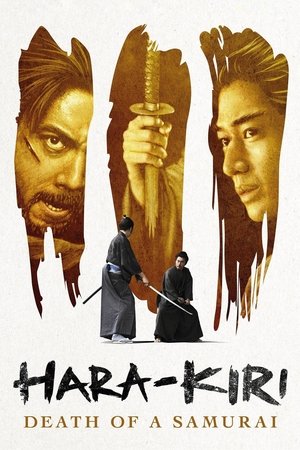
In the turbulent last days of the Edo period, Kawai Tsugunosuke, a Japanese samurai serving the Makino clan of Nagaoka, dreamt of independence from the restraints of vassalship. Despite his progressive views and his desire for his estate to remain neutral during the Boshin Civil War, he was bound by loyalty and duty to the clan and was compelled to choose sides.
High school student Tomoyuki (Hoshi Ishida), his father (Kazuhiro Sano), and Yuki (Miwako Wagatsuma), a girl that Tomyuki likes, gather together as a family and performs road shows out of their truck. A sense of loss, farewells, and relations are all brought out.
In the late 16th century, after the death of Nobunaga Oda, Hideyoshi Toyotomi takes power. The age of war is about to end, but Hideyoshi Toyotomi's rule makes life difficult for the people. Monk Senko Ikenobo is a master of flower arrangement. He prays for peace in the world and tries to give hope to the people with flower arrangement. He becomes good friends with Rikyu. Rikyu is a monk and a politician. He has the most profound influence on chanoyu. Rikyu is forced to commit hara-kiri by Hideyoshi Toyotomi’s order. Monk Senko Ikenobo challenges Hideyoshi Toyotomi.
Tokunaga is an unpopular comedian. He meets a senior comedian, Kamiya, who holds a strong faith in comedy. They struggle to move forward as comedians.
In a universe where the Cold War never ended and growing conflicts result in the rapid advancement of technological warfare, the cyborg spy Mylene Hoffman of the 00 Organization battles the agents of the Eastern block in a game of high tech espionage.
Sen no Rikyu (Ebizo Ichikawa) is the son of a fish shop owner. Sen no Rikyu then studies tea and eventually becomes one of the primary influences upon the Japanese tea ceremony. With his elegant esthetics, Sen no Rikyu is favored by the most powerful man in Japan Toyotomi Hideyoshi (Nao Omori) and becomes one of his closest advisors. Due to conflicts, Toyotomi Hideyoshi then orders Sen no Rikyu to commit seppuku (suicide). Director Mitsutoshi Tanaka's adaptation of Kenichi Yamamoto's award-winning novel of the same name received the Best Artistic Contribution Award at the 37th Montréal World Film Festival, the Best Director Award at the 2014 Osaka Cinema Festival, the 30th Fumiko Yamaji Cultural Award and the 37th Japan Academy Film Prize in nine categories, including Best Art Direction, Excellent Film and Excellent Actor.