How were the giant stone heads of Rapa Nui – also known as Easter Island – carved and raised, and why? Since Europeans arrived on this remote Pacific island over 300 years ago, controversy has swirled around the iconic ancient statues and the history of the people who created them. Now, a new generation of researchers is overturning old theories, revealing the rich history, innovation, and resilience of the Rapanui people, and uncovering intriguing new evidence about where they – and their practice of monumental stone building – came from.
Marijuana is the most controversial drug of the 20th Century. Smoked by generations to little discernible ill effect, it continues to be reviled by many governments on Earth. In this Genie Award-winning documentary veteran Canadian director Ron Mann and narrator Woody Harrelson mix humour and historical footage together to recount how the United States has demonized a relatively harmless drug.
Woolly Mammoth: Secrets from the Ice is a documentary presented by English anatomist Dr. Alice Roberts that reveals some of the secrets of one of the most widely known extinct animals ever. Humans have been transfixed by the Wolly Mammoth since the end of the last ice age when there were still herds of them roaming the continents of Asia and Europe. Despite many people knowing about the great Woolly Mammoth until recently very little was known about them despite ancient humans living along side them for so long; few documented accounts exist.
In this hour-long documentary, Oxford academic Janina Ramirez tours the country in search of Anglo-Saxon art treasures. Her basic thesis - and it is a plausible one - is that we should not look upon their era as a "dark age" as compared, for example, to Roman times, but rather celebrate it as an age in which creativity flowered, especially in terms of artistic design as well as symbolism. She shows plenty of good examples, ranging from the Franks Casket to the Staffordshire Hoard, and the Lindisfarne Gospels. - l_rawjalaurence
In 150 years, twice marked by total destruction —a terrible earthquake in 1923 and incendiary bombings in 1945— followed by a spectacular rebirth, Tokyo, the old city of Edo, has become the largest and most futuristic capital in the world in a transformation process fueled by the exceptional resilience of its inhabitants, and nourished by a unique phenomenon of cultural hybridization.
Druids have existed far longer than hitherto assumed, since the 4th century BC. Their traces are found all over middle Europe: from the northern Balkans to Ireland. Their cultural achievements were equal in almost every way to those of the Romans and Greeks: They could read and write and spoke Greek and Latin - for centuries, they were the powerful elite of their culture. Only one single Druid is known by name to history: Diviciacos - an aristocrat of the Aedui and personal friend of Julius Caesar. Diviciacos was a politician, a judge and a diplomat, but he lived at a time when the Celtic lands of Gaul were conquered by the Romans. Greek and Roman contemporaries distrusted the actions of this forbear of the famous comic book druid Getafix: They imagined him in bloody rituals in somber woods.
Cave paintings and lunar calendars exist in the caves and remains of prehistoric hunters studied recently. What if Prehistoric Man were clever enough to develop in depth scientific knowledge? As unlikely as it may seem, new data tend to prove that Prehistoric Man actually invented Astronomy!
Nos restaurants : Une grande histoire française
This short documentary depicts the search, discovery and authentication of the only known Norse settlement in North America - Vinland the Good. Mentioned in Icelandic manuscripts and speculated about for over two centuries, Vinland is known as "the place where the wild grapes grow" and was thought to be on the eastern coast between Virginia and Newfoundland. In 1960 a curious group of house mounds was uncovered at l'Anse aux Meadows in northern Newfoundland by Drs. Helge Ingstad and Anne Stine Ingstad of Norway. Added to the United Nations World Heritage List, l'Anse aux Meadows is considered one of the most important archaeological sites in the world.
Drama-led documentary following the life of Signe, an orphaned Chief's daughter, who, driven by revenge, becomes an explorer and trader in the lands of the Rus Vikings.
By combining actual footage with reenactments, this film offers both a documentary and fictional account of the life of Adolf Hitler, from his childhood in Vienna, through the rise of the Third Reich, to his final act of suicide in the waning days of WWII. The film also provides considerable, and often shocking, detail of the atrocities enacted by the Nazi regime under Hitler's command.
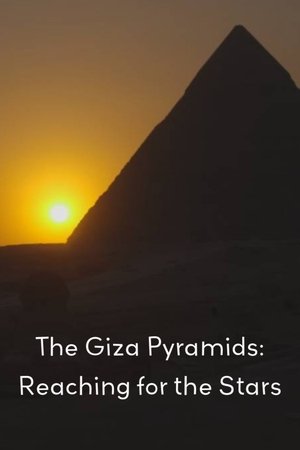
Explores the Pyramids of Giza as Egyptologists try to unravel the mysteries and decipher the clues behind these stone giants built over 4,500 years ago.
The first American space station Skylab is found in pieces scattered in Western Australia. Putting these pieces back together and re-tracing the Skylab program back to its very conception reveals the cornerstone of human space exploration.
Plastic Odyssey, mission pacifique
Ady Steg, un parcours juif, une histoire française
More than 2.000 years ago, Narbonne in today's Département Aude was the capital of a huge Roman province in Southern Gaul - Gallia Narbonensis. It was the second most important Roman port in the western Mediterranean and the town was one of the most important commercial hubs between the colonies and the Roman Empire, thus the town could boast a size rivaling that of the city that had established it: Rome itself. Paradoxically, the town that distinguished itself for its impressive architecture, today shows no more signs of it: neither temples, arenas, nor theaters. Far less significant Roman towns like Nîmes or Arles are full of ancient sites. Narbonne today is a tranquil town in Occitania
What killed King Tutankhamun? Ever since his spectacular tomb was discovered, the boy king has been the most famous pharaoh of all ancient Egypt. But his mysterious death, at just 19 years old, has never been explained. In this BBC One special, presenter Dallas Campbell reveals new scientific research and carries out unique experiments to get to the truth. For the first time, a virtual autopsy of Tut's mummified body reveals astonishing secrets about the pharaoh. Using CT scan data, the programme creates the first ever full size, scientifically accurate image of the real Tutankhamun. Brand new DNA analysis uncovers a shocking secret about Tut's family background, and the genetic trail of clues leads to a radical and revolutionary new theory to explain Tut's sudden and unexpected death. This is an epic detective story that uncovers the extraordinary truth of the boy behind the golden mask.
Move over, King Tut: There's a new pharaoh on the scene. A team of top archaeologists and forensics experts revisits the story of Hatshepsut, the woman who snatched the throne dressed as a man and declared herself ruler. Despite her long and prosperous reign, her record was all but eradicated from Egyptian history in a mystery that has long puzzled scholars. But with the latest research effort captured in this program, history is about to change.
5000 years ago the ancient Elamites established a glorious civilization that lasted about three millennia. They created marvelous works in architecture and craftsmanship. These works of art depict the lifestyle, thoughts, and beliefs of the Elamites.
Guy Debord's analysis of a consumer society.