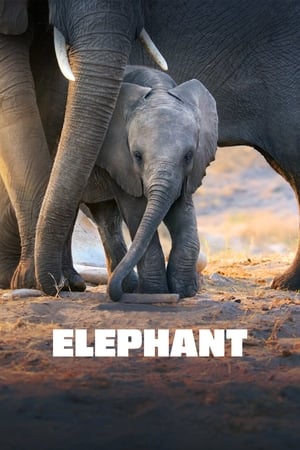
Disneynature’s Elephant follows African elephant Shani and her spirited son Jomo as their herd make an epic journey hundreds of miles across the vast Kalahari Desert. Led by their great matriarch, Gaia, the family faces brutal heat, dwindling resources and persistent predators, as they follow in their ancestors’ footsteps on a quest to reach a lush, green paradise.
A love triangle that incites jealous rage. An out-of-control wildfire that threatens lives and livelihoods. A sudden tragedy that upends a close-knit community. You might not expect such intense dramas at a small conservation center in the California desert, yet that’s exactly what you’ll get in the documentary, The Center: Gibbons and Guardians, which includes interview with Dr. Jane Goodall, DBE, founder of the Jane Goodall Institute and UN Messenger of Peace. Watch it to get immersed in the sometimes funny, sometimes startling story of the Gibbon Conservation Center. There, a determined group of people dedicate their lives to the conservation, study, and care of these endangered apes — and in the process, find courage, laughter, and even romance. The film will keep you riveted as the staff face one challenge after another. The lives of the apes intertwine with those who care for them to create a rich symphony that will make you feel how surprising and passionate life can be.
Conservationist photographer and filmmaker Kyle Dudgeon, with the help of wildlife biologist Steve Hoffman, follows a family of great gray owls in the Bridger Mountains of Montana whose habitat is threatened by a logging project. The first feature film of this longtime bird photographer, The Trees with Orange Rings is a passionate documentary short profiling the natural history of these owls and confronting important environmental issues over the span of two years.
70 years after the last wolves roamed the national park, a total of 41 wolves were reintroduced between 1995 and 1997. A globally unique experiment that had many supporters, but also resolute opponents, then as now.
Nóouhàh-Toka’na, known as swift fox in English, once roamed the North American Great Plains from Canada to Texas. Like bison, pronghorn and other plains animals, Nóouhàh-Toka’na held cultural significance for the Native Americans who lived alongside them. But predator control programs in the mid-1900s reduced the foxes to just 10 percent of their native range. At the Fort Belknap Indian Community in Montana, members of the Aaniiih and Nakoda tribes are working with the Smithsonian’s National Zoo and Conservation Biology Institute and other conservation partners to restore biodiversity and return Nóouhàh-Toka’na to the land.
Proyecto Ibera
The film tells of the beginnings of the Serengeti National Park in Tanzania. At the end of the 1950s, the Tanzanian National Park Administration wanted to fence in the protected area around the Ngorongoro Crater. Bernhard and Michael Grzimek were invited by the national park administration in 1957 to get a precise picture of the animal migrations and to provide the national park administration with the values they needed for their project. Using a new counting method with two airplanes, the Grzimeks found out that the migration of the herds was different than assumed.
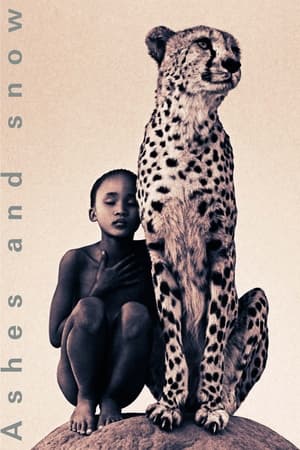
Ashes and Snow, a film by Gregory Colbert, uses both still and movie cameras to explore extraordinary interactions between humans and animals. The 60-minute feature is a poetic narrative rather than a documentary. It aims to lift the natural and artificial barriers between humans and other species, dissolving the distance that exists between them.
An excellent display of how humans can rehabilitate and restore an area where a heavy industry polluted the water so severely that it was unsuitable to sustain any kind of life. A a film showing how birds returned to an environment once devastated by industry. The lakes around the northern Slovenian town of Velenje, placed in the Central Europe, are geographic center of the film. They emerged as the land above the lignite mines subsided and the depressions were filled with water. The mines started operating at the end of the 19th century. In the mid 20th century a power plant was built that caused a severe pollution of the lake waters to the extent of the lakes not being fit for any kind of life. As a consequence many birds moved from these parts. After a long ecological restoration that started in the mid 1980s, life returned to the water. Gradually the birds returned as well, including some there were previously never observed in this area.
Etienne-Jules Marey, a French inventor who turned a gun into a camera. A hand-drawn hunter whose weapon, instead of firing ammunition, shoots photographs. Carlos, a Mexican wildlife photographer who used to be a real life hunter until he chose to get rid of all his guns. All come together in this poetic yet approachable animated documentary short film.
Guardian chronicles the work of wildlife stewards amid sweeping legislative rollbacks of environmental protections in Canada. Part hermit, part biologist, Guardians live on boats, full-time, in one of the last pristine frontiers of the world to monitor salmon, the backbone of the ecosystem, economy, and culture along British Columbia's coast. But, in an age of science censorship and soaring resource extraction in the form of fracking for oil and natural gas, Guardians and the wildlife they have dedicated their lives to protect are now disappearing.
Wildlife biologist Karsten Heuer and his wife, environmentalist Leanne Allison follow a herd of 120,000 caribou on foot across 1500 km of Arctic tundra, hoping to raise awareness of the threats to the caribou's survival. Along this journey, they brave torrid conditions, dangerous wildlife and treacherous terrain all in the hopes of learning the truth about this epic migration.
Follow filmmakers as they capture the epic journey of African elephants across the Kalahari desert. The team faces extreme weather, inaccessible terrain, crocodile-infested waters and close encounters with lions in order to shine a light on these remarkable creatures and their ancient migrations.
Imagine walking some of the largest land animals in existence across one of the most densely populated regions on earth. Intelligent, majestic and awe-inspiring, Elephants have a long and fascinating history with man. On this epic journey we experience the modern day relationship between man and beast.
David Attenborough investigates the remarkable life and death of Jumbo the elephant - a celebrity animal superstar whose story is said to have inspired the movie Dumbo. Attenborough joins a team of scientists and conservationists to unravel the complex and mysterious story of this large African elephant - an elephant many believed to be the biggest in the world. With unique access to Jumbo's skeleton at the American Museum of Natural History, the team work together to separate myth from reality. How big was Jumbo really? How was he treated in captivity? And how did he die? Jumbo's bones may offer vital clues.
Minnesota: A History of the Land vividly brings to life the epic story of the people and landscapes of Minnesota. From the retreat of the last ice sheets to the growth of today’s suburbs – the series seeks to entertain as it enriches our understanding of Minnesota’s past, present, and future. A visually stunning and groundbreaking 4-part documentary series featuring nature videography from across the state, never before seen historic images, state-of-the-art animations and historic recreations. Original soundtrack by award-winning composer, Peter Ostroushko.
This short film focuses on how conservationists endeavor to protect wildlife.
Au nom des jaguars
Sangduen Chailert, or Lek, as she is generally known, has already rescued over 200 elephants. She has dedicated her life to saving the Asian elephant and founded a special camp, The Elephant Nature Park to protect them. We follow this winner of Time Magazine’s “Asian Hero of the Year” Award in her work. Lek is on a mission to save the Asian elephant in her native Thailand. This film looks at the plight of the Asian elephant, as it goes from being a widely used domestic animal, to becoming a burden on modernizing communities. With experts predicting its extinction within four decades, Lek’s work is needed now more than ever and she has gathered a large group of supporters and volunteers in her quest for a better future for the Asian elephant. This moving film demonstrates Lek’s natural understanding of and rapport with these huge animals and will stir the viewers emotions as it highlights the often desperate state some elephants are kept in.
A Maasai human rights lawyer fights to stop the evictions of his people from their homelands in Tanzania. On the outskirts of Serengeti National Park in East Africa, Maasai face eviction from their land to make way for international tourism and hunting grounds. Human rights lawyer Joseph Oleshangay campaigns for his community to remain on its homeland as it has done for generations. While he represents Maasai communities in court, Joseph also remains close to his traditions among the cattle at his rural home near the Ngorongoro Crater. Risking his life to gather evidence from recently depopulated villages, Joseph battles in court where he leads the fight to resist the evictions.