A friendly football match between Bahrein and Togo in 2010, turns out to be rigged, as the team representing Togo is a fake team set up by international gamblers. The bad guys turn out to be victims, the good guy is revealed as the international gambling criminal while the top crooks stay out of sight since they have the power to determine who’ll be convicted. A revealing peek into a hidden world.
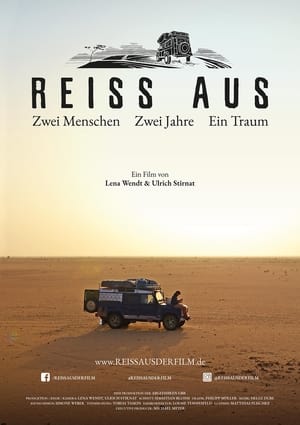
When Lena and Ulli start the engine of their old Land Rover, Lady Terés, they have a plan: to drive from Hamburg to South Africa in six months. What they don't know yet is that they won't ever get there. Two totally different characters, jammed together in two square meters of space for almost two years, they experience what it really means to travel: leaving your comfort zone for good.
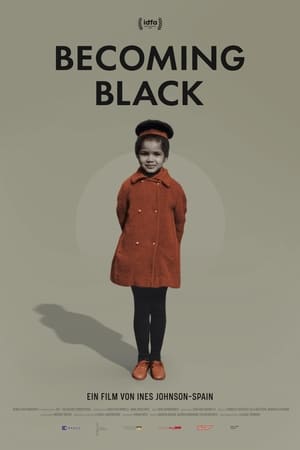
In the 1960s, a white couple living in East Germany tells their dark-skinned child that her skin color is merely a coincidence. As a teenager, she accidentally discovers the truth. Years before, a group of African men came to study in a village nearby. Sigrid, an East German woman, fell in love with Lucien from Togo and became pregnant. But she was already married to Armin. The child is Togolese-East German filmmaker Ines Johnson-Spain. In interviews with Armin and others from her childhood years, she tracks the astonishing strategies of denial her parents, striving for normality, developed following her birth. What sounds like fieldwork about social dislocation becomes an autobiographical essay film and a reflection on themes such as identity, social norms and family ties, viewed from a very personal perspective.
Nana Benz is the story of the legendary queens of the West African mercer, self-made women, coming out of nowhere, building empires. These women were heroes to the people, Mercedes driver at the West African coast. They influenced the history of Togo and were witnesses of the fights for independence, the dictatorship till the globalization nowadays. Thomas Böltken manages to establish closure to the protagonists by letting their heirs - grandchildren, widows, lovers - speak.
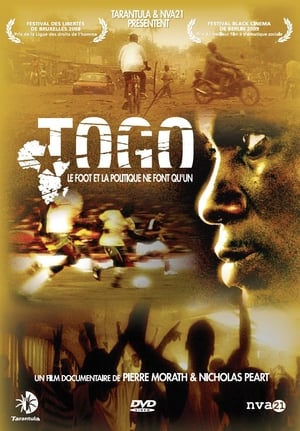
October 8, 2005. Togo, one of Africa's poorest countries, qualifies for the World Cup for the first time in its history. The achievement is not only historic; it also hastens the end of the bloody civil war that has been ravaging the country for several months. On the eve of the World Cup opening in Germany, hopes are high in Lomé, the capital of Togo, that the national team will restore pride and prosperity to an entire people. However, disillusionment quickly sets in. The team had not even entered the competition when it was already beset by endless internal problems. What if soccer, in the end, was nothing more than a reflection of the deep-seated problems that have been plaguing Africa for years?
Six Scouts and Guides from France are heading to Togo, where they are joining forces with Togolese scouts to build a classroom. This documentary captures their human adventure and the cultural exchange that emerges at the heart of this solidarity project. Through the challenges of construction, a story of friendship, cooperation, and discovery unfolds between young people from two continents.
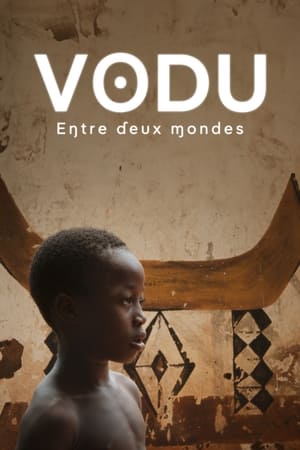
Voodoo tradition is too often victim of misperceptions and stereotypes in the Western imagination. In Togo, Voodoo is revealed in all its splendour and complexity. Through spectacular ceremonies, consultations and rites, an intimate connection is revealed that unites the visible world with that of invisible forces. By giving a voice to those who live and practise Voodoo, an authentic and nuanced perspective emerges, revealing the richness of this mysterious spirituality. It's a genuine burst of curiosity about a living heritage and the sumptuousness of its traditions.
In 1925, a group of brave mushers travel 700 miles to save the small children of Nome, Alaska from a deadly epidemic.
This pioneering documentary film depicts the lives of the indigenous Inuit people of Canada's northern Quebec region. Although the production contains some fictional elements, it vividly shows how its resourceful subjects survive in such a harsh climate, revealing how they construct their igloo homes and find food by hunting and fishing. The film also captures the beautiful, if unforgiving, frozen landscape of the Great White North, far removed from conventional civilization.
Starting with a long and lyrical overture, evoking the origins of the Olympic Games in ancient Greece, Riefenstahl covers twenty-one athletic events in the first half of this two-part love letter to the human body and spirit, culminating with the marathon, where Jesse Owens became the first track and field athlete to win four gold medals in a single Olympics.
Part two of Leni Riefenstahl's monumental examination of the 1938 Olympic Games, the cameras leave the main stadium and venture into the many halls and fields deployed for such sports as fencing, polo, cycling, and the modern pentathlon, which was won by American Glenn Morris.
In 1967, Dr. Thomas Starzl stunned the world with the first successful liver transplantation. His breakthrough provoked controversy. Critics accused him of recklessness, even murder. Others declared it the beginning of a medical revolution. "Burden of Genius" is the story of an innovator as complex and elusive as the biological secrets he unlocked. It is also a reflection on the price of scientific progress by the man many consider the greatest surgeon of the 20th century and the father of transplantation.
A portrait of Ivo Van Hove, internationally the most highly regarded stage director of the Low Countries. And of his partner in love and work, scenographer Jan Versweyveld.
La Palma: el último volcán
Documentary on famous writer Marguerite Duras and her paradoxical relation to the seventh art by her former film editor.
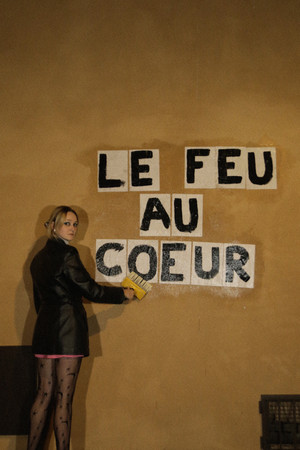
In September 2022, Beatrice Dalle arrives in Italy. At the origin of this journey is the desire to walk in the footsteps of Pier Paolo Pasolini.
Join the likes of Tatiana Maslany, Mark Ruffalo, Tim Roth, and Benedict Wong as they reveal how Marvel Studios’ She-Hulk: Attorney at Law was conceived and shaped. Discover what it took for She-Hulk’s creators to pull off the show’s tricky tone and deliver Marvel Studios’ first truly comedic series – one that boldly breaks the fourth wall to acknowledge its own audience, no less!
Working men and women leave through the main gate of the Lumière factory in Lyon, France. Filmed on 22 March 1895, it is often referred to as the first real motion picture ever made, although Louis Le Prince's 1888 Roundhay Garden Scene pre-dated it by seven years. Three separate versions of this film exist, which differ from one another in numerous ways. The first version features a carriage drawn by one horse, while in the second version the carriage is drawn by two horses, and there is no carriage at all in the third version. The clothing style is also different between the three versions, demonstrating the different seasons in which each was filmed. This film was made in the 35 mm format with an aspect ratio of 1.33:1, and at a speed of 16 frames per second. At that rate, the 17 meters of film length provided a duration of 46 seconds, holding a total of 800 frames.
Twenty-five years after the verdict in the Rodney King trial sparked several days of protests, violence and looting in Los Angeles, LA 92 immerses viewers in that tumultuous period through stunning and rarely seen archival footage.
Cinéastes de notre temps : Norman McLaren