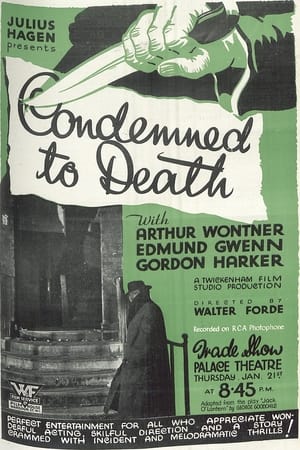
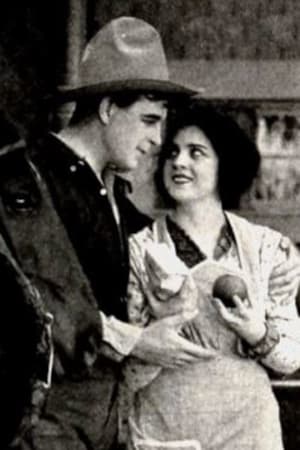
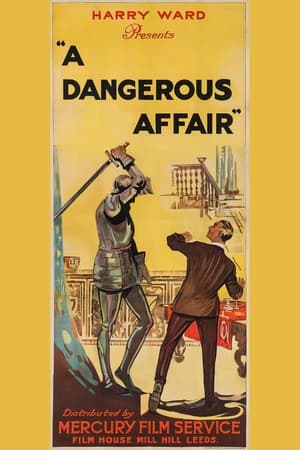
In this story the hero is haunted by a beautiful young woman who tries to stab him to death with a knife. This fantasy recurs on each of his birthdays, becoming more and more real as the years go on. He leaves home to secure a place as groom, but arrives at his destination too late. Forced to retrace his steps, he seeks shelter in a little inn, forgetting that the hour of his birth is approaching. In the middle of the night he awakens, terrified with fright… Based on Wilkie Collins' novel “The Dream Woman”.
Prosperous architect David Hunter, lives with his wife Evelyn, who loves gambling and admiration, as well as his small daughter Dora, and his sister-in-law Ruth. When Evelyn tells her husband she owes $10,000 in bridge losses, she promises not to gamble or see her lover, Stephen Dabney, again if he will pay the debt. Stephen's friend, Moira Lamson, however, entices her to the country club for one last game. David and Ruth, worried by her prolonged absence, go to the club where they find her in Stephen's arms. Evelyn accuses her sister of spying on her and demands a divorce from her husband. Ruth, weary of her sister's frailties, moves out of the household and takes up nursing. Evelyn's health suffers from the strain, and now with David and Ruth gone, she is ill and alone. David and Ruth take pity on her and return. A smarter Evelyn is reunited with David.
James Montgomery Flagg first draws his sketch of the girl, and then tearing it from its frame reveals the real girl lounging in bed with the pouting expression which is her wont. Then we are treated to an exposé of her various moods and selfish acts. For instance, she allows mother to bring breakfast to her in bed, and doesn't even greet her with a smile nor trouble to thank her. And it is nothing for father and mother to sit up until daylight to open the door for her as she returns from a dance. Finally she demands an automobile so that she will not have to bother with taxis, and in order to grant her wish, some of the household furniture has to be sold. In a tantrum she takes her car and goes to her lover, and the closing scene shows her in a home of her own, making life miserable for a husband.
Amos Dyer receives word from Washington that there are wireless messages being transmitted from a point in Oregon to foreign battleships off the Pacific Coast. Dyer, the Secret Service representative on the Coast, sets out with his assistant, Calhoun. He arrives, assumes the disguise of an invalid being wheeled about in a chair by his assistant and interviews the regular wireless operator at that point. The suspicions of the Secret Service Department are verified.
In Belgium, at the outbreak of the war, Russian agent Olga Raminoff shoots at a German general when the enemy enters town. Ray Bourke, an American traveler, gives her the protection of his name, but nevertheless both are sentenced to death. They are rescued by an allied rescue plane and later, bound for home, Ray meets an old college friend, Curt Schreiber, who is in the service of the German government. Schreiber has important papers to be delivered to Washington and, knowing that he will be searched on board ship, gives them to Ray. Olga beseeches Ray to give the papers up for her sake, but his word to Schreiber is sacred. Nearing America, Ray tells her that he will make an effort to return the papers if she will marry him.
In New York's Washington Square, a poet named Karl (Jack Livingston) is the king of art and artifice. But World War I breaks out and the spotlight on him begins to fade, so he dramatically declares his intention to enlist in the British Army. His friend Marcarson announces that he will go with him, keeping Karl to a promise which he hadn't planned to see through.
Sure-Fire Flint, an energetic chap just returned from wartime military service, meets June De Lanni, the girl of his dreams, while working as a cabdriver and busboy. Her father gives Flint a job in his factory, but Dipley Poole, who hoped to marry June, becomes jealous of Flint's success and attempts to rob the company safe. June is trapped in the safe, but after a series of adventures, Flint arrives in time to rescue her.
Helene Palmer and her husband Orrin have grown apart, and she becomes infatuated with bachelor Edward Wadsworth. With the outbreak of World War I, Orrin and Edward enlist, while Helene works as a Red Cross nurse in a small French town. Edward is wounded on a dangerous scouting mission near the town and Orrin carries him to safety. The enemy invades during the night, and Orrin rescues Helene as she is about to be overpowered by a German officer. The dying Edward, morally strengthened by his experience as a soldier, encourages the couple to reunite. Soon after, peace is declared.
John Dale, a lawyer, who, after a trip to the Middle East, is asked by his niece why he's never married, leading him to recount a tale of a yachting party and a love affair.
Society girl Sybil Lawton is left penniless by her father's death, and though her mother wishes her to marry into wealth, her sole ambition is to achieve fame in the theater. Her youthful charm and talent interest producer Stewart Thrall, who finds her a position with an Omaha stock company. Under Sybil's encouragement, fellow actor Jim Roberts, disillusioned by an unhappy marriage, improves and becomes her self-appointed guardian. Sybil returns to New York and begins rehearsals for "Romeo and Juliet" with Thrall as her costar and Roberts as stage manager. Meanwhile, Thrall's unhappy wife obtains a divorce, and Roberts, recognizing her as the woman who ruined his life, blames Thrall and shoots him at a performance as he bends over "Juliet" on her bier. Thrall recovers, however, declares his love for Sybil, and looks forward to happiness with her.
Arsdale, a candidate for mayor misconstrues the situation when he sees his wife Alice enter the apartment house of gambler Norton. Unknown to him Alice’s sister Mabel had married the dissolute Norton and made her life misery. Norton, recruited by Arsdale’s rival to incriminate his opponent surreptitiously tries to compromise Alice and Arsdale, consumed with jealousy shoots him, ruining all their lives.
Identical twin brothers, Ward and Clyde Kingsley lives intertwine in a scheme involving marriage, insurance fraud, and mistaken identity. Clyde marries heiress Agnes for her money, but when he plans to fake his death with the help of his dying twin Ward, Agnes falls for Ward, leading to a murder plot where Clyde is accidentally killed by his own accomplices, leaving Ward and Agnes to marry after Ward's recovery.
In 1876, Lt. Tony Britton of the 7th Cavalry is in love with pretty young Barbara Manning, but the wife of his superior, Capt. Granson, is in love with him and begs him to run away with her. Britton refuses, but is soon sent to arrest Sioux chief Rain-in-the-Face, who has murdered two soldiers from the 7th. He captures his quarry and carts him off to jail, infuriating the local Indians. When Capt. Granson learns of his wife's infatuation with Britton, he makes trouble for Britton, who is soon forced to resign his commission. He signs up as an army scout, and learns that the Indians are planning to attack and massacre the 7th under the command of Col. George Armstrong Custer. Can he get to Custer in time to warn him of the impending attack, and will he--a disgraced army officer--be believed?
Robert Lovell falls in love with his father’s secretary Dorothy Arden and marries her in secret despite his father and his business partner Daniel Casselis’s attempts to arrange a match for him with Daniel’s daughter, also named Dorothy. When circumstances lead to the three young people ending up stranded on a lonely island in the Pacific, complications ensue, especially when Bob suffers a blow which temporarily wipes out his memory and he cannot remember which Dorothy is his wife! All ends happily, however.
Miss Olivia Martindale, at a dinner, announces: "There is no longer any romance in American life," and immediately arouses a storm of protest.
Lieutenant Curren of the regular army, is assaulted by Private Roy, of his company, and the latter is sent to the military prison. Known as Convict 125, Roy serves a year of his time, then his desire for revenge turns to repentance and he apologizes to Curren. A pardon is secured and Roy reinstated in the service. War breaks out, and Roy saves the Lieutenant's life on the field of battle but loses his own in doing so. From a locket found on Roy, Curren's wife identifies him as her long-lost brother
Reporter Tom Warder exposes a theatrical producer, Isaac Shuman, for sexually harassing young women, including Tom's girlfriend. After being forced out of town, Shuman returns years later to frame Tom for theft, leading to his imprisonment and the tragic death of his family.
Roy Conover has just returned to his village home from college.
The Talbots, formerly one of the Eastern Shore's first families, have gone to seed: Pap is a drunk, soddenly decaying in his ruined ancestral home, and three of his sons (William, Carol, and Ezra) are lazy, shiftless young men. Mulligan, Pap's second son who supports the entire family by oyster fishing, falls in love with wealthy Anna Lee, but when he first kisses her, she calls him "white trash."
A lost film based on the 'Reign of Terror', a real-life series of several dozen murders committed against the Osage people. 'Tragedies of the Osage Hills' was directed by James Young Deer, the first known Native American film director, and boasted a cast of “hundreds of real Indians.” Described as a dramatic thriller interwoven with a “tender love story”, the film’s premiere in Cushing, Oklahoma occurred just months after the arrest of Ernest Burkhart, the subject of Martin Scorsese’s similarly themed 2023 film 'Killers of the Flower Moon'. The 'Cushing Daily Citizen' described 'Tragedies of the Osage Hills' as having a fictitious ending of the Osage and white men united under an American flag.