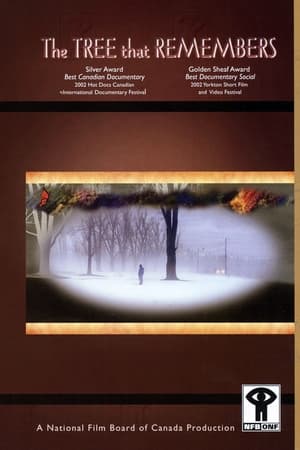
The 1992 suicide of a young Iranian refugee in a small Canadian town prompted filmmaker Masoud Raouf to examine his own past as a political prisoner in Iran who helped fight for democracy, only to be persecuted by the ayatollah's regime. Raouf's documentary features historical footage and interviews with veterans of the 1979 revolution, who watched with dismay as their homeland traded a despot for a religious dictatorship.
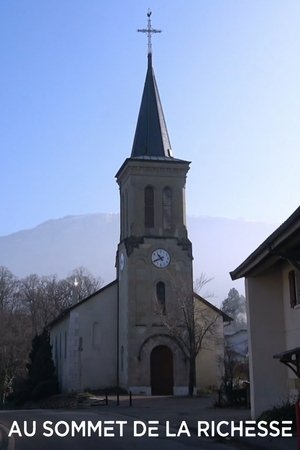
Archamps, au sommet de la richesse
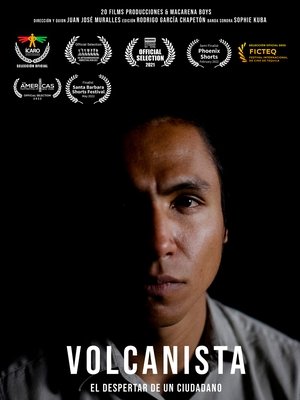
Jorge Luís Altuve is a young Guatemalan, passionate about mountaineering and a lover of his country. After the COVID-19 crisis and the lack of transparency in the execution of funds by the government of Alejandro Giammattei, he raised a wave of indignation that led thousands of Guatemalans to demonstrate. Jorge Luis attended the central square, when PNC agents began to intimidate the peaceful demonstrators. He and other citizens were arrested without having carried out an act of vandalism.
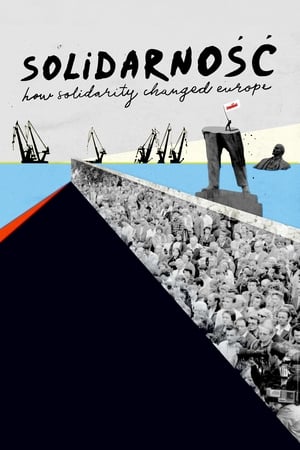
Gdańsk, Poland, September 1980. Lech Wałęsa and other Lenin shipyard workers found Solidarność (Solidarity), the first independent trade union behind the Iron Curtain. The long and hard battle to bring down communist dictatorship has begun.
This documentary, filmed after October 7, places recent events in context and retraces the extraordinary history of this region to shed light on the present, interviewing actors and witnesses to this conflict: Islamists, Jewish nationalists, imams, rabbis, intellectuals, urban planners, soldiers, etc.
The Conference on Security and Cooperation in Europe (CSCE) was the starting point for the slow but sure collapse of communist authoritarian rule in Eastern Europe. The Helsinki Effect offers new perspectives on the events of the Cold War. The film tells the story of the CSCE process, which had a major impact on the end of the Cold War, and sheds light on secret top-level discussions behind closed doors, through voice simulations using artificial intelligence.
Visionary, radical, spiritual seeker, renowned poet, founding member of a major literary movement, champion of human rights, Buddhist, political activist and teacher. Extensive archival footage, interviews, and home movies cover Allen Ginsberg's life, activism, and influence on American culture through the Beat era, the 1960s, and beyond.
In the swirling volcanic steam and misty rain forest of Kilauea volcano’s east rift zone on the island of Hawai’i, two forces meet head on. Geothermal development interests, seeking to clear the rain forest for drilling operations, are opposed by native Hawaiians seeking to stop the desecration of the fire goddess, Pele. Pele is a living deity fundamental to Hawaiian spiritual belief. She is the eruption, with its heat, lava and steam. Her family takes the form of forest plants, animals and other natural forces. But geothermal development interests see Pele as simply a source of electricity. When Hawaiians take the issue to court, they find that nature-based religions are not respected by U.S. law.
The full-length television documentary, using currently found audio-visual records, tells the story of the fabricated political process from November 1952, the story of its victims and its masterminds. At its end, 11 executed high-ranking officials of the Communist Party of the Czech Republic, committed to the communist party, who mechanically "recited" memorized confessions and accusations of "accomplices", former friends and colleagues in front of the court in response to prearranged questions from the prosecutors and judges.
A vivid portrait of a generation of Hong Kongers committed to creating a new more democratic Hong Kong. Schoolboy Joshua Wong dedicates himself to stopping the introduction of National Education. Whilst former classmate Ma Jai fights against political oppression on the streets and in the courts. Catapulting the viewer on to the streets of Hong Kong and into the heart of the action. The viewer is confronted with Hong Kong's oppressive heat, stifling humidity and air thick with dissent. Filmed over 18 months this is a kaleidoscopic, visceral experience of their epic struggle.
In the wake of the high school shootings in Parkland, Florida, concerned citizens travel by bus to the State Capitol to debate legislators about an urgent issue: Gun Reform. One of them, a stay-at-home mom, runs for office to honor her son.
Huw Edwards presents a documentary examining the relationship between Victorian prime ministers Benjamin Disraeli and William Gladstone, whose bitter personal rivalry dominated British politics for 40 years.
More than a century ago, large scale gold mining was begun at Kolar Gold Field, Mysore. At its peak, the mines employed 36,000 workers who braved the dangerous labour and built a new life in the mining camp. Today, many third and fourth generation gold miners face the threat of not just unemployment but displacement from the area they have made their own. This film is a tribute to the "labouring lions" of Kolar Gold Field, a historical reconstruction of their work, culture and rich political traditions.
The story of the last months of the 20-year war in Afghanistan through the intimate relationship between American Green Berets and the Afghan officers they trained.
Will Cubans be able to safeguard their heritage of pristine Nature and preserved ecological treasures under this new era, as they are facing the combined pressure of money and tourism? What policies can be implemented to maintain the island’s spectacular wilderness?
A documentary that investigates the complexity of a nation, Albania, through the narration of the convoluted history of its monuments. What happens to the statues when they are destroyed, what are they replaced with and where do their marble shreds end up? What happens to their expensive bronze? And again: what do the sculptors who made these statues think of these destructions, what is their opinion. And today? Which statues are being destroyed in Albania today?
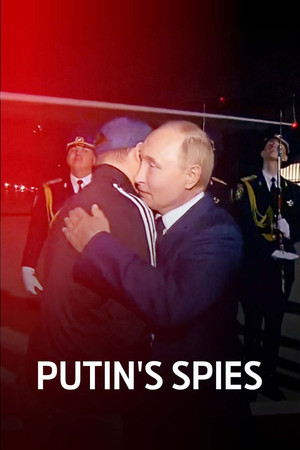
Never before in Russian history has the Russian domestic intelligence services been more powerful than today. The FSB is a murky organisation that can ruin people’s lives who are deemed enemies of the Russian state and even commit murder on behalf of the Kremlin. Four people in exile open up about their experiences with the FSB.
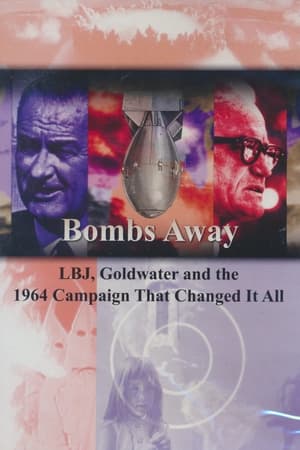
The political ad "Peace Little Girl" aired during the 1964 presidential campaign ushered in a new era of the television attack ad. The campaign also reshaped the American political landscape in other significant ways ultimately ending up with the establishment of the contemporary geopolitical map of red and blue states. Includes interviews with historians and participants in the campaign.
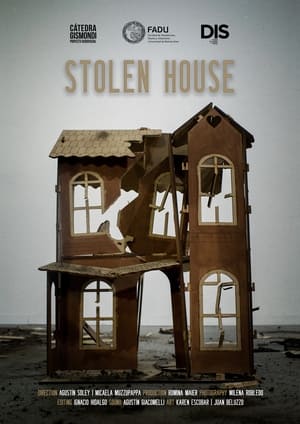
"Stolen House" is a documentary short film that follows the migration story of Mark, a Russian photographer, and Katya, a Ukrainian artist, to Argentina. Through narrations, staged scenes, and archival material, fragments of their lives, feelings, and motivations are explored.
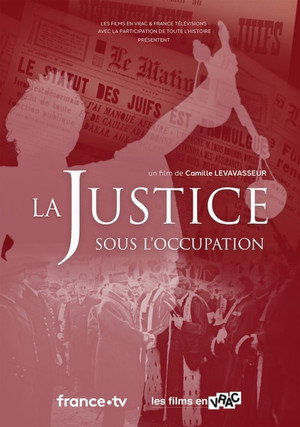
La Justice sous l'Occupation