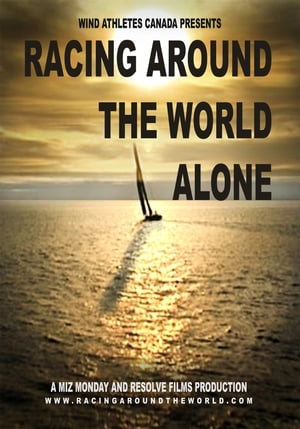
The story of the 2008/2009 Vendée Globe race. 30 skippers embark on a quest to be the fastest to sail 27000 miles around the world, non stop, without assistance and alone on 60 foot sailboats. This is one of the most extreme challenges a human being can face. The sailors are alone at sea for months and physical and emotional strength are essential. Growlers (Icebergs), sea mammals, and massive waves are a constant danger. On any day the forces of nature can bring an end to the best sailor's well made plans. They harness the wind, hope for safe passage over the sea and push hard to win. They are a testament to the audacity of the human spirit.
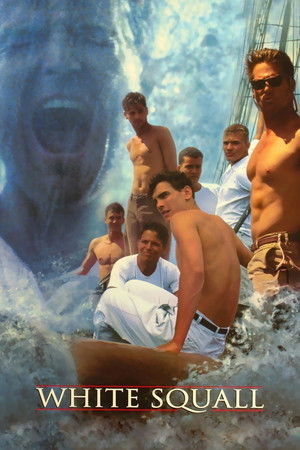
In 1960, a hardy group of prep school students boards an old-fashioned sailing ship. With Capt. Christopher Sheldon at the helm, the oceangoing voyage is intended to teach the boys fortitude and discipline. But the youthful crew are about to get some unexpected instruction in survival when they get caught in the clutches of a white squall storm.
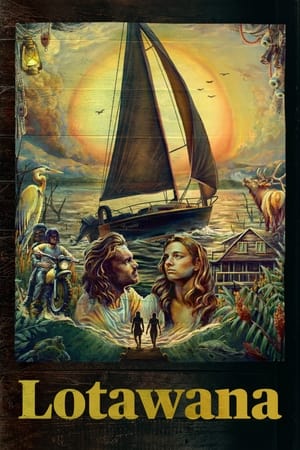
A monotonous life has pushed the unfulfilled Forrest (Todd Blubaugh) to a voyage of self-discovery by living aboard his sailboat on an alluring, Missouri lake. Soon he catches wind of the rebellious and free-spirited Everly (Nicola Collie) and their idealistic dreams align for a thrilling and thought-provoking, romantic adventure. Can they survive, reconnect with nature and rewrite their own rules of modern existence, or will they discover that society operates the way it does for a reason?
Bruce Brown's The Endless Summer is one of the first and most influential surf movies of all time. The film documents American surfers Mike Hynson and Robert August as they travel the world during California’s winter (which, back in 1965 was off-season for surfing) in search of the perfect wave and ultimately, an endless summer.
An exploration —manipulated and staged— of life in Las Hurdes, in the province of Cáceres, in Extremadura, Spain, as it was in 1932. Insalubrity, misery and lack of opportunities provoke the emigration of young people and the solitude of those who remain in the desolation of one of the poorest and least developed Spanish regions at that time.
Megacities is a documentary about the slums of five different metropolitan cities.
Warsaw's Central Railway Station. 'Someone has fallen asleep, someone's waiting for somebody else. Maybe they'll come, maybe they won't. The film is about people looking for something.
A detailed chronicle of the famous 1969 tour of the United States by the British rock band The Rolling Stones, which culminated with the disastrous and tragic concert held on December 6 at the Altamont Speedway Free Festival, an event of historical significance, as it marked the end of an era: the generation of peace and love suddenly became the generation of disillusionment.
Primary is a documentary film about the primary elections between John F. Kennedy and Hubert Humphrey in 1960. Primary is the first documentary to use light equipment in order to follow their subjects in a more intimate filmmaking style. This unconventional way of filming created a new look for documentary films where the camera’s lens was right in the middle of what ever drama was occurring. Preserved by the Academy Film Archive in partnership with The Film Foundation in 1998.
In this wildly entertaining vision of one of the twentieth century’s greatest artists, Bob Dylan is surrounded by teen fans, gets into heated philosophical jousts with journalists, and kicks back with fellow musicians Joan Baez, Donovan, and Alan Price.
One Dude's Quest to Save Democracy. A FilmBuff Presentation.
In this film from late in his career, Kramer returns to Hanoi after nearly 25 years to re-envision the city’s struggle through an uncertain and daunting past, present, and future. The Vietnamese characters in the film are diverse: Kramer’s former guide from an earlier visit in 1969; a tight-rope walker in the national circus; a man who took photos of B-52s and another who lost his fingers shooting them down.
The documentary presents the biography of filmmaker Leon Hirszman, director of Cinema Novo, who made 11 short films and five feature films between 1962 and 1986. A review of the trajectory of Leon Hirszman through his work and archive images.
The adventures of Hergé, or how Georges Remi created The Adventures of Tintin. Interviews, archive footage and animation clips tell the story of Tintin, which is the history of the 20th century.
The Revolution also put an end to the colonial wars in Guinea Bissau, Mozambique and Angola. Vasconcelos recounts the absurdity of this bitter conflict. - Cinema du réel
Led Zeppelin: The Untold Story reveals an often overlooked side of the saga. Using early performance footage, seldom seen interviews and previously unpublished photographs, as well as contributions from colleagues, friends, and associates who worked alongside the future members of Led Zeppelin, The Untold Story is finally made public.
A cinematic poem with an impressive soundtrack that complements and completes the cinematic sketches of the folk culture of the Slovak nation previously made by ethno-photographer and director Karel Plicka. With its perfectly constructed dramaturgy, the documentary follows the beauty of the natural cycle of the seasons and shows peasant life in an isolated village in the Carpathian mountains of Slovakia from the end of winter through spring and summer to the traditional harvesting methods of autumn. This creates a tribute to traditional culture and the secular connection between man and nature. The aesthetically extraordinary visual representation of folklore comes to life through the editing technique influenced by the Soviet avant-garde and is complemented by poetic intertitles by the Slovak poet Ján Smrek.
A Letter to Spring Garden
Rap ? Violent words, a social chronicle without complacency at a time of the politically correct and a wishywashy consensus. Twenty years after its first babblings in the popular quarters of New York, rap has imposed its presence beyond the borders. Je rap donc je suis (I Rap Therefore I Am) goes around five different towns where it meets rappers driven by the same motivation. In Paris and its suburbs, Marseille and its districts, Algiers, London or Berlin, rappers move, play, record, teach... And above all, they talk. Outside of any promotional context, the present-day heralds of French hip-hop, from La Rumeur to IAM, speak about the role of rap, the environment in which it was born, boredom, the feeling of belonging to a sacrificed generation, drugs in districts of towns, immigration, parents, political and social actors, the police, school, writing, money, the parallel economy, violence...
An assessment of the first twenty-five years of the Cuban revolution. PBS Special funded by the Corporation for Public Broadcasting and WNET in New York, featuring an interview with Fidel Castro. Narrated by Raul Julia. Filmed on Location in Cuba and Nicaragua. Chicago Film Festival Winner Gold Hugo Award Winner Honorable Mention: San Francisco Film Festival