After years of a happy marriage and producing a family, the husband of a catholic woman gets sick. This takes her into a whirl of rancor and hate that drives her to the destruction of her marriage, her family and the things that she loved most.
José Sirgado is a low-budget filmmaker whose heroin addiction distorts his perspective of the real world. Although he is a depressed and unstable individual, his mood improves when he receives the mysterious films of Pedro, with whom he shares his passion for cinema.
The old man’s daughter married the foreigner and moved abroad. Only his neighbor Gienyk remembers his name. Others call him “Beard”. “Beard” feeds hens, smokes cheap cigarettes, goes fishing as an ordinary villager. But nobody, even Gienyk knows what’s on his mind. His daughter visits him while passing by. He’s not at home at that moment. When he comes back, he founds his daughter on the threshold, ready to leave. The old man sees off his daughter with sadness. And then takes the gun. Everything’s going to change in a moment… The Beard will disappear.
Olia and Zina are sisters. Olia has a husband and children. Zina has a parrot and a cat. Olia moved to Germany, she couldn’t handle her mother who was dying of terminal illness. Zina has left her art career and dedicated herself to mother. Both of the women suffer from insults, innuendos, and self-reproaches. They’re parted by borders and social status. But there’s still something that urges them to arrange a meeting, even if a meeting is going to be virtual. And there’s still something that saves them from tragedy that is about to occur during their meetings.
A sickly scrawny man in a striped uniform takes a shaving brush and foam, and with a sharp blade, he shaves the back of the head of Rudolf Höss, the commandant of the Auschwitz camp himself. They will never speak with one another, and Joseph (we only learn his name during the credits) will never harm Höss, will not stop the flood of horrible murders with yet another murder. This short sketch about life of a death camp makes us feel pain and grief of millions of people who had passed beyond the walls of the shaving room during the imprisonment of Joseph, the man who outlived his torturer.
This is a story about the eternal miracle of life and death. The unfortunate death of a wild hare turns into a remarkable experience for children who find his body and bury it in a sand box. Now buried, the hare’s life fades away and dozens of magical creatures that lived inside him leave his body in search for a new home. The hare’s life ends by merging with nature, but is reborn in the plants and animals around it. This fairy-tale for children encourages us to think about what death is.
A super 8 projection which references the essay “On the Jewish Question” by Karl Marx.
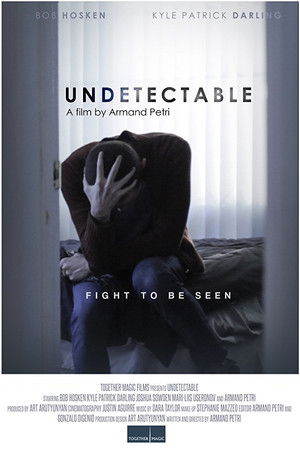
A gay man living with HIV must confront the guilt tormenting him after betraying and infecting his terminal ex-lover.
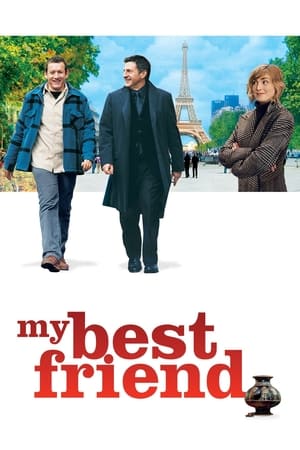
Catherine refuses to believe that her business partner, the unlikeable François, has a best friend, so she challenges him to set up an introduction. Scrambling to find someone willing to pose as his best pal, François enlists the services of a charming taxi driver to play the part.
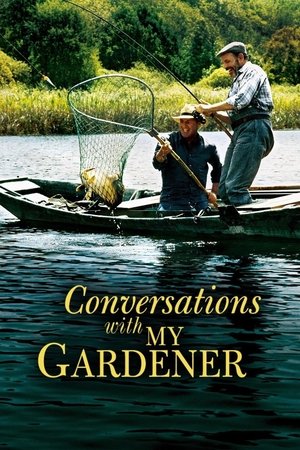
A successful artist, weary of Parisian life and on the verge of divorce, returns to the country to live in his childhood house. He needs someone to make a real vegetable garden again out of the wilderness it has become. The gardener happens to be a former schoolfriend. A warm, fruitful conversation starts between the two men.
Two Russian craftsmen, slightly warmed up by a game of chess, where instead of pieces there are glasses with "strong drink", invent a perpetual motion machine... for a ballerina.
A father strives to give his daughter a perfect life full of happy memories, in spite of a troubling diagnosis and a partner overseas.
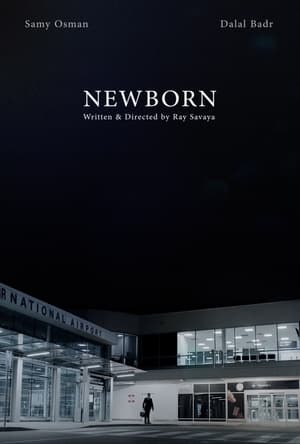
A couple is overjoyed to welcome their firstborn into the world. Euphoria slips away when they return to an unwinnable argument over the name they will give their son.
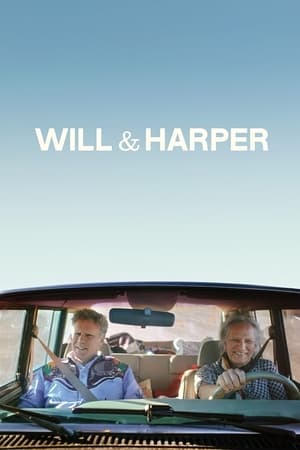
When Will Ferrell's good friend Harper comes out as a trans woman, they take a road trip to bond and reintroduce Harper to the country as her true self.
A man without his own half of the body is looking for the other half in the opposite sex. As for the integrity of his body, so for the sake of emotional healing.
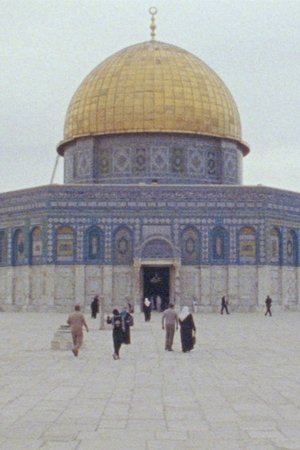
ḤARAM is an essay film portraying the urgent contemporary situation at the Haram Al Sharif/ Noble Sanctuary in the Old City of Jerusalem reflecting on the growing Temple Mount Faithful movement whose goal is to build the Jewish Third Temple on this holy landscape and in turn to assert Jewish sovereignty over this holy Muslim site.
VIVA ÁGUA is a meditation on the philosophical work entitled ÁGUA VIVA written by Clarice Lispector in 1973. The film reflects on Lispector’s interior experimental monologue on the “instant-now” of time, the discomforts of language which are “beyond thought” and the harmonious dissonant reminders and remainders of that “sometime what is seen is ineffable.”
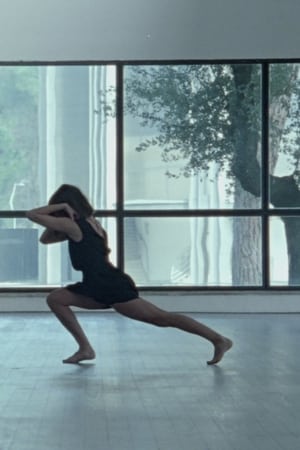
Anna, Pina, Teresa reinterprets the pivotal scene in Rossellini’s “Roma Città Aperta” where Anna Magnani, who plays the character Pina, (based on the story of Teresa Gullace,) is murdered on the streets of Rome by the Fascist police. This scene is characterized by three movements performed by Magnani — resistance, running and falling. Filmed in the Sala Scherma at Foro Italico in Rome (Mussolini’s fencing studio designed by Moretti) Anna, Pina, Teresa examines the contemporary and historical dynamics between an urban Fascist space and movements of resistance.
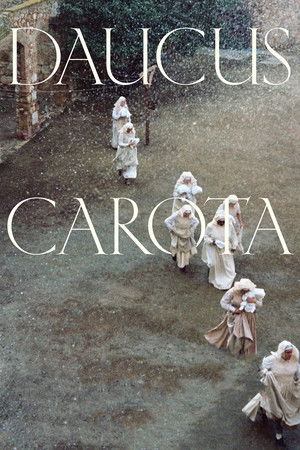
A community of women lives in an old convent that falls apart. They never talk and strive to keep everything clean. One day, Irene realizes for the first time that there is much more beyond the routine she and her sisters keep doing over and over. Irene, following nature’s signs, starts a journey of reconnection with her own impulses and body to finally find her own voice.
A young boy overcomes the communication obstacle he has with the object of his affection: A deaf girl.