Three children evacuated from London during World War II are forced to stay with an eccentric spinster. The children's initial fears disappear when they find out she is in fact a trainee witch.
Miracle at St. Anna chronicles the story of four American soldiers who are members of the all-black 92nd "Buffalo Soldier" Division stationed in Tuscany, Italy during World War II.
Film journalist and critic Rüdiger Suchsland examines German cinema from 1933, when the Nazis came into power, until 1945, when the Third Reich collapsed. (A sequel to From Caligari to Hitler, 2015.)
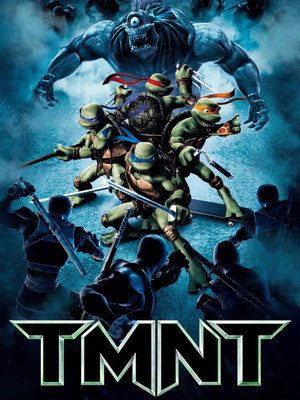
After years of being sheltered from the human world, the Turtle brothers set out to win the hearts of New Yorkers and be accepted as normal teenagers through heroic acts. Their new friend April O'Neil helps them take on a mysterious crime syndicate, but they soon get in over their heads when an army of mutants is unleashed upon them.
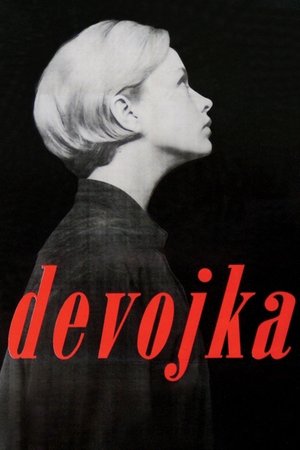
The true life-story of Sara Góralnik, a 13 year-old Polish Jew whose entire family was killed by Nazis in September of 1942. After a grueling escape to the Ukrainian countryside, Sara steals her Christian best friend’s identity and finds refuge in a small village, where she is taken in by a farmer and his young wife. She soon discovers the dark secrets of her employers’ marriage, compounding the greatest secret she must strive to protect, her true identity.
During the Iraq War, a Sergeant recently assigned to an army bomb squad is put at odds with his squad mates due to his maverick way of handling his work.
Joe Enders is a gung-ho Marine assigned to protect a "windtalker" - one of several Navajo Indians who were used to relay messages during World War II because their spoken language was indecipherable to Japanese code breakers.
Together with Shimada Akira (Hagiwara Masato), the last appointed governor of Okinawa during the war, Arai Taizo (Murakami Jun), the chief of police of Okinawa Prefecture, goes beyond his duties and strives to protect the lives of the citizens of the prefecture. As the ravages of war intensify, the two, who each carried a heavy cross during the Battle of Okinawa, desperately devote themselves to saving the lives of the Okinawan people, with the belief that "life is precious." A human drama, set in Okinawa at the end of World War II, depicting the preciousness of human life. Directed by Igarashi Sho of One Step on a Mine, It's All Over.
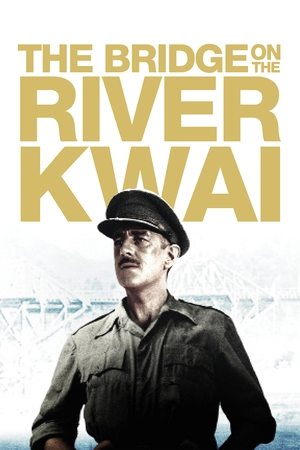
Island of Java, 1942, during World War II. British Major Jack Celliers arrives at a Japanese prison camp, run by the strict Captain Yonoi. Colonel John Lawrence, who has a profound knowledge of Japanese culture, and Sergeant Hara, brutal and simpleton, will witness the struggle of wills between two men from very different backgrounds who are tragically destined to clash.
Nebi Surreli lives in poverty along with his mother. Doing small jobs to earn a living, he also helps his town's communist unit.
In Fascist Albania 1942, Albanian partisans will do all they can to remove the Italian fascists from their country.
The destruction of the traditional legal system is probably one of the lesser-known yet essential goals of the Nazi state. The aim was to establish the supremacy of the "people's community" over the individual by subjugating the judicial system. The documentary looks at the careers of four people who were actively involved or became victims.
The "Memphis Belle" is a World War II bomber, piloted by a young crew on dangerous bombing raids into Europe. The crew only have to make one more bombing raid before they have finished their duty and can go home. In the briefing before their last flight, the crew discover that the target for the day is Bremen.
During the Nazi occupation of 1944 Rome, Resistance leader Giorgio Manfredi is pursued by the Nazis as he seeks refuge and a means of escape.
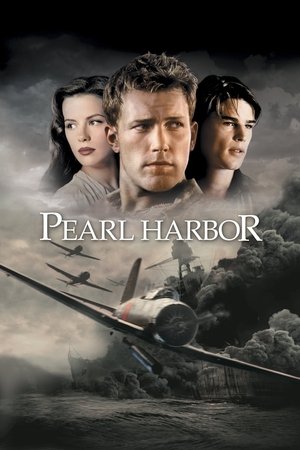
The lifelong friendship between Rafe McCawley and Danny Walker is put to the ultimate test when the two ace fighter pilots become entangled in a love triangle with beautiful Naval nurse Evelyn Johnson. But the rivalry between the friends-turned-foes is immediately put on hold when they find themselves at the center of Japan's devastating attack on Pearl Harbor on Dec. 7, 1941.
A dramatic history of Pu Yi, the last of the Emperors of China, from his lofty birth and brief reign in the Forbidden City, the object of worship by half a billion people; through his abdication, his decline and dissolute lifestyle; his exploitation by the invading Japanese, and finally to his obscure existence as just another peasant worker in the People's Republic.
A pragmatic U.S. Marine observes the dehumanizing effects the U.S.-Vietnam War has on his fellow recruits from their brutal boot camp training to the bloody street fighting in Hue.
In April of 1945, Germany stands at the brink of defeat with the Russian Army closing in from the east and the Allied Expeditionary Force attacking from the west. In Berlin, capital of the Third Reich, Adolf Hitler proclaims that Germany will still achieve victory and orders his generals and advisers to fight to the last man. When the end finally does come, and Hitler lies dead by his own hand, what is left of his military must find a way to end the killing that is the Battle of Berlin, and lay down their arms in surrender.
On the 29th September 1945, the incomplete rough cut of a brilliant documentary about concentration camps was viewed at the MOI in London. For five months, Sidney Bernstein had led a small team – which included Stewart McAllister, Richard Crossman and Alfred Hitchcock – to complete the film from hours of shocking footage. Unfortunately, this ambitious Allied project to create a feature-length visual report that would damn the Nazi regime and shame the German people into acceptance of Allied occupation had missed its moment. Even in its incomplete form (available since 1984) the film was immensely powerful, generating an awed hush among audiences. But now, complete to six reels, this faithfully restored and definitive version produced by IWM, is being compared with Alain Resnais’ Night and Fog (1955).
In 1939, Charlotte Salomon leaves Berlin to seek refuge at her grandparents' villa in the south of France. A little later, war breaks out, and Charlotte must, besides forgetting all she left behind, deal with her grandmother's depression, and her mother's suicide. To fight despair, Charlotte starts to paint, producing over one thousand images. "Is my life real, or is it theater?" This is the title she gives her body of work, which highlights her former life in Berlin. She finds herself though her art, but in 1943 is deported to Germany and Auschwitz.