Winner of a record breaking, 6 Ballon d'Or's, Lionel Messi has proved time and time again that he is the greatest player of all time. He is the most award winning player, the highest scorer in La Liga, and at the age of 32, he is still performing at a world class standard week in, week out at Barcelona. Follow the journey of the Argentine prodigy and witness how he became the greatest player in the world.
At the 1954 FIFA World Cup in Switzerland, we see the red-hot favourites Hungary, led by the legendary Ferenc Puskás eventually beaten by West Germany 3-2 in a classic final.
The 1958 finals, held in Sweden, saw the emergence of a new superstar in Pelé. This 17 year-old wonder player led the Brazilians to a final triumph over the host nation 5-2.
Chile was the venue for the 1962 finals, where holders Brazil were expected to regain their crown. The host, Chile, took them all the way in an epic semi-final, but the classy Brazilians eventually beat Chile 4-2 and went on to beat another surprise package, Czechoslovakia, 3-1 in a one-sided final.
The 1970 finals saw the emergence of probably the greatest team the world has ever seen, in the all-conquering form of Brazil. Pelé was playing in his last finals and his touch, vision and goal prowess combined with Jairzinho's amazing feat of scoring in every round, propelled the Brazilians to an irresistible 4-1 final victory over an overwhelmed Italy.
The 1974 finals in West Germany saw the emergence of "Total Football" in the shape of the classy Dutch led by the legendary Johan Cruyff. The Dutch swept all before them until they came up against the solid hosts in the final. Beckenbauer led West Germany to a tense 2-1 victory.
Argentina, as hosts in 1978, were under great pressure to succeed. Amidst passionate supporters, they progressed to the finals with a wonderful blend of attacking football and tough defending. The unlucky Dutch, now lacking Cruyffs' sublime skills, were the fall guys once again in the Final, losing 3-1 in a classic clash of styles. This 1991 reedited version omits controversial interviews from the 1978 original "Copa 78 - O Poder do Futebol", while also including additional television footage of the tournament and newly dubbed English narration instead of the original Spanish.
Italia 90 was another fascinating tournament, a melting pot of different styles, culture and technique. The biggest tournament to date, it saw the emergence of the African nations with the free-flowing Cameroon capturing everyone's hearts. The final was tight and not for the squeamish, but the well-drilled and better-disciplined Germans prevailed 1-0 winners to claim the crown for the third time.
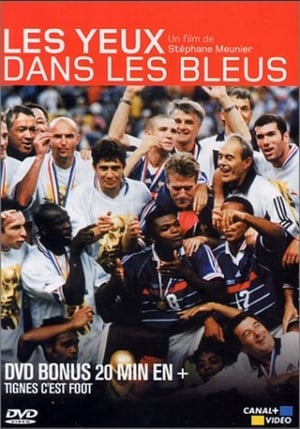
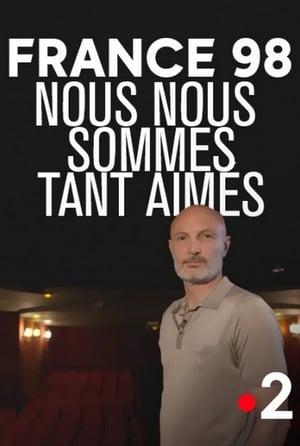
The French team —on home soil— was always going to be in contention for the title of World Champion. It did not disappoint its fans. France '98 was not short on drama or controversy, in equal measure and this is captured most effectively on this film. The 1998 film was shot on Super 16 mm film and includes the most complete and extensive coverage ever, with each match being filmed from more angles than any previous film.
A World Cup of shocks and surprises, making history from start to finish. It was the first World Cup in Asia and the first to be co-hosted by two countries. The official film captures the unique spirit of this event in 120 minutes of football - on the pitch and behind the scenes. This is one of few official films able to offer a hint of the world behind the dressing room door - Senegal's victory celebrations, Mexico's prayer and team talk and the referees debriefing.
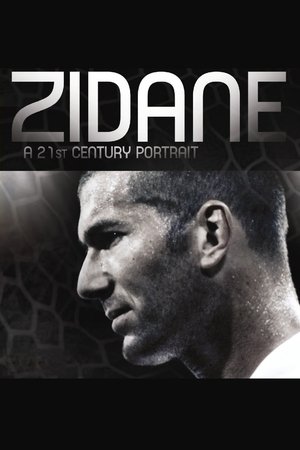
FIFA World Player in 1998, 2000, and 2003, Zidane has been labeled the greatest player to come out of France. Known for his brilliant ball control, incredible vision, precise passing and ability to read the game, Zidane has also dedicate much of his time to helping those less fortunate than himself.
Inspired by true events from the spring of 1944 when the Nazis organized a football match between a team of camp inmates and an elite Nazi team on Adolf Hitler's birthday. A match the prisoners are determined to win, no matter what happens.
In the ‘poor crescent’ around Brussels one child in three lives on the poverty line. But they can find refuge with BX Brussels of Vincent Kompany – a sports and social project. Stranger follows recent immigrant Senegalese football coach Moussa as he struggles to give them hope in their sport … and in their life.
Documentary following the new board of FC Barcelona as they attempt to turn around the club's business performance.
The documentary Schwarze Adler (Black Eagles) lets black players of the German national football team tell their personal stories for the first time. What road did they take before they got to where we cheer for them? What hurdles did they have to overcome? What prejudices and racist hostility were they exposed to – and what was it like in the past, what is it like today?
Documentary about Ajax Amsterdam in 1968.
This utterly enjoyable and globe-spanning jaunt follows Canadian actor and comedian Jay Baruchel on an epic road trip through Canada, Ireland and Scotland with his new friend, well-known Irish soccer journalist Eoin O’Callaghan. It’s a story that stretches over 200 years of colorful history and that takes the duo eastward from Montreal to Westport, Ireland—where Jay’s ancestors set sail for Canada, like so many others—and finally Glasgow, where Jay will fulfill a lifelong dream: to watch a match at Celtic Park, one of the wildest and most hallowed grounds in world football.
L’últim partit. 40 anys de Johan Cruyff a Catalunya
Any given Sunday of 1974 in Spain, soccer games in several stadiums, the sarcastic voice of commentators, the inevitable presence of advertising. Goal! The victors and the defeated.
Behind the scenes and with the fans of West Ham United as they move to a new home after 112 years at Upton Park.