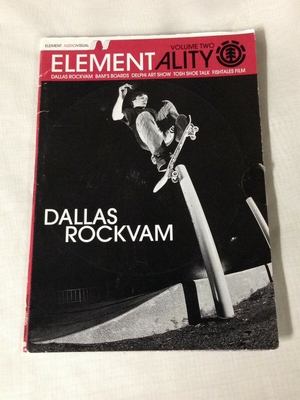
Celebrated skateboarder Leo Baker shares the details of their rise to fame and the clash between their career and self-discovery as a trans person.
The infamous "Memorex" tape circulated the mid-west underground scene in the mid-’90s. Shot in 1993, the film captures a transient slice of post-’80s, pre-Y2K youth culture on the eve of a new century. Following a tribe of teenage heshers and burnouts at a skate park punk show, the film is a snapshot of the stray children of the boomer generation as they navigate their anxieties on the brink of social, global, and digital upheaval. Now, on its 30th anniversary, the original VHS tape has been restored in 4K, revealing a cultural time capsule of pre-9/11 American youth; a candid documentation of a moment both electric and uncanny.
The untold true story: The rise and fall of the greatest funk band ever, Parliament Funkadelic.
No Mercy, No Remorse takes viewers back to the winter of 1993, with a journey into the deeply disturbing world of Paul Charles Denyer, the then 21-year old who is currently serving three life sentences for the Frankston murders.
Co-curated by Jenni Olson and the late Black gay activist Karl Knapper, this entertaining showcase of vintage movie trailers traces the evolution of African American cinema through its most crucial period, 1952-1976. Filled with insights on race and social dynamics, this fascinating compendium of coming attractions explores an extensive range of stylistic approaches—Blaxploitation, Comedy, Music Bio, Plantation Drama and more—offering an outrageous joyride through motion picture history. Beyond mere camp, these marvelously condensed gems crystallize a range of African American identities and personalities, tracking the meteoric careers of Sidney Poitier, James Earl Jones, Billy Dee Williams, Richard Pryor, Pam Grier and others through their bold performances in movies both hugely popular and practically forgotten. Afro Promo provides a compact glimpse at the representation of African Americans through twenty-five dynamic years of American cinema history.
Serge Gainsbourg, les meilleures chansons
A&E's long-running biography series takes a look at one of the 20th century's most emblematic figures, Ernest Hemingway. Through a collection of still photography, narration by granddaughter Mariel Hemingway, commentary from author A.E. Hotchner and publisher Charles Scribner, and readings from Hemingway's writing (including personal letters and unpublished works) by Scott Glenn, the film takes us from the man's Midwestern childhood roots up through the tragic suicide that serves as a bittersweet exclamation on what is otherwise considered to be a life of profound accomplishment.
Documentary film about four families in Pori, Finland, all struggling with unemployment and poverty.
Documentary film about Tony Halme, masculinity and populism. The film follows how Tony Halme created a mythical, highly masculine freestyle wrestling character, The Viking, who gained fame both in the ring and in the public eye and eventually became captivated by it. With his brash speeches, Halme fired the starting shot for the rise of the Finns Party. The voice of a forgotten section of the population, a protest against the ruling elite, were the building blocks of Halme's popularity. Halme's great popularity has served as a good example of a populist figure, admired within the deep ranks of the nation, who comes from outside the political elite and changes the direction of politics. Also, despite - or perhaps because of - his openly racist statements, he was part of changing the political climate in Finland to a more acrimonious one.
Using testimonies by pioneers and witnesses of the times, delve into the feverish visual culture the media generated – with far-fetched examples of canine television games, seduction manuals, aerobics class while holding a baby, among others.
Journalist Dermi Azevedo has never stopped fighting for human rights and now, three decades after the end of the military dictatorship in Brazil, he's witnessing the return of those same practices.
Cannabis, un paradoxe français
New York, USA, February 1964. Five grueling days in the life of George, John, Paul and Ringo, the Fab Four, The Beatles: the hysterical fan reception at JFK airport; several press conferences; in their rooms at the Plaza Hotel; in the backstage at the Ed Sullivan Show; hanging out with the legendary DJ Murray the K; and the frantic return home.
How does a traumatic event shape a family? How do you sift through the memories to find hidden clues and unlock a collective grief? Kingdom of Us takes a look at a mother and her seven children, whose father's suicide left them in financial ruin. Through home movies and raw moments, the Shanks family travels the rocky road towards hope.
While investigating the suicide of Las Vegas Teenager Levi Presley, a filmmaker uncovers a story of a city with the highest suicide rate in the country, and a nation scrambling to bury decades of nuclear excess in a nearby mountain.
New York Solo Andata tells the story of the American Dream from the first Italian migratory flows to nowadays through the voices of all those who truly believed and fulfilled it with determination. Davide Ippolito leaves Italy to meet Italians and important personalities living in New York to tell the most unusual aspects of the city to remind "if you can dream it, you can do it."
Balladur-Chirac, mensonges et trahisons
The first offering in the iconic Plan B video "fourology", the release of Questionable Video promptly set the skateboard community on its ear while screaming, "change!" into the other. In the age of cut-down high tops and late shove-its, the hellish Plan B roster (brought together by a visionary Mike Ternasky) rose above the transitional feel of the era by pioneering today's tech + handrail methodologies. Shot lovingly with shouldered VHS dinosaurs and screw-on fisheyes, Questionable is an undoubtedly raw, homegrown, and pure skateboarding video that not only reflects a major turning point in skateboarding's evolution, but illuminates the path that the sport will follow over the next decade.
Martin Greenfield learned to sew while mending shirts for the Gestapo in Auschwitz and went on to make suits for U.S. presidents and stars. Now, at 95, America’s greatest tailor is grappling with his legacy.
An in-depth look at the Democratic and Republican national conventions held during the 2008 U.S. Presidential election year.