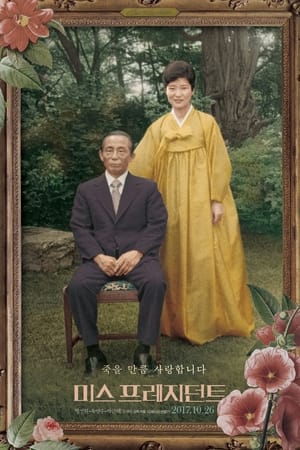
My father led a coup in 1961. Two years later, I became the president's daughter.
Following a year in Cadance and Amanda's gender transition, this intimate documentary charts not only their personal transformation but the building of a life and community together in regional New South Wales.
Set in a leper colony in the north of Iran, The House is Black juxtaposes "ugliness," of which there is much in the world as stated in the opening scenes, with religion and gratitude.
While reporting on the rise of spy cam porn in South Korea, a crime that affects thousands each year, a journalist discovers that she too is being watched in her own home. She decides to speak out, joining a nationwide movement of women seeking protection from this frighteningly ubiquitous crime.
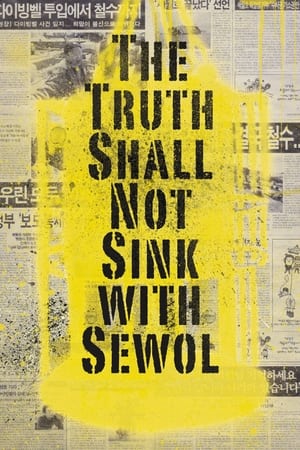
A documentary on the South Korean ferry disaster that claimed the lives of more than 300 passengers in April, 2014.
Why did Moon Jae-in, a human rights lawyer who hated politics, become president? During five years at the Blue House, why didn’t he use his power? Why did he just silently plant flowers while being sworn at by protesters? One by one, those who watched him reveal their hidden stories.
An anti-western propaganda film about the influences of American visual and consumption culture on the rest of the world, as told from a North Korean perspective.
From groundbreaking human cloning research to a scandalous downfall, this documentary tells the captivating story of Korea's most notorious scientist.
By 2020, half of children in South Korea's rural areas will be multi-ethnic. Through extensive interviews with parents, educators, social activists and multi-ethnic Koreans themselves, EVEN THE RIVERS examines how South Korea's schools are responding to the country's dramatic demographic changes.
Anonymous and exploitative, a network of online chat rooms ran rampant with sex crimes. The hunt to take down its operators required guts and tenacity.
When the MV Sewol ferry sank off the coast of South Korea in 2014, over three hundred people lost their lives, most of them schoolchildren. Years later, the victims’ families and survivors are still demanding justice from national authorities.
Far away from any other urban centers, Itapuã is a small community with the characteristics and rituals of everyday life. The location, which sheltered 1,454 people and has more than 70 years of existence remains with only 35 residents all over the age of 60. No one likes to remember what the place was in the past, even though for many the memory is etched on their bodies.
The documentary Two Doors traces the Yongsan Tragedy of 2009, which took the lives of five evictees and one police SWAT unit member. Left with no choice but to climb up a steel watchtower in an appeal to the right to live, the evictees were able to come down to the ground a mere 25 hours after they had started to build the watchtower, as cold corpses. And the surviving evictees became lawbreakers. The announcement of the Public Prosecutors’ Office that the cause of the tragedy lay in the illegal and violent demonstration by the evictees, who had climbed up the watchtower with fire bombs, clashed with voices of criticism that an excessive crackdown by government power had turned a crackdown operation into a tragedy.
Shedding new light on a geopolitical hot spot, the film — written and produced by John Maggio and narrated by Korean-American actor John Cho — confronts the myth of the “Forgotten War,” documenting the post-1953 conflict and global consequences.
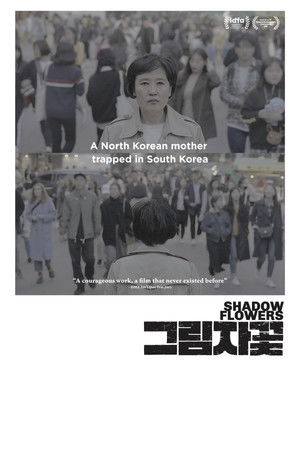
Ryun-hee Kim, a North Korean housewife, was forced to come to South Korea and became its citizen against her will. As her seven years of struggle to go back to her family in North Korea continues, the political absurdity hinders her journey back to her loved ones. The life of her family in the North goes on in emptiness, and she fears that she might become someone, like a shadow, who exists only in the fading memory of her family.
What happened in Korean society in the 1990s? The film starts with the Jijon-pa (Supreme Gangsters) case. The shocking story is narrated through the discussion by the two detectives who arrested the gangsters, of details of the roundup, data screens, and the death sentence. Nevertheless, Nonfiction Diary’s focus is not on the crime story. Starting from Jijon-pa onwards, the film reflects on the 1990s, when Korea digressed into contemporary history. The Seongsu Bridge and the Sampoong Department Store’s collapses are recalled, followed by the then-government’s punishment of the May 18 Uprising leaders, revealing the Korean legal system’s death penalty status, touching on political and power issues. The audience is reminded that today, 2013, is an extension of that same flow.
A total of 17 journalists have been fired since 2008, the beginning of LEE Myung-bak’s presidential term. They fought against the companies that they worked for succumbing to power and are now frustrated at reality where censorship of the press by authority has now become a norm. Can they continue their activities as journalists?
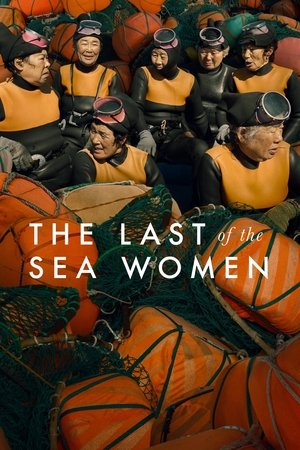
On the shores of Jeju Island, a fierce group of South Korean divers fight to save their vanishing culture from looming threats.
Nearly 250,000 South Korean children were adopted to the West as “orphans” in the 60 years following the Korean War. Some to loving homes. Others to tragic ends. Raised in places where they looked like nobody else, many were told to forget their past and be grateful. But the innate desire to understand where you came from has led many Korean adoptees to search for their roots. In the process, they discover lies in their past and families they never knew existed. In this documentary series, correspondent Wei Du travels around the world to meet Korean adoptees and accompany a few on their journey to reclaim who they are. Together, they reveal how an “orphan rescue” mission separated families and erased the roots of hundreds of thousands.
Crossroads explores the ever changing face of South Korea since the Sewol ferry disaster that tragically killed 304 people, mainly schoolchildren, in April 2014. The film takes us on a journey through Korean modern history exploring the changes the country has gone through since April 16th 2014, encompassing emotional re-enactment narrations from survivors, interviews with family members, activists, historians and the general public, as we go in search of how Korea came to yet another crossroad in its history.