Blind traveler Zatoichi is a master swordsman and a masseur with a fondness for gambling on dice games. When he arrives in a village torn apart by warring gangs, he sets out to protect the townspeople.
Ichi is a blind entertainer that travels the countryside with her traditional Japanese guitar and walking stick. She’s in search for the kind man that brought her up as a child, but because of her beauty she encounters problems every step of the way. Fortunately for Ichi, she is also a gifted swordswoman and carries a lethal blade within her walking stick.
Sen no Rikyu (Ebizo Ichikawa) is the son of a fish shop owner. Sen no Rikyu then studies tea and eventually becomes one of the primary influences upon the Japanese tea ceremony. With his elegant esthetics, Sen no Rikyu is favored by the most powerful man in Japan Toyotomi Hideyoshi (Nao Omori) and becomes one of his closest advisors. Due to conflicts, Toyotomi Hideyoshi then orders Sen no Rikyu to commit seppuku (suicide). Director Mitsutoshi Tanaka's adaptation of Kenichi Yamamoto's award-winning novel of the same name received the Best Artistic Contribution Award at the 37th Montréal World Film Festival, the Best Director Award at the 2014 Osaka Cinema Festival, the 30th Fumiko Yamaji Cultural Award and the 37th Japan Academy Film Prize in nine categories, including Best Art Direction, Excellent Film and Excellent Actor.
Detective Onihei better known as "Heizo the Demon" heads a group of skilled officers, however, one of those special officers got himself into a web of betrayal and deceit, and become the very thing Heizo the Demon investigates daily.
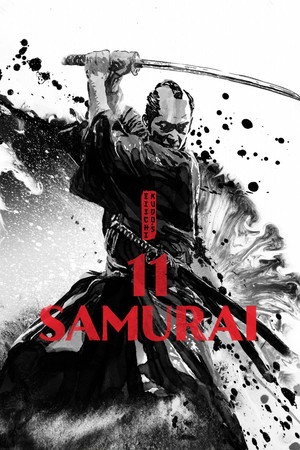
In 1701, an insult led to a sword slash between the heads of the Ako clan and the Kira clan in Shogun's court. The head of the Ako clan was ordered to commit seppuku, and his loyal retainers plotted revenge against the Kira clan. This led to the legendary events known as the "47 ronin incident". However, unknown to most, the head of the Kira clan, Kozukenosuke Kira, is already dead from his wounds. Impersonating him is his slacker monk brother Takaaki, who has to prevent his brother's death being found out to protect his clan – and accidentally befriends Ooishi, the leader of the Ako men who wouldn't really want to go through with the revenge. Will Takaaki survive with his head?
Ryunosuke, a gifted swordsman plying his trade during the turbulent final days of Shogunate rule, has no moral code and kills without remorse. It’s a way of life that leads to madness.
The Jumping Magistrate
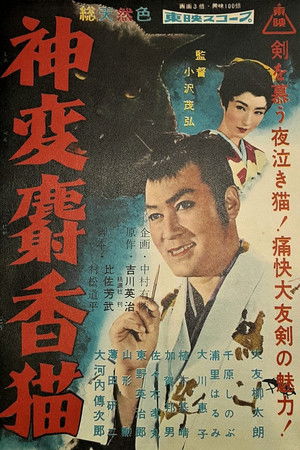
The Roar of The Lion
The Official And The Princess of Thieves
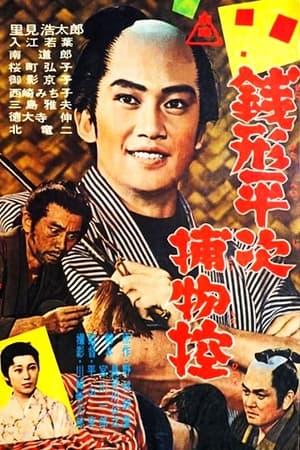
The Well-known Magistrate
Bakumatsu seishun graffiti: Ronin Sakamoto Ryoma
The Color Print of Edo is a 1939 black and white Japanese silent film with benshi accompaniment directed by Kazuo Mori. It is a cheerful period drama, sprinkled with comical scenes and tells the story of a loyal and handsome Edo period servant who fights to help his older brother marry the woman he loves. The star of this film, Utaemon Ichikawa, gained enormous popularity for his portrayal of a cheerful and chivalrous man.
The struggles of the Golden Peacock Clan continue as they seek to reclaim their home and prevent the evil Gondaiyu from taking their most prized treasures.
The righteous young men, who were separated by the all-out attack of sorcery, are saved by the friendship of a young Sengoku warlord, and now launch an all-out attack on Gondayu, who has usurped the regent's position. An exciting and heated battle unfolds. This is the grand finale of a golden period drama that mobilizes all the popular youth stars.
A group of travelers is stranded in a small country inn when the river floods during heavy rains. As the bad weather continues, tensions rise amongst the trapped travelers.
Oda Nobunaga and Nōhime were originally married to mend a hostile relationship between neighbouring regions. Unfortunately, they were like oil and water, making for a somewhat unhappy marriage. When Oda's enemy, Imagawa Yoshimoto, attacks Owari with his vast army, Oda is devastated by the overwhelming gap in military strength. However, Nohime encourages him not to despair, and the pair draw up a tactical plan that will allow them to overcome the odds.
Kon Ichikawa's retelling of the classic true story of Samurai honor. When a young clan lord is forced to commit seppuku (ritual suicide), his loyal followers (now Ronin, masterless Samurai) dedicate their lives to avenging his death.
Struggling to elevate himself from his low caste in 17th century Japan, Miyamoto trains to become a mighty samurai warrior.
After years on the road establishing his reputation as Japan's greatest fencer, Takezo returns to Kyoto. Otsu waits for him, yet he has come not for her but to challenge the leader of the region's finest school of fencing. To prove his valor and skill, he walks deliberately into ambushes set up by the school's followers.
A humble and simple Takezo abandons his life as a knight errant. He's sought as a teacher and vassal by Shogun, Japan's most powerful clan leader. He's also challenged to fight by the supremely confident and skillful Sasaki Kojiro. Takezo agrees to fight Kojiro in a year's time but rejects Shogun's patronage, choosing instead to live on the edge of a village, raising vegetables. He's followed there by Otsu and later by Akemi, both in love with him. The year ends as Takezo assists the villagers against a band of brigands. He seeks Otsu's forgiveness and accepts her love, then sets off across the water to Ganryu Island for his final contest.