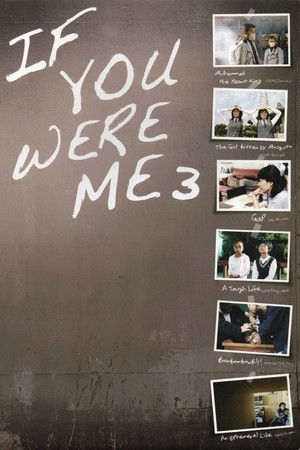
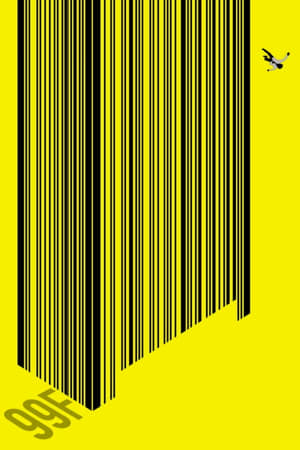
Commissioned by South Korea's National Human Rights Commission, If You Were Me is an innovative omnibus film project to promote tolerance and human rights and shed light on the hardships disadvantaged people face in Korea. This third installment continues the If You Were Me tradition. Directors Jeong Yun Cheol (Marathon), Kim Hyeon Pil (Wonderful Day), Lee Mi Yeon (L'Abri), Noh Dong Seok (Boys of Tomorrow), Hong Gi Seon (The Road Taken), and Kim Gok and Kim Sun (Capitalist Manifesto: Working Men of All Countries) participated in If You Were Me 3, creating shorts on human rights issues of their choosing, ranging from labor conditions to gay rights to discrimination.
On June 17, 1953, there was an outrageous action between the Elbe and the Oder: the people in the GDR refused obedience to their political leadership. The story takes place in Bitterfeld and tells the story of a family involved in the political events around 17 June.
Dr Janina Ramirez travels across glaciers and through the lava fields of Iceland to find out about one of the most compelling of the great Viking stories - the Laxdaela Saga. This hour-long film explores how the unique literary achievements of the Saga writers were possible at a time of such immense cultural, political and religious upheaval.
In the 1960s, two entrepreneurs hatch an ingenious business plan to fight for housing integration—and equal access to the American Dream.
Set during a sultry summer in a French suburb, Marie is desperate to join the local pool's synchronized swimming team, but is her interest solely for the sake of sport or for a chance to get close to Floriane, the bad girl of the team? Sciamma, and the two leads, capture the uncertainty of teenage sexuality with a sympathetic eye in this delicate drama of the angst of coming-of-age.
In early 19th-century France, the Marquis de Sade is confined to an asylum where his forbidden writings continue to circulate beyond its walls. As the authorities tighten control, a clash unfolds between the Marquis’ unyielding imagination, the reformist ideals of the Abbé in charge, and the repressive measures of a doctor sent to silence him. Desire, power, and censorship collide in a battle over freedom of expression.
In 1950s Los Angeles, a special crime squad of the LAPD investigates the murder of a young woman.
What if the events in a key era in our history were actually completely different than what our history textbooks try to tell us? What if Master Jan Hus didn't even get warm in Constance, let alone burn up? What if Jan Zizka had more than one healthy eye? This animated comedy from director Pavel Koutský playfully breaks the myths about the Hussite era as the pedestal of history is occupied not by preachers and military leaders but by two unbelievable scatterbrains, who become the heroes of their time against their will.
Abortionist Vera Drake finds her beliefs and practices clash with the mores of 1950s Britain – a conflict that leads to tragedy for her family.
Sweden, beginning of the 18th Century. Executions are popular entertainment and brothels a given. Still the executioner and the whore are both despised and shunned. The executioner became executioner against his will and the whore, only 17 years old, was forced into the brothel. This is the story of how the two meet and exchange cruelty with tenderness, guilt with innocence.
This short film was commissioned to commemorate the 60th anniversary of May 13, 1954, in which a peaceful assembly of more than one thousand boys and girls in Singapore was brutally broken up by riot police. The students had gathered to seek exemption for classmates affected by a new conscription law. To continue their protest, 800 students proceed to occupy Chinese High School. The film depicts a possible day in the occupation.
In 1890 Paris, Moulin Rouge is a nightclub where crippled artist Toulouse-Lautrec feels like he fits in. In the following years, he meets two women who provide an opportunity for him to find true love.
A group of soldiers are sentenced for the murders of key political figures in the night of October 19th, 1921, in the streets of Lisbon. But the names of the conspirators remain unknown. Berta Maia, a widow of the 1910 revolution hero Carlos da Maia, will fight for the truth…
A sheltered young high society woman joins the US Army on a whim and finds herself in a more difficult situation than she ever expected.
The story of one of the great environmental disasters to befall the United States, and the terrible movie that helped bring the catastrophe to light.
Stonehenge is an icon of prehistoric British culture, an enigma that has seduced archaeologists and tourists for centuries. Why is it here? What is its significance? And which forces inspired its creators? Now a group of international archaeologists led by the University of Birmingham and the Ludwig Boltzman Institute in Vienna believe that a new state-of-the-art approach is the key to unlocking Stonehenge's secrets. For four years the team have surveyed and mapped every monument, both visible and invisible, across ten square kilometres of the sacred landscape to create the most complete digital picture of Stonehenge and the surrounding area over millennia. Operation Stonehenge takes the viewer on a prehistoric journey from 8000BC to 2500BC as the scientists uncover the very origins of Stonehenge, learning why this landscape is sacred, preserved and has been revered by following generations.
Professor Saul David uses the BBC archive to chart the history of the world's most destructive war, by chronicling how the story of the battle has changed. As new information has come to light, and forgotten stories are remembered, the history of World War Two evolves. The BBC has followed that evolution, and this programme examines the most important stories, and how our understanding of them has been re-defined since the war ended over 70 years ago.
Simple Italian postman learns to love poetry while delivering mail to a famous poet; he uses this to woo local beauty Beatrice.
Swedish efficiency researchers come to Norway for a study of Norwegian men, to optimize their use of their kitchen. Folke Nilsson (Tomas Norström) is assigned to study the habits of Isak Bjørvik (Joachim Calmeyer). By the rules of the research institute, Folke has to sit on an umpire's chair in Isak's kitchen and observe him from there, but never talk to him. Isak stops using his kitchen and observes Folke through a hole in the ceiling instead. However, the two lonely men slowly overcome the initial post-war Norwegian-Swede distrust and become friends.
Set in 1951, a blacklisted Hollywood writer gets into a car accident, loses his memory and settles down in a small town where he is mistaken for a long-lost son.