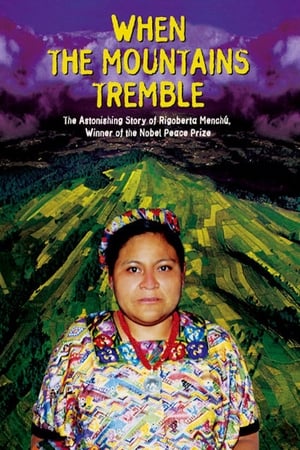
A documentary on the war between the Guatemalan military and the Mayan population, with first hand accounts by Nobel Peace Prize winner Rigoberta Menchú.
Denese Joy Becker, a manicurist living in Iowa, discovers she is indeed Dominga Sic Ruiz, a survivor from a 1982 Guatemalan massacre, when more than 200 people were killed in the small village of Rio Negro, after opposing the construction of a dam, sponsored by World Bank. She then tries to unveil the truth.
A story of destinies joined by Guatemala's past, and how a documentary film intertwined with a nation's turbulent history emerges as an active player in the present.
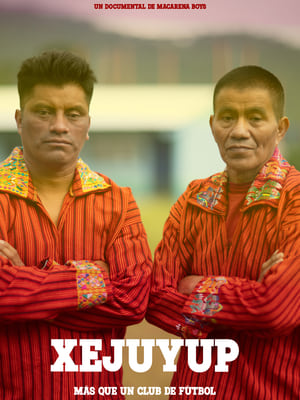
The Perechú family is afraid that the ancestral costume of their ancestors will disappear, but they see soccer as an opportunity to keep their culture and legacy alive.
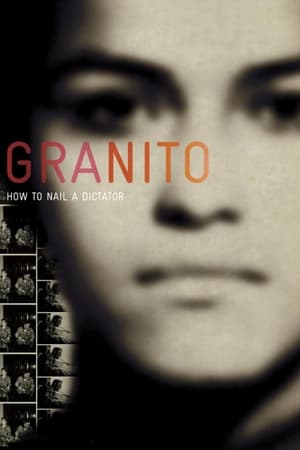
A Guatemalan woman, Ana Lucía Cuevas, returns home from exile to face the brutal history of Guatemala's armed conflict. In 1984, her brother Carlos was kidnapped by the state as one of thousands who were abducted and disappeared. Recounting the stories of brutal genocide, terror, state repression and violence, this film documents the memories of those victimised by the Guatemalan state.
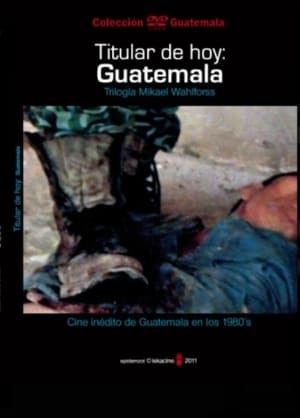
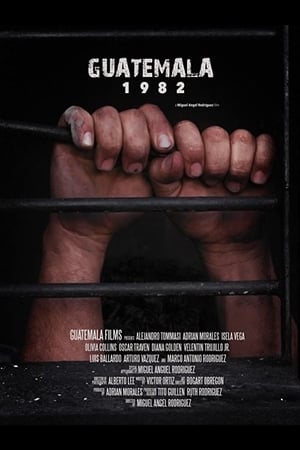
Headline Today: Guatemala is a war documentary. Two American journalists: Allan Nairn and Jean-Marie Simon explore the internal armed conflict in Guatemala in 1982. After General Efraín Ríos Montt comes to power the few news about Guatemala that appear in the United States' media are apparently positive. The major American media advertises the image of Ríos Montt as a “born again Christian” with a mission to pacify Guatemala. Nothing is further from reality. The Reagan Republican administration hides from Americans the war aid that his administration continues to provide to the Guatemalan army, despite the explicit congressional ban. The international media remains silent about the dimensions of the war in Guatemala while Ríos Montt, with the approval of the local oligarchy, leads for 18 months the largest number of atrocities and human rights violations against the civilian population.
Accused of the genocide of Mayan people, retired general Enrique is trapped in his mansion by massive protests. Abandoned by his staff, the indignant old man and his family must face the devastating truth of his actions and the growing sense that a wrathful supernatural force is targeting them for his crimes.
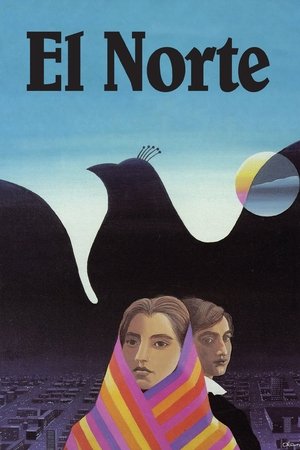
Brother and sister Enrique and Rosa flee persecution at home in Guatemala and journey north, through Mexico and on to the United States, with the dream of starting a new life.
Adrian Morales goes to the town of Jiutiapa, after his father ordered him to do so. He had the task to pick up identification cards needed to carry arms. Colonel Fuentes, friend of his father, is who is given them. When he arrives to the town, Adrian is mistakenly identified as a guerrilla member and they hold him captive as a prisoner. He is then hooded and tortured in search for a confession about who and where the leader of the guerrilla is. Adrian does not return with the identifications. His brother and sister-in-law search for him. When they arrive to the town, they discover the chilling truth. Colonel Rodriguez believes in Adrian's innocence, creating an even bigger conflict within the military headquarters.
Rylan Clark shares his experiences of homophobia and his complicated relationship with football. He also meets people involved in the sport to ask why it's not a wholly welcoming place for gay men and how homophobia has an impact on those exposed to it.
Teatro Brasileiro: Origem e Mudança
Documentary featuring interviews with director Sidney Lumet, "Fail-Safe" (2000) producer George Clooney, star Dan O’Herlihy and screenwriter Walter Bernstein.
This documentary-style short follows two impoverished teens performing on the streets of London in the days leading up to the London Blitz of 1940.
A "video action" in which Barney crosses the ceiling of the Gladstone Gallery using a harness and ice-climbing screws, propelling himself by the forces of muscle and will.
The film is about the formation of a music channel that has shaped modern pop culture. On August 1, 1981, the life of a whole generation of Americans changed forever - on this day MTV began its broadcasting day, making VJ a new teen hero and creating a canon of music video as a vivid artistic statement.
On February 2, 2011, Jussi Björling would have turned 100 years old. Just in time for the anniversary comes the film, a drama documentary about the legendary opera singer.
Salif Keita has been one of the best selling world music artists since he embarked on a solo career fifteen years ago. In this portrait we are treated to music that spans his wide-ranging repertoire, from spellbinding performances of his traditional Malian music to concerts that showcase his innovations in fusing his musical roots with jazz, funk, Europop, and R&B. Highlights include performances in Denmark and France, as well as an improvised session with Carlos Santana.
A look back at "La Cage aux Folles", which ran non-stop for five years, from February 1973, on the stage of the Théâtre du Palais Royal in Paris. At a time when homosexuality was considered a crime by the law, Poiret and Serrault achieved great success in boulevard theater. Their success continued on the silver screen, with three Oscar nominations and a Broadway musical. Combining never-before-seen archives from the play, extracts from the film, confessions by Poiret and Serrault, and interviews with witnesses, this is the story of a wild epic.
Screen icon Charlotte Rampling has fascinated the world of cinema, fashion and photography with her mysterious and almost inaccessible beauty. A major figure in genre and auteur films, she is unclassifiable: between presence and absence, shyness and audacity, she's always hypnotic, magnetic and fascinating. From her film debut in the mid-1960s in England, to her unconventional career path, through the tragic loss suicide of her older sister that will irremediably mark her acting, this film is a dive into the existential quest of a complex actress, whose every facet is discovered through her roles. Through a conversation with the actress herself, along with personal archives and extracts from her films, this documentary raws a dazzling portrait of her life and career.
Boj o Hřensko